

Every adjustable weighted vest listing shouts a different number: 2–40 lb here, 20–150 lb there, sixteen blocks or twelve packs or steel bars measured in fractions of a pound. The label promises the same thing — a load you can change as you get stronger — but the way each vest gets there decides whether it actually fits your training, your frame, and your budget.
This guide compares ten adjustable vests on the three things that matter most: how the weight is built (iron, silicone, or steel), how fine the adjustment steps are, and what arrives in the box. Prices and ratings cited below are listing data current as of this writing, so confirm current details on each product page before you buy.
The quick answer
An adjustable weighted vest is a training vest with removable weight — blocks, packets, or bars — that lets you scale resistance without buying a new vest. Across the ten vests in this comparison, total capacities span a 0.7 lb ultra-light start for walking up to listings that claim 150 lb, and the smallest adjustment step is a fraction of a single pound.
If you want the shortest path: the BAGAIL vest is the most fully documented all-rounder in this guide, the Eric Flag vest is the calisthenics pick with the strongest rating base, the WICTTISPOSI vest is the budget ultra-light entry, and the Wolf Tactical vest is the rucking choice thanks to its MOLLE panels. Each pick is justified in its own section below.
Affiliate disclosure: FitGearPilot links to Amazon in this guide. If you buy through one of those links, we may earn a commission at no additional cost to you.
How to judge an adjustable weighted vest
Four features separate an adjustable vest you will keep using from one that ends up hanging in a closet.
Load range and starting point
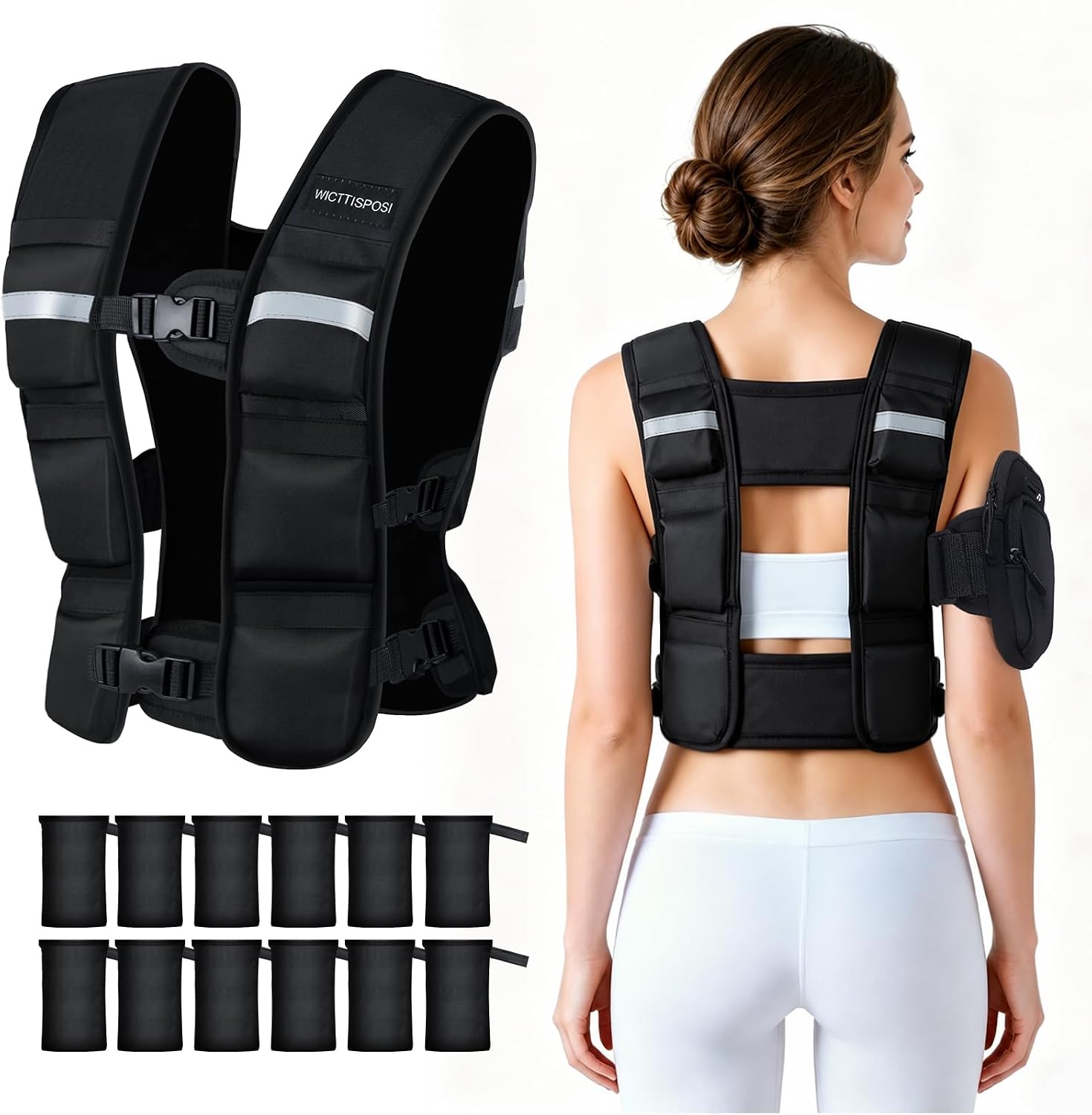
Check both ends of the range, not just the ceiling. The WICTTISPOSI vest starts from a 0.7-lb base, while the APEXUP options begin at 20 lb — a difference that decides who each vest suits. A wide ceiling matters if progression is the goal: several vests here reach 40 lb, the Beatboost sets reach 60 lb, and two listings claim up to 150 lb.
Adjustment step size
The step is the smallest load change you can make. Fine steps — 0.625-lb steel bars on the Beatboost, 2.4-lb blocks on the Eric Flag, 2.5-lb blocks on the BAGAIL and APEXUP — make progression smoother and let you dial in a comfortable walking load. The CAP vest jumps in 4-lb packets, which moves the needle faster but with fewer stops in between.
Weight material
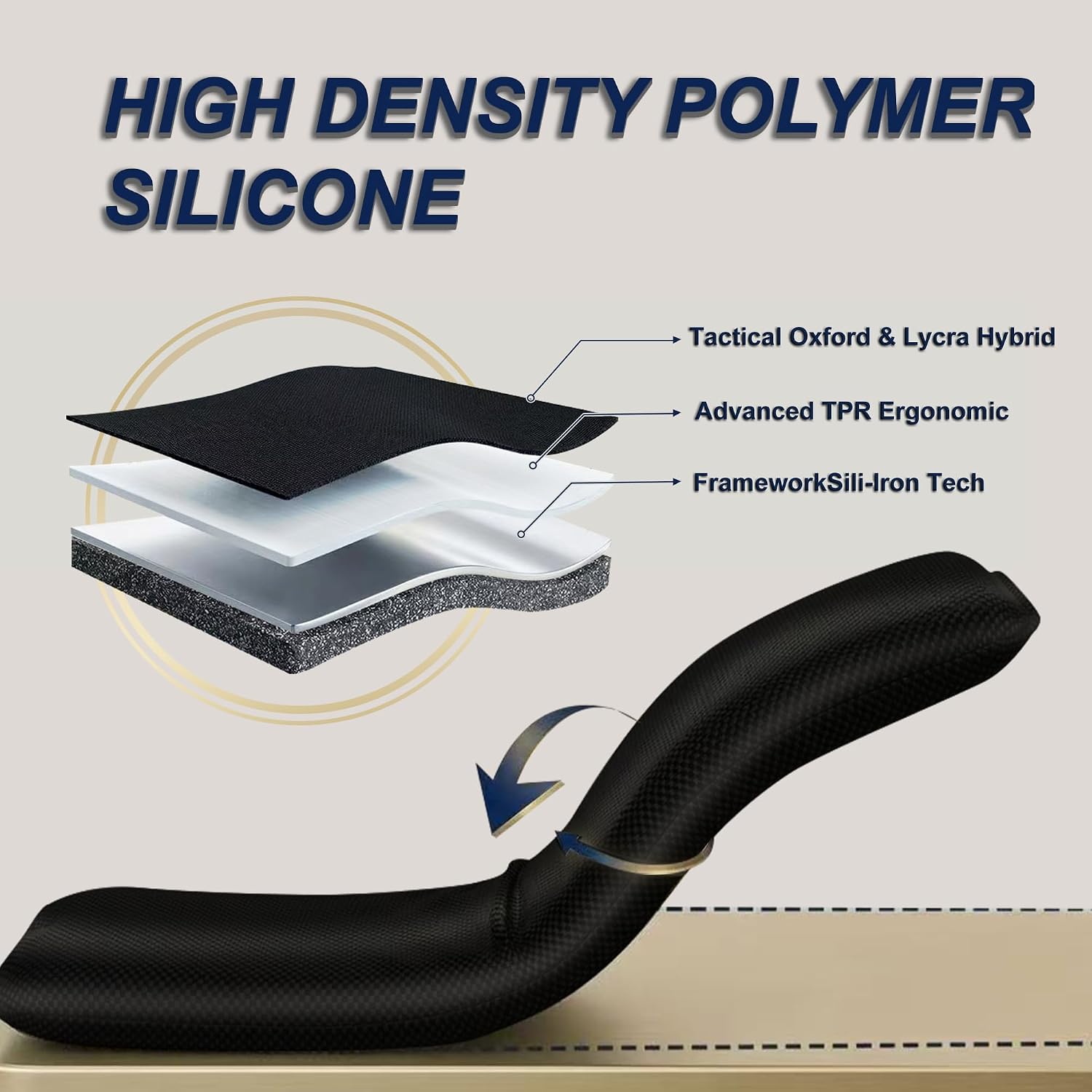
The listings here use three materials: iron blocks (BAGAIL, APEXUP, Eric Flag), soft silicone or polymer blocks (CHICVAULT, ONETWOFIT), and solid steel bars (Beatboost). The silicone options are marketed on comfort — blocks that contour to the body instead of digging in — while iron and steel stay slimmer and denser for the same load.
Fit hardware
Look past the weight itself: padded shoulders, waist belts, buckles, and washability decide how the load feels at speed. Four of these vests add reflective strips for low-light training, and several shells are washable once the weights come out.
The ten vests at a glance
| Vest | Load range | Adjustment system | Price snapshot | Listed rating |
|---|---|---|---|---|
| CHICVAULT soft-counterweight vest | 2–40 lb | 18 silicone blocks in 4 zones | $119.00 | — |
| Wolf Tactical rucking vest | 14–42 lb configs | Front/back pockets, weights sold separately | $125.99 | — |
| CAP packet-load vest | 4–80 lb* | 4-lb iron-ore packets | $169.99 | — |
| BAGAIL 20/30/40 lb vest | 2–40 lb | 2.5-lb rust-resistant iron blocks | $119.99 | 4.6/5 (456) |
| APEXUP running vest | 20/30/40 lb options | 2.5-lb cast-iron blocks | $119.99 | 4.3/5 (462) |
| ONETWOFIT silicone vest | 2–45 lb | 16 silicone blocks | $119.99 | 4.5/5 (210) |
| WICTTISPOSI ultra-light vest | 0.7–12.7 / 0.7–18 lb | 12 removable packs | $45.99 | 4.6/5 (33) |
| Eric Flag 40 lb vest | 0–40 lb | 16 × 2.4-lb iron weights | $159.99 | 4.8/5 (1,121) |
| 20–150 lb shoulder-pad-option vest | 20–150 lb | Removable weights, pads optional | $107.42 | — |
| Beatboost steel-bar set | 20–60 lb sets | 0.625-lb steel bars | $199.99 | — |
*The CAP listing title advertises 20–150 lb while its description details a 4–80 lb packet setup, so verify the exact configuration on the product page before ordering.
Recommended options by training style
Each pick links to its FitGearPilot product page, with the Amazon listing alongside for current pricing.
Best all-round: BAGAIL 20/30/40 lb
The BAGAIL 20/30/40 lb adjustable weight vest has the strongest rating base here — a 4.6/5 rating across 456 reviews — plus the most complete fit hardware: extra-thick shoulder pads, an adjustable waist belt, wide Velcro straps, and safety buckles. The 1200D Oxford shell is washable, and an 18-month warranty backs the whole package. Choose it if you want one vest for walking, rucking, and gym work with the fewest known compromises. Check the BAGAIL vest on Amazon.

Best for calisthenics: Eric Flag 40 lb
The Eric Flag 40 lb weighted vest carries the highest rating in this comparison (4.8/5 from 1,121 reviews) and is built for bars and stations: sixteen removable 2.4-lb iron weights scale the load from zero, the cut leaves shoulders and arms unrestricted, and the compact 1000D Oxford shell keeps the profile tight through dips and muscle-ups. See the Eric Flag vest on Amazon.
Best for running: APEXUP
The APEXUP adjustable weight vest for running is engineered around a locked-down, zero-bounce fit: padded shoulder straps and an adjustable waist belt hold the cast-iron blocks tight against your torso mid-stride, with reflective strips for road visibility and a detachable logo for a cleaner look. The trade-off is granularity — you buy a fixed 20, 30, or 40 lb vest and fine-tune within it, rather than scaling continuously from empty. View the APEXUP vest on Amazon.

Best silicone alternative: ONETWOFIT
The ONETWOFIT 2-45lb silicone weighted vest covers the widest silicone-blocked range here across sixteen high-density polymer blocks, on a bare frame that weighs just 2.2 lb. The listing describes the silicone as skin-friendly and rust-proof — the counterpoint to rigid plates that can bruise. If comfort has been the reason you skipped weighted training, start here. Check the ONETWOFIT vest on Amazon.
Best for zone-based micro-adjustment: CHICVAULT
The CHICVAULT 2-40 lb vest with silicone counterweights splits eighteen soft silicone blocks across four zones — A, B, and C at the front, D at the back — so you can bias the load front-to-back for balance, not just add or remove it. The Oxford-and-Lycra shell zips up, cinches with waist straps, and machine-washes once the blocks are out. See the CHICVAULT vest on Amazon.
Best budget and beginner entry: WICTTISPOSI
At $45.99, the WICTTISPOSI ultra-light adjustable vest is the cheapest option here, with twelve removable packs in two variants that top out at 12.7 or 18 lb — 1 lb steps in the smaller one. The listing also targets the complaints that make people quit weighted walking: heat, lingering sweat odor, and chest compression. The caveat is evidence depth: its 4.6/5 rating rests on just 33 reviews, the thinnest base among these ten. Check the WICTTISPOSI vest on Amazon.
Best for rucking: Wolf Tactical
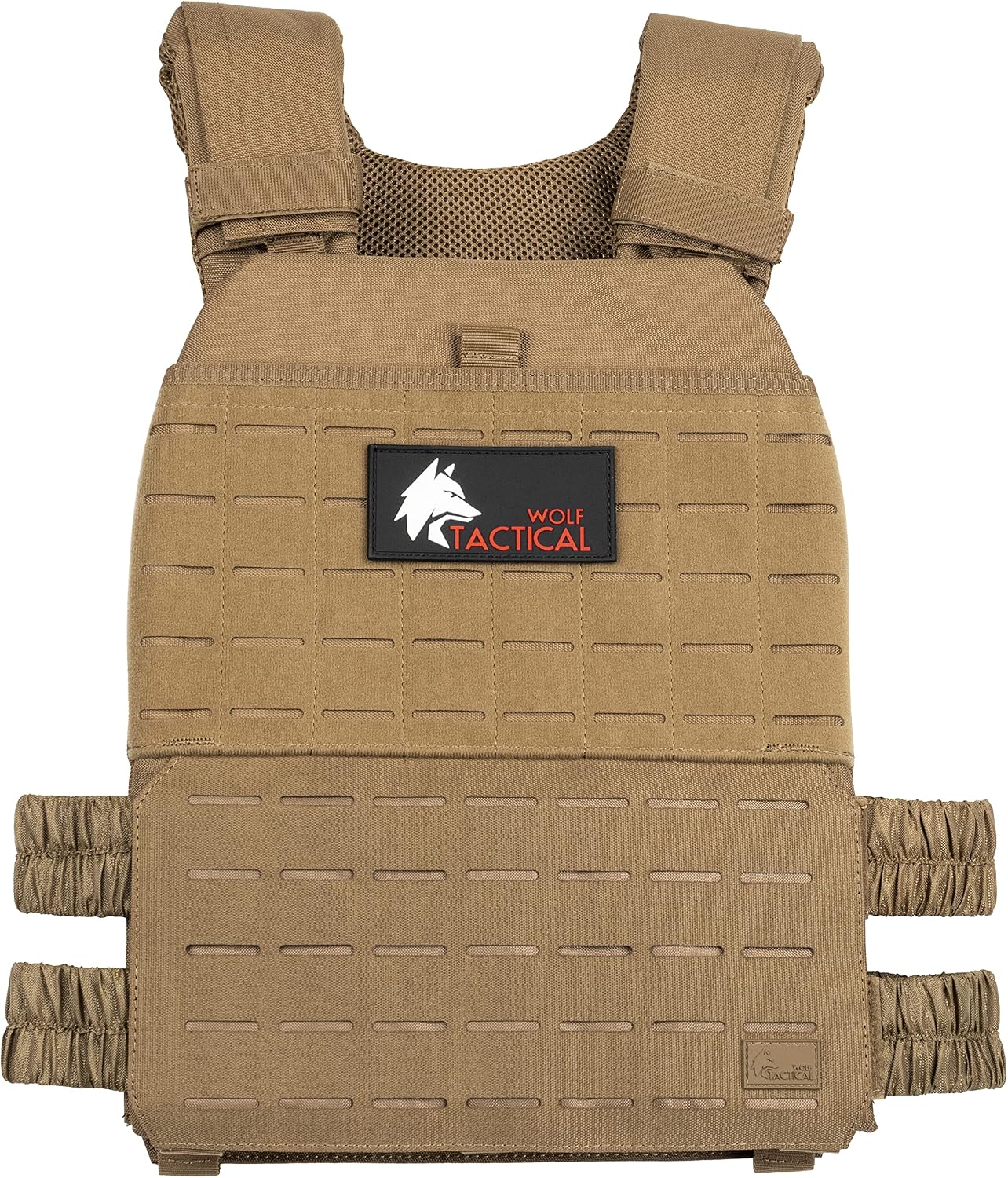
The Wolf Tactical rucking and training vest is the only vest here with laser-cut MOLLE panels front and back, so you can attach pouches and gear — much of the point of rucking. Breathable airflow panels, a padded shoulder yoke, and adjustable waist straps cover an XS-to-XL range on a rugged 600D nylon build. One cost note: weight pairs are sold separately, so the sticker price is not the full picture. View the Wolf Tactical vest on Amazon.
Best high ceiling: CAP packet vest
The CAP packet-load weighted vest targets progressive strength and conditioning with 4-lb iron-ore packets, a fully adjustable waist belt, padded shoulders, and reflective stripes. The listing describes CAP as a long-standing strength and fitness brand, and the $169.99 price is the second highest here — but reconcile that 4–80 lb packet setup with the 150 lb title claim before you commit. Check the CAP vest on Amazon.
Best heavy-load floor: 20–150 lb shoulder-pad option
The 20-150 lb adjustable vest with shoulder-pad option makes the heaviest capacity claim here at the second-lowest price ($107.42): weights are included and removable in all models, and shoulder pads are an optional add. What you give up is documentation — the listing is thin on materials and fit detail, so you are relying on the product page rather than a deep spec sheet. See this vest on Amazon.
Best full kit: Beatboost
The Beatboost adjustable weight vest sets bundle wrist weights, ankle weights, shoulder pads, and accessories around a vest that adjusts in 0.625-lb solid-steel bar increments — the finest steps in this comparison — in single-vest or full-set configurations up to 60 lb. It is the priciest option at $199.99, and the listing is careful to state that its weight figures refer to the steel plates alone. Check the Beatboost set on Amazon.
Trade-offs to weigh
- Comfort versus compactness. Silicone blocks contour and cannot rust, but iron and steel pack the same load into less bulk. Both presentations come from the listings, not from side-by-side testing.
- Sticker price versus what ships. The Wolf Tactical vest needs its weights bought separately, while the Beatboost kit and the 20–150 lb vest include theirs — compare total cost, not vest cost.
- Where the range starts. An ultra-light base suits a beginner’s first weeks; a fixed 20-lb floor serves someone already training loaded.
- Evidence depth. Five of the ten vests carry no listed rating at all, and the two strongest-rated options are not the cheapest.
How to choose
- Pick the ceiling you will train toward within a year, not the biggest number on the page — capacity you never load is money and bulk you carry on the hanger.
- Match the step size to your patience: sub-2-lb increments make progression gradual and walking loads precise; 4-lb packets get there in fewer moves.
- Choose the weight material by priority: soft silicone for contour comfort, iron or steel for a slimmer, denser profile.
- Check the fit hardware against your use: shoulder pads and a cinching waist belt for running, MOLLE for rucking, washable shells for high-sweat training.
- Confirm what is in the box and the current price on the product page before ordering — the snapshots in this guide will not update.
Frequently asked questions
What does “adjustable” actually mean on a weighted vest?
The weight comes out in pieces — iron blocks, silicone blocks, fabric packets, or steel bars — so you can set the load per session and add more as you adapt. The pieces differ most in size and in what ships: one vest in this guide (Wolf Tactical) ships without weights at all, leaving the configuration entirely to you.
How light do adjustable weighted vests go?
Lighter than most shoppers expect. The WICTTISPOSI vest starts from a 0.7-lb base before any packs go in, and the ONETWOFIT bare vest weighs 2.2 lb. For context at the other end, the APEXUP line begins at 20 lb loaded.
Are silicone weights better than iron blocks?
Per the listings, silicone blocks are softer against the body and cannot rust, while iron blocks are denser and take up less room — and BAGAIL’s iron blocks are specifically described as rust-resistant, so material choice is not simply metal versus soft. No side-by-side testing exists for these vests, so treat both as valid and prioritize fit hardware instead.
More adjustable-vest coverage
Every vest above links to its FitGearPilot product page, where the full specification and current pricing live. For the wider category — including fixed-weight builds and other fits — the site’s adjustable weighted vest guidance hub collects the rest of the category in one place.
