Wearing a weighted vest on a walk, an errand run, or a long day at your desk only helps if you forget you have it on — and so does everyone else. That is the exact problem behind the search for a weighted vest for women under clothes: you want the extra load without the look of gym gear over your sweater. It is a solvable problem: the vests that disappear under clothing share a specific set of traits, while the ones that bulge, ride up, or overheat fail for predictable reasons.
This guide walks through those traits, how to match a vest to your frame, and where buyers most often go wrong. Six adjustable vests that surface repeatedly in women’s weighted-vest searches serve as running examples; each links to its product page if you want the full specification sheet.
The short answer
Yes, you can wear a weighted vest under clothes without it showing, as long as you choose for slimness first and capacity second. Four traits decide whether a vest stays invisible:
- A light base weight with thin, removable packs. The bulge under a shirt comes from thick weight bags, not from the vest fabric.
- Even weight distribution. Load spread across the torso lies flat; concentrated blocks print through as lumps.
- Close-fitting adjustability. Multiple strap points pull the vest against your body so it cannot shift or gap.
- Breathable material. A vest worn against your skin or a base layer for hours needs airflow, or comfort ends the experiment before discretion does.
No vest here covers all four perfectly, and those gaps are exactly what the rest of this guide is for.
What makes a vest work under clothes
Where the bulk actually comes from
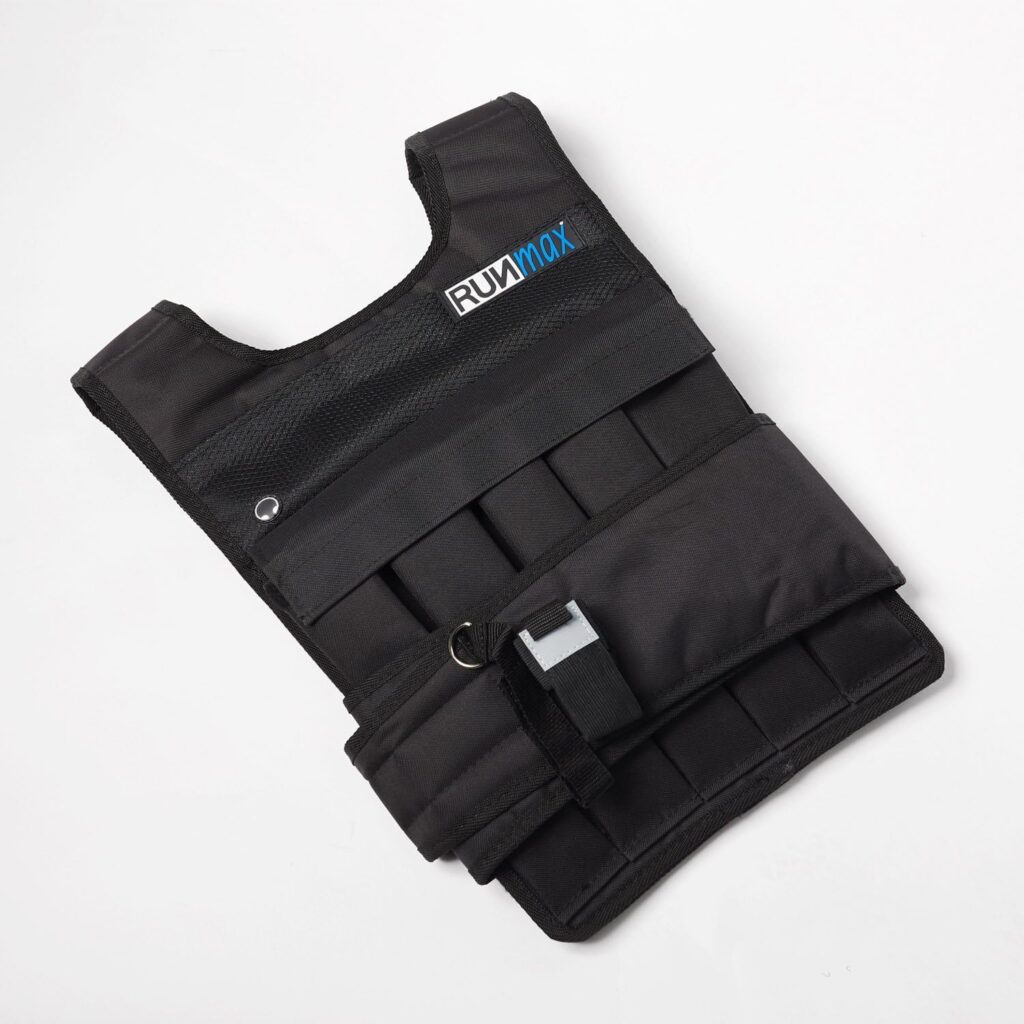
A vest’s profile is set by its weight packs, not its fabric. The clearest example here is the WICTTISPOSI adjustable vest, whose listing describes a base weight of just 0.7 lb plus twelve small removable packs that scale the total to either 12.7 lb or 18 lb depending on the variant. Start that light and the vest itself is barely thicker than a garment, unloaded or lightly loaded. At the opposite end, a fixed-weight design such as the APEXUP 15 lb vest carries its entire load in one permanent layer, which is simpler to manage but presents a uniformly thicker silhouette from the first pound.
Even weight, no lumps
How the filler is packaged matters as much as how much of it there is. Iron sand and steel shot spread flatter than hard blocks, which is why most listings in this group specify them. The APEXUP 4–10/12–18/20–32 lb model pairs a base self-weight with six iron-sand bags, and the UOPON 6–12 lb vest uses six 1 lb packs in a soft neoprene shell. The WICTTISPOSI goes further and fills its packs with steel shot rather than iron sand, a choice its listing ties to less fine dust leakage and less sweat odor buildup, details that matter more against your clothing than over it.
Fit hardware that keeps it close
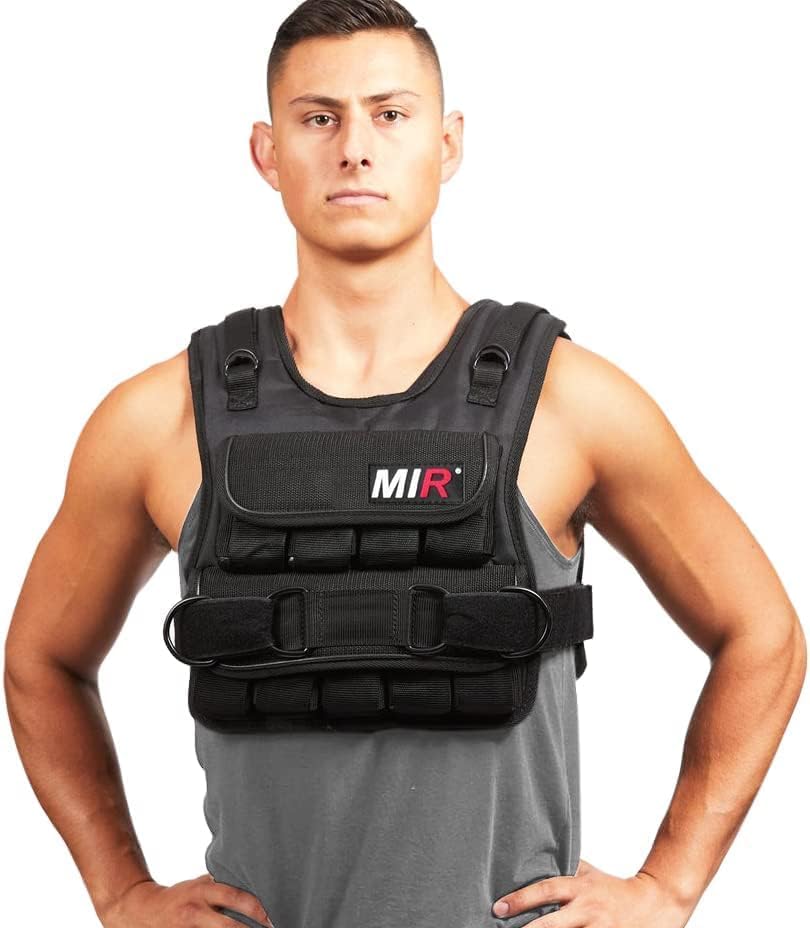
A vest that hangs away from your body will show and shift, so adjustability is the discreet wearer’s best friend. The WICTTISPOSI uses six adjustable buckle straps across the chest and side waist to pull the fit in. The TB3C vest combines double buckles with elasticated webbing to stay snug during movement, and the Atybo adds adjustable side straps plus thickened shoulder pads so the load does not chafe. The UOPON takes a different route: an X-shaped wrap designed to hug a female torso, with a clip closure to lock it in. More adjustment points generally mean a flatter, more personal fit under a layer.
How to choose one you can actually wear out the door
Start lighter than you think
It is tempting to buy your target weight up front, but under clothes, extra weight means extra thickness. The adjustable designs here let you begin small and climb: the UOPON starts at 6 lb and steps up in single pounds to 12 lb, and its listing positions that range for women building walking routines, including bone-density-focused ones. The WICTTISPOSI’s 0.7 lb base is the gentlest entry in this group. One practical rule: pick a vest whose lightest usable setting still feels almost too easy, then add load as the vest stops feeling like anything at all. If you are adding weight for bone or joint health rather than fitness, that is worth a quick conversation with your doctor first.
Match it to your frame
Fit guidance is rare in this category, which makes the UOPON listing’s published sizing window genuinely useful: it recommends the vest for busts of 35–45 inches, body weights of 110–130 lb, and heights under 5’5″. If you fall outside a published window like that, lean on strap adjustability instead — the six-point system on the WICTTISPOSI or the side straps on the Atybo exist precisely to adapt one vest to many bodies. The three-range designs (APEXUP, TB3C, Atybo each sell the same shell in ascending weight ranges) also let you buy the range that matches your build rather than one-size-fits-all hardware.
Fabric, sweat, and odor
Most vests in this group use soft neoprene precisely because it flexes and breathes against the body — the APEXUP, TB3C, UOPON, and Atybo listings all lean on it. The Atybo adds 360° airflow channels and an anti-odor lining, aimed at the sticky, smelly vest problem its listing names outright. The WICTTISPOSI attacks the same problem structurally with an open-back design that moves air across your back, and it is the one vest here whose listing documents washing: the shell is hand-washable and air-dried once the weight packs are removed, though the packs themselves are not washable.
Pockets: useful outside, awkward underneath
Storage is a genuine dividing line for under-clothes wear. The APEXUP adjustable vest carries a large mesh pocket on the front, the TB3C puts mesh pockets on the back, and the WICTTISPOSI includes a detachable arm pocket. Over your clothes, a phone in a pocket is convenient; under them, it is a visible rectangle. If discretion is the goal, either empty the pockets before you layer up or treat pocket placement as a tiebreaker between otherwise similar vests.
Wearing it through a normal day
The listings for all six vests converge on the same everyday activities — walking, errands, light housework, yoga, and easy strength work — which is exactly the use case the under-clothes question comes from. A realistic pattern looks like this: put the vest on over a thin base layer in the morning, add a loose overshirt or jacket on top, and go about walks, chores, or a desk day with the load quietly in place. Reflective strips, standard on every vest here, are a safety feature for early-morning or evening walks; just remember they hide under an outer layer, so on dark walks you still want visible gear on top.
Two habits make the routine sustainable. First, keep sessions short when you start — a vest that feels fine for a thirty-minute walk can feel different by hour three. Second, adjust the straps whenever you change clothing layers; a fit tuned over a t-shirt will gap over a hoodie, and a gapping vest is a visible vest.
The six options at a glance
FitGearPilot’s links to retailer listings, including the ones below, are affiliate links: if you buy through them, we may earn a commission at no extra cost to you. Each internal link goes to our own product page with the full spec sheet.
| Vest | Weight range | Standout trait for under-clothes wear |
|---|---|---|
| APEXUP Adjustable Weighted Vest, 4-10lb/12-18lb/20-32lb Vest with 6 Ironsand Weights and Large Pocket, Weight Vest for Men Women Strength Training, Running, Walking | 4–10, 12–18, or 20–32 lb | Base weight plus six iron-sand bags in soft neoprene, with reflective straps; check the listing on Amazon |
| APEXUP Weighted Vest Men Women, Weight Vest for Women Workout Equipment for Strength Training Running | 15 lb fixed | One-piece simplicity with padded straps, a waist belt, and a quick clip system; see it on Amazon |
| Adjustable Weighted Vest Woman, 4-10/11-20/20-30 LB Weight Vest for Women | 4–10, 11–20, or 20–30 lb | Padded shoulders, double buckles with elasticated webbing, and storage moved to the back; check today’s Amazon listing |
| Adjustable Weighted Vest Women, 6-12 Lb Ruck Vest with 6 Ironsand weights | 6–12 lb | X-shaped female-specific wrap with a published bust, weight, and height window; view it on Amazon |
| Adjustable Weighted Vest for Women Men, 0.7-12/0.7-18 lb Ultra-Light Start | 0.7–12.7 or 0.7–18 lb | Lightest starting point here, six-point straps, an open back, and a washable shell; see Amazon’s listing |
| Adjustable Weighted Vest for Women and Men, 4-11lb/11-18lb/20-32lb Vest | 4–11, 11–18, or 20–32 lb | Comfort-first details: thickened shoulder pads, side straps, 360° airflow, anti-odor lining; check it on Amazon |
Treat the table as a trade-off menu rather than a ranking. Each design gives up something different for its strengths, and the right pick is the single trade-off you can live with most comfortably under your own wardrobe.
Common mistakes
- Ignoring published fit windows. The UOPON’s stated bust, weight, and height range exists because a vest sized for one torso will gap or bind on another. Check any stated ranges before buying, not after.
- Buying the wrong shell range for discreet use. The multi-range listings are distinct configurations, not colors: the discreet use case lives at the low ranges, and a vest bought for a 30 lb ceiling brings hardware sized for that ceiling before you have added a single pack.
- Checking the fit only while standing still. A vest that lies flat in the mirror can gap the moment you stride or reach. Tighten until it stays put during a brisk walk around the room, then re-check after you layer up.
A quick decision checklist
- Base weight at or near the lightest setting you would actually wear out of the house
- Thin, removable weight packs rather than one thick fixed slab
- At least two strap adjustment points, more if you fall between standard sizes
- Breathable fabric, with airflow features (open back, anti-odor lining) for wear beyond an hour
- Published fit guidance that includes your measurements, or enough straps to compensate
- Front pockets you can live without, or storage placed elsewhere
- A care routine you will follow, with removable packs
Frequently asked questions
Will a weighted vest show under a fitted top?
Usually yes at heavier settings, and rarely at light ones. The listings here suggest the practical ceiling for invisibility sits at the light end of each range — single-digit loads in thin packs lie close to the body, while any vest approaches visibility as its packs stack up. Loose layers cover the difference.
How heavy should an under-clothes vest be?
Light enough that you forget it during normal movement. The two designs aimed specifically at discreet, all-day wear start at 0.7 lb (WICTTISPOSI) and 6 lb (UOPON), and both climb gradually from there. Treat the lowest comfortable setting as your baseline and add a pound at a time.
Can you wear one all day?
The listings market these vests for exactly that — walking, housework, desk time — and features like the open-back construction and anti-odor lining exist to make longer wear tolerable. What the listings cannot tell you is your own tolerance, so build up: short sessions first, and take the vest off if you notice numbness, chafing, or unusual strain.
How do you wash a weighted vest?
Follow each product’s care instructions. The WICTTISPOSI is the one in this group with documented washing: remove the weight packs, hand wash the shell, and air dry — the packs themselves stay out of the water. For the neoprene vests without documented washing instructions, spot cleaning and air drying is the safe default.
Where to go next
If you want a broader picture of the category before committing, our best weighted vest for women guide compares vest types across training goals, and the Women weighted vest guidance hub collects every article in this series, including fit guides and usage breakdowns for the models above.