
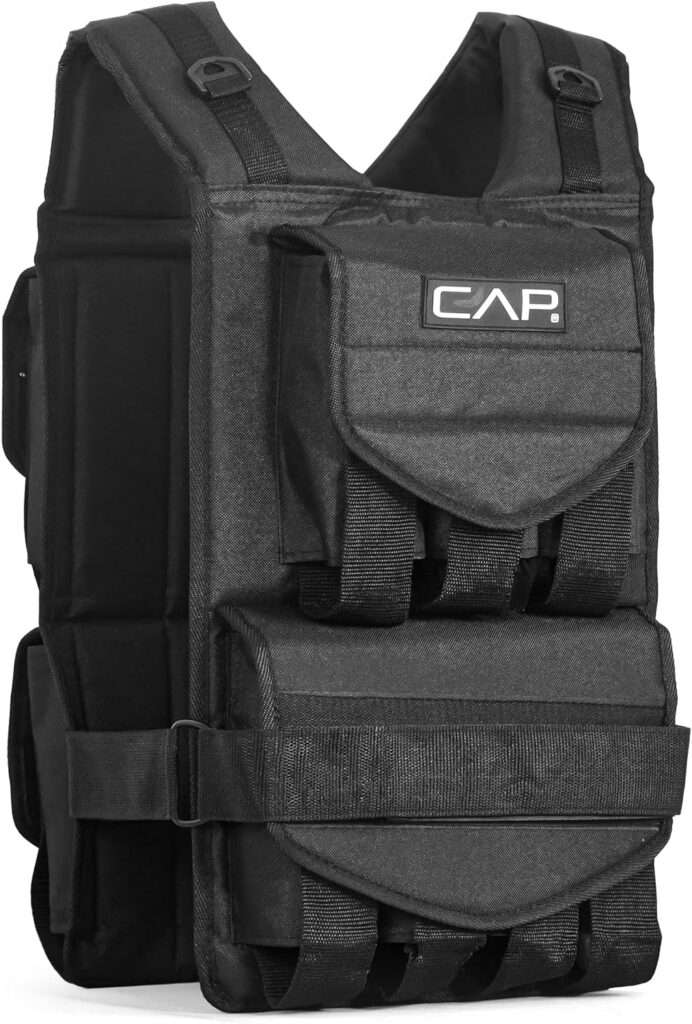
This CAP adjustable weighted vest review compares two specific configurations from the supplied product records: the 60 lb version and the 80 lb version. Both use removable 4 lb packets filled with iron ore fines, an adjustable waist belt, padded shoulders, hook-and-loop closure, and similar listed materials.
The important difference is capacity. The 60 lb configuration is documented with 15 weight packets and the 80 lb configuration with 20. FitGearPilot has not worn, weighed, or movement-tested either vest, so this review focuses on the specifications the source supports and the details still worth checking before purchase.
Disclosure: FitGearPilot may earn a commission if you buy through an affiliate link in this article.
Quick comparison
| Specification | 60 lb variant | 80 lb variant |
|---|---|---|
| ASIN | B015XUL8UC | B015XTXYJG |
| Model | HHWV-CB060 | HHWV-CB080 |
| Selected size/style | 60-Pound / 60lbs | 80-Pound / 80lbs |
| Advertised range | 4–60 lbs | 4–80 lbs |
| Weight packet | 4 lb iron-ore-fines packet | 4 lb iron-ore-fines packet |
| Listed packet count | 15 | 20 |
| Materials | Nylon and polyester | Nylon and polyester |
| Closure | Hook and loop | Hook and loop |
| Fit features | Adjustable waist belt, padded shoulders | Adjustable waist belt, padded shoulders |
| Other listed features | Reflective striping, parachute-training anchor hooks | Reflective striping, parachute-training anchor hooks |
The broad “20–150 lbs” wording used in the product-family titles should not be read as the adjustment range of either reviewed configuration. The supplied records give the selected 60 lb version a 4–60 lb range and the selected 80 lb version a 4–80 lb range.
60 lb configuration: what the source says
The 60-Pound version is identified by ASIN B015XUL8UC and model HHWV-CB060. Its listing states 15 packets, each containing 4 lb of iron ore fines. Fifteen packets at 4 lb each equal 60 lb of listed packet weight.
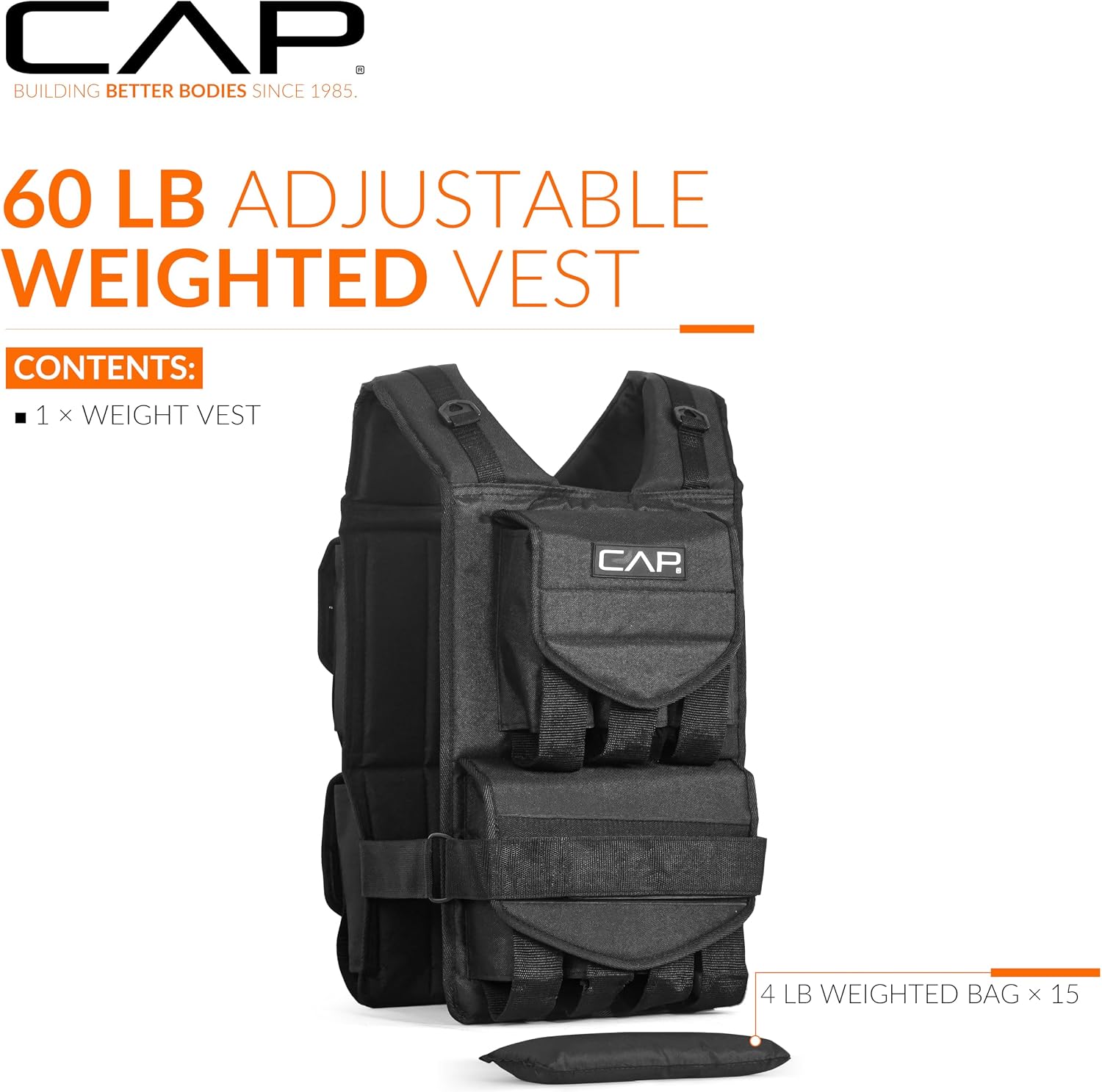
The record also describes the same adjustable waist belt, padded shoulders, reflective striping, nylon/polyester construction, and hook-and-loop closure found in the 80 lb listing. On the supplied evidence, its main distinction is the lower documented capacity and lower packet count.
80 lb configuration: what changes
The 80-Pound version is identified by ASIN B015XTXYJG and model HHWV-CB080. Its listing states 20 packets at 4 lb each, which equals 80 lb of listed packet weight.
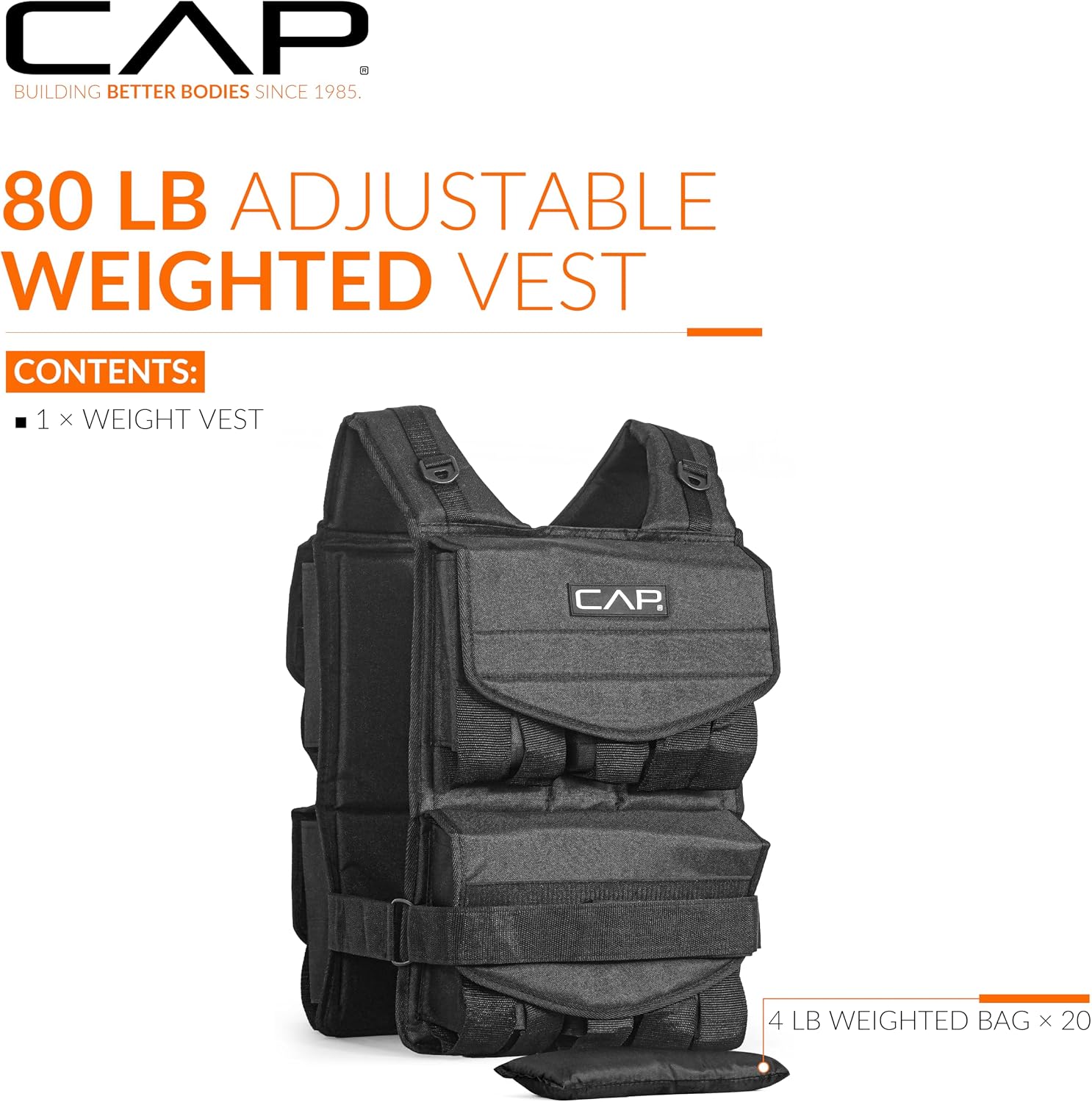
The supported capacity difference is therefore straightforward: the 80 lb listing adds five 4 lb packets and raises the stated maximum by 20 lb. The records do not document upgraded shoulder padding, a different closure system, or a separate fabric specification for the 80 lb version.
How the loading system should be interpreted
The packet system is the clearest practical feature in both records. Each packet is listed at 4 lb, which makes the arithmetic transparent: 15 packets equal 60 lb and 20 packets equal 80 lb.
What the source does not explain is how the empty vest itself relates to the advertised 4–60 lb and 4–80 lb ranges. A fabric shell and hardware have some physical weight, but the records do not state that empty weight or explain whether the published range refers to packet load, total worn weight, or another convention.
The listings also do not provide a complete packet-placement guide in the supplied record. If you plan to use fewer than the full set of packets, review the current manufacturer loading instructions so the weight is installed as intended.
Fit: one gallery image provides dimensions, but not a body-size range
The original product text does not provide a chest or waist range. However, one supplied gallery image does give physical vest dimensions: it labels an approximately 46-inch overall span, an 11-inch side height, and a 6.75-inch opening height.

That corrects an important gap in the text-only specifications, but it still does not tell you which body measurements fit comfortably. The adjustable waist belt is a relevant feature, yet the source does not provide its minimum or maximum circumference.
Before ordering, compare the current manufacturer sizing information with your own measurements and intended clothing layers. Do not treat the 60 lb or 80 lb capacity label as a size designation.
Padding, closure, and movement claims
Both variants list padded shoulders and hook-and-loop closure. The seller also uses language about even weight distribution, reduced shifting, stability, and a bounce-free feel. Those claims describe the intended benefit of the design, but the supplied records contain no FitGearPilot walking test, pressure measurement, or movement analysis.
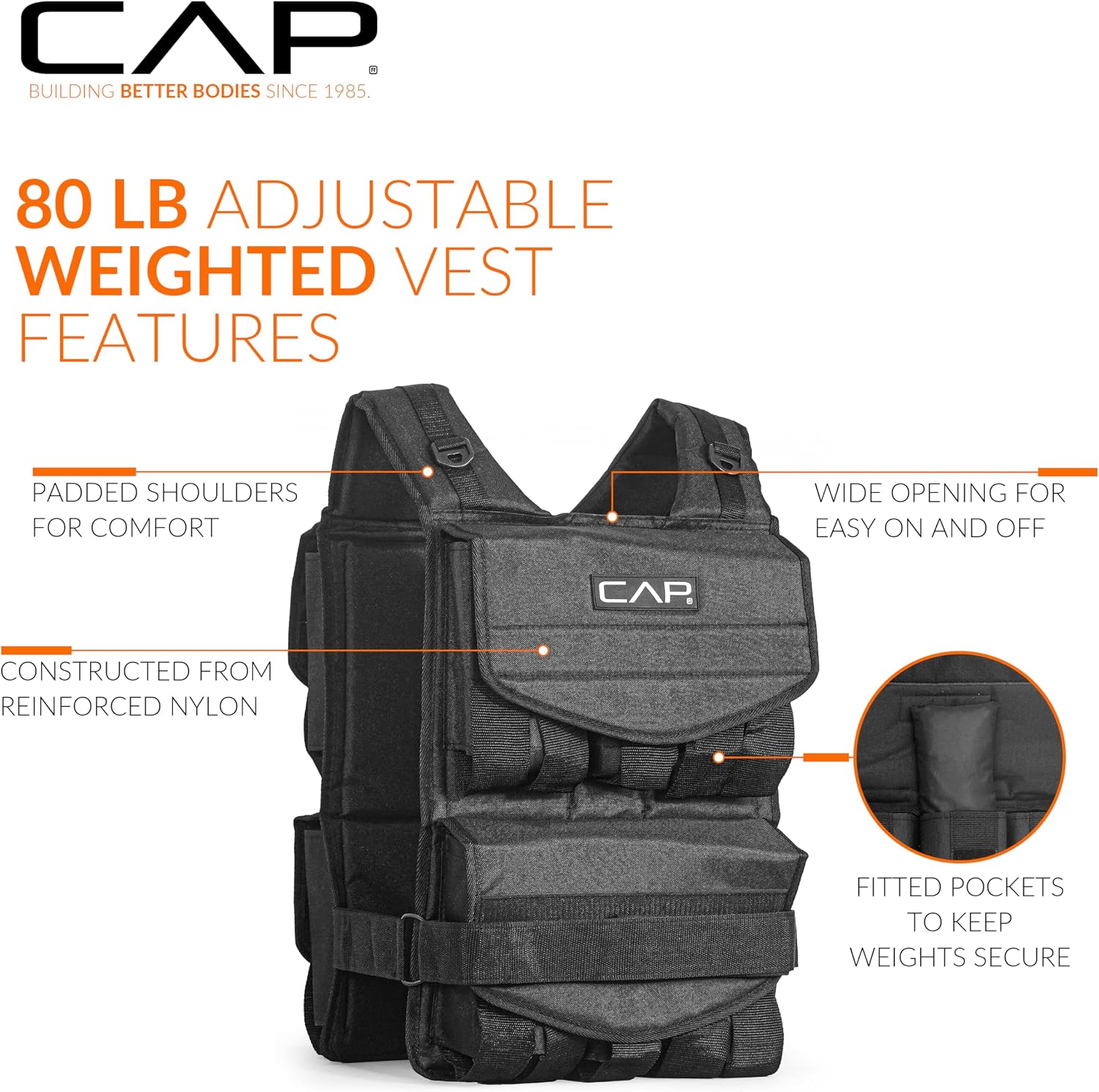
For walking, the most useful questions are whether the waist adjustment reaches your preferred fit, whether the shoulders sit comfortably at the selected load, and how securely the packets remain positioned over repeated movement. The listing features are relevant to those questions without answering them completely.
Walking use, reflective striping, and anchor hooks
Walking is included among the recommended uses for both variants, alongside running, resistance training, and general workouts. That supports considering the CAP vest for walking but does not establish an ideal load, route, or wear duration for an individual.
Reflective striping is listed on both variants. Its presence can be noted, but the source provides no visibility distance or standardized reflectivity testing. The parachute-training anchor hooks are also documented features, although the supplied records do not show that a parachute or other attachment is included.
For broader walking-focused comparisons, see FitGearPilot’s Walking weighted vest guidance.
Materials, care, and warranty details
Both variants list nylon and polyester, and the seller describes reinforced construction. The source does not provide abrasion testing, seam-strength data, or long-term observations of the hook-and-loop closure and weight pockets.
Care instructions are not supplied in the extracted records. If washing, drying, or packet replacement matters to you, confirm the current manufacturer guidance before purchase rather than assuming the vest is machine washable or water resistant.
The 60 lb record includes the brief wording “30 day manufacturer,” while the 80 lb record says “30 Day Warranty.” Neither entry defines coverage, exclusions, or the claims process. Those snippets should not be treated as a retailer return policy.
What to verify before buying
- Exact variant: match the selected weight, model number, and ASIN rather than relying on the broad 20–150 lbs family title.
- Loading instructions: confirm how packets should be distributed when using less than the full set.
- Fit: use the current body-size guidance in addition to the gallery’s vest dimensions.
- Empty vest weight: confirm how the shell weight relates to the advertised 4–60 lb or 4–80 lb range.
- Ownership details: verify care instructions, replacement-packet availability, and warranty terms.
- Current offer: check live price, currency, stock, shipping, and returns before checkout.
Verdict
The CAP Adjustable Weighted Vest is documented as the same basic adjustable packet system in two reviewed capacities. The 60 lb version uses 15 listed 4 lb packets; the 80 lb version uses 20. The higher-capacity model therefore gives you 20 lb more stated loading capacity, but the supplied evidence does not show a separate comfort, materials, or closure advantage.
The most useful correction to the original text is that the product gallery does provide vest dimensions—46 inches across the overall span, 11 inches at the side height, and a 6.75-inch opening height—even though a body-size range is still missing. Capacity is therefore the clearest documented difference; fit still needs to be checked separately.
FitGearPilot maintains separate product reference pages for the CAP 60 lb configuration and the CAP 80 lb configuration.
Check the current CAP 60 lb listing on Amazon or check the current CAP 80 lb listing on Amazon.
Frequently asked questions
What is the difference between the 60 lb and 80 lb CAP variants?
The supplied records show the same basic materials, closure type, adjustable waist belt, padded shoulders, and 4 lb packet system. The 60 lb version lists 15 packets; the 80 lb version lists 20.
Do the packet counts match the advertised capacities?
Yes. Fifteen 4 lb packets equal 60 lb, while twenty 4 lb packets equal 80 lb. The source does not explain how empty vest weight relates to the published 4–60 lb and 4–80 lb ranges.
Does the source provide vest dimensions?
Yes. One supplied gallery image labels a 46-inch overall span, 11-inch side height, and 6.75-inch opening height. Those measurements are product dimensions, not a body-size chart.
Has FitGearPilot tested either CAP vest for walking comfort or bounce?
No. The records contain seller claims about stability and comfort, but FitGearPilot has not performed a hands-on walking, bounce, or durability test of either reviewed configuration.

