
Finding the best weighted vest for rucking comes down to how you want to carry the load: hugging your torso in a neoprene vest, riding high in a minimalist plate carrier, or packed into a dedicated rucksack. Each style fits a different kind of walker, and every product below earns its place through a specific strength rather than a generic feature list.
This guide compares ten rucking-ready options across load style, fit, and budget, then maps each one to the walker it suits best. The short version: GORUCK’s plate-driven gear is the most rucking-dedicated, BAGAIL and EMPOWER lead on comfortable everyday wear, and Renoj and Zikopomi keep the entry simple. A quick comparison table follows, then the detailed picks, honest trade-offs, a buyer’s guide, and answers to the questions walkers ask most.
Affiliate disclosure: this guide contains affiliate links, and FitGearPilot may earn a commission on qualifying purchases at no extra cost to you.
Best Weighted Vests for Rucking at a Glance
| Pick | Style | Load setup | Best suited to |
|---|---|---|---|
| GORUCK Rucker 4.0 | Rucksack (20L) | Ruck Plates in an elevated pocket | Serious ruck training with room for gear |
| GORUCK Ruck Plate Carrier 3.0 | Plate carrier | 10, 20, or 30 lb Standard Ruck Plates (sold separately) | Minimal loads, chest-free movement |
| BAGAIL Comfort-Fit Vest | Neoprene vest (women) | 5-30 lb | Comfort-first walking and running |
| Zikopomi Weighted Vest | Neoprene vest (unisex) | 6-30 lb fixed sizes | Simple, budget-friendly training |
| EMPOWER Weighted Vest | Contoured vest (women) | Fixed 8 lb; 4-10 or 10-16 lb adjustable | Weight-bearing walking for women |
| BAGAIL Adjustable Vest | Adjustable vest (women) | 4-32 lb across three versions | Gradual progression from a 4 lb base |
| Renoj Weighted Vest | Fixed-weight vest (unisex) | 6-20 lb fixed variants | Pick-one-weight simplicity |
| UOPON Adjustable Ruck Vest | Adjustable vest (women) | 6-12 lb | Petite-frame walking comfort |
| Achilles Rucking Weighted Vest | Training vest (men) | Fixed 20 lb | Hard sessions, Murph prep, stair climbs |
| ONETWOFIT Adjustable Vest | Adjustable vest (men) | 2-50 lb cast iron | Wide adjustment for heavier rucking |
How These Picks Were Compared
Every option here was compared on the details that change a ruck, not the ones that fill a spec sheet: how the load is built (plates, iron sand, or steel pellets), where it sits on your body, how the design controls chafe and bounce over long miles, whether the weight can progress with your training, and the extras such as pockets, reflective strips, and handles that decide daily usability. The descriptions below come from the manufacturers’ published specifications, so read them as listing facts rather than lab results.
The Picks: Rucking Vests, Plate Carriers, and Rucksacks
GORUCK Rucker 4.0: the purpose-built rucking pack
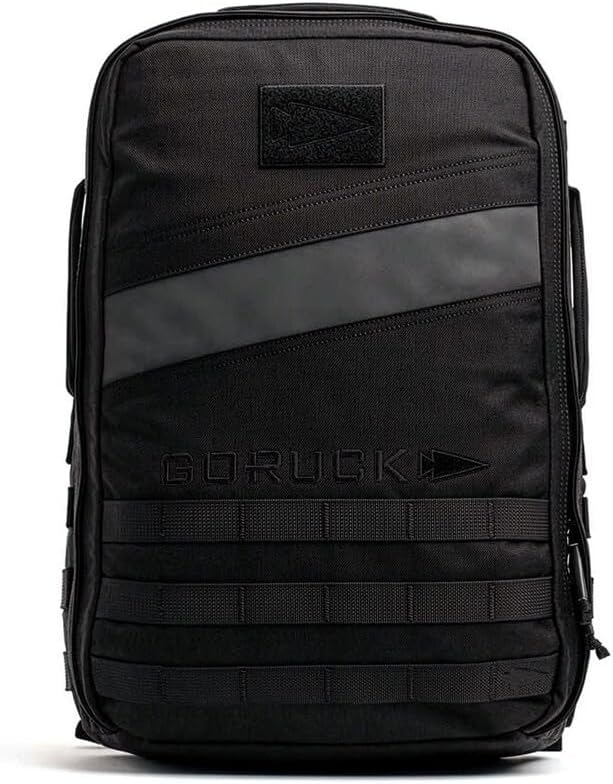
GORUCK built the Rucker 4.0 specifically for rucking, and the details agree. The elevated Ruck Plate pocket holds weight high and stable instead of letting plates slump to the bottom of the bag, and the pack scales to 75 pounds of plates, though the maker recommends starting at 20. Wide, reinforced straps pair two heat-laminated foams, one for cushioning and one for durability, while raised lumbar padding braces your lower back and a built-in frame sheet keeps the load structured. The Cordura back panel shrugs off sweat and rain, the 20-liter compartment leaves room for layers, and the pack accepts an optional hip belt. Check the GORUCK Rucker 4.0 rucking backpack or view it on Amazon.
GORUCK Ruck Plate Carrier 3.0: the minimalist plate option
The Plate Carrier 3.0 strips rucking down to the load itself, carrying a Standard Ruck Plate high on your back with none of a vest’s torso coverage. Because your chest stays open, push-ups, burpees, and running all feel natural, and the Cordura lining is smooth enough for bare skin without chewing up merino base layers. Dual-density shoulder padding absorbs impact during dynamic movement, the 1000D Cordura shell with a ballistic bottom panel and YKK zippers is built for years of abuse, and the whole thing cleans up under a hose. GORUCK backs it with its SCARS lifetime promise. See the Ruck Plate Carrier 3.0 or view it on Amazon.
BAGAIL Comfort-Fit: storage and chafe control in a women’s fit
BAGAIL’s Comfort-Fit vest is built around even weight distribution: fine iron sand fills a breathable neoprene shell that hugs the body without bouncing, and smooth-stitched edges plus upgraded straps keep chafing off the list of worries on long walks. Storage is unusually good for a vest this slim, with a detachable phone pouch that fits phones up to seven inches and a rear mesh pocket for keys or snacks, and reflective strips on the front and back cover low-light roads. The maker backs it with lifetime support. Check the BAGAIL Comfort-Fit weighted vest or view it on Amazon.
Zikopomi: the straightforward starter vest
Zikopomi’s vest covers the rucking basics without extras: double-stitched neoprene with iron-sand filling, an even-distribution design, and two adjustable elasticated straps that dial in the fit across different chest shapes. Reflective strips on the front and back handle night walks. One practical note from the maker: a new vest can carry a slight odor out of the box, so let it air out in a ventilated spot for a day or two before your first ruck. See the Zikopomi weighted rucking vest or view it on Amazon.
EMPOWER: a contoured vest designed for women’s walking
EMPOWER shaped this vest exclusively around women’s fit, with a contoured X-design, an enhanced bust fit, an open chest area, and wide padded straps plus adjustable waist straps. The fixed-weight version is deliberately simple: put it on and walk. The 4-in-1 adjustable variants add room to progress without buying a second vest. The maker positions it for weight-bearing walking: low-impact resistance that supports bone health and burns extra calories alongside your usual routes. Check the EMPOWER weighted walking vest or view it on Amazon.
BAGAIL Adjustable: small-step progression from a 4 lb base
A 4-pound base with six removable one-pound bags makes this the easiest vest to grow into: you add resistance in small steps instead of committing to a heavier shell upfront, and two larger versions extend the same design for stronger walkers. The U-neck and X-shape relieve pressure where stiffer vests dig in, a 10-inch front pocket takes a large phone, and 360-degree reflective coverage runs across the front, shoulders, and back. Like its sibling above, it carries lifetime support. See the BAGAIL adjustable rucking vest or view it on Amazon.
Renoj: pick one weight and go
Renoj sells fixed weights only, so each vest is one built-in load and the variant you choose is the one you keep. That simplicity comes with thoughtful construction: a reinforced chest panel minimizes shifting during brisk movement, a clip system cinches without restricting breathing, and double-stitched neoprene with a leak-proof liner keeps the high-density iron shot from migrating. Breathable mesh reduces sweat buildup, and storage pockets hold the essentials. Check the Renoj fixed-weight vest or view it on Amazon.

UOPON: an adjustable vest sized for petite walkers
This 6-to-12-pound vest is sized with a narrower frame in mind: the maker lists a 35-to-45-inch bust, a 110-to-130-pound body weight, and a height under 5 feet 5 inches, so check those numbers before ordering. Six one-pound ironsand packs scale the load, an X-shaped cut with soft neoprene keeps the fit secure, enlarged mesh pockets take a full-size phone, and reflective strips run across the front, shoulders, and back. The maker positions it for balance and bone-density support in walking routines. See the UOPON adjustable 6-12 lb vest or view it on Amazon.
Achilles: a fixed 20 lb training vest for men
Achilles builds its vest for hard training rather than casual strolls: a fixed 20-pound load of odorless coated steel pellets, wrapped in a 420D Robic exterior with a nylon-spandex double weave that handles sweat and abrasion. Ten-inch dual-density shoulder pads spread the load, a cummerbund releases quickly between efforts, and details such as the front patch panel, the padded grab handle, and the anti-odor, anti-rust build read like a checklist for Murph prep and stair climbs. It carries GORUCK’s SCARS lifetime guarantee. Check the Achilles rucking weighted vest or view it on Amazon.
ONETWOFIT: the widest adjustment range here
Sixteen detachable cast-iron blocks give this men’s vest the widest adjustment range in the comparison, and the metal construction avoids the damp, odor-prone sand fill of cheaper designs. Extra-thick padded straps protect shoulders under heavy loads, a durable nylon shell wicks sweat, a metal tactical buckle secures the waistbelt, and a removable logo keeps the look discreet if you ruck beyond the gym. See the 2-50 lb adjustable weighted vest or view it on Amazon.
Who Each Pick Suits
- You want the classic rucking setup with room for gear: the GORUCK Rucker 4.0 is the dedicated choice.
- You ruck with a bare chest, train on the floor, or want the lightest plate solution: the Ruck Plate Carrier 3.0.
- Your rucks are long daily walks and storage matters: the BAGAIL Comfort-Fit.
- You want a first weighted vest the whole household can share: the Zikopomi.
- You prefer resistance that needs zero setup and a design built for women: the EMPOWER.
- You want to grow your load one pound at a time: the BAGAIL Adjustable.
- You would rather choose a weight once and never think about it again: the Renoj.
- Standard vests swim on you: the UOPON is cut for petite frames.
- Your sessions look like gym class with a backpack on: the fixed 20 lb Achilles.
- You train heavy and want one vest to cover the whole journey: the ONETWOFIT.
Limitations and Trade-offs
Every style here gives something up, and the trade-offs deserve an honest read before you buy.
- Plate gear assumes you already own plates. Both GORUCK options carry their weight separately, so the true starting cost is the carrier plus the plates.
- Fixed-weight vests lock in your decision. The Renoj, the EMPOWER fixed version, and the Achilles cannot shed weight as you fatigue or grow stronger.
- Neoprene and sand-filled vests need gentle care. BAGAIL’s models are wipe-clean only, and a new Zikopomi should air out before first use.
- Sizing windows are real constraints. The UOPON in particular fits a narrow frame band, so measure before you buy rather than after.
- Budget neoprene designs top out in the low thirties of pounds. If your rucking plan climbs past that, plate gear is the honest path.
Rucking Vest Buyer’s Guide
Match the load style to your routes. Plates concentrate weight high on the back, which keeps the load steady but means buying plates; iron-sand and steel-pellet vests spread the weight around your torso in a slimmer profile that suits walking-first routines. Neither wins in the abstract; the right choice is the one that fits where and how you actually walk.
Start lighter than your ambition suggests. The manufacturer guidance in this comparison runs from a 4-pound beginner base to a 20-pound plate recommendation, which tells you there is no universal number for a weighted ruck. Pick a vest that lets you progress gradually rather than one that maxes out on day one.
Fit decides whether you finish your ruck in a good mood. Even weight distribution, padded or contoured straps, and an adjustable closure are the difference between a vest you forget you are wearing and one that chafes at mile two. If your routes touch traffic, reflective coverage is not optional.
Frequently Asked Questions
Is a weighted vest or a rucksack better for rucking?
Both work, and the difference is where the weight sits. A rucksack such as the Rucker 4.0 holds plates high against your back and adds storage for gear, a plate carrier strips the setup down to the load itself and frees your chest, and a weighted vest wraps the weight around your torso in a slim, even profile. Choose by movement style and how much gear you carry.
How heavy should a rucking vest be?
Follow the conservative end of the manufacturer guidance: GORUCK suggests a 20-pound plate start for its rucking packs, while BAGAIL’s adjustable system lets beginners begin at 4 pounds. If you are new to loaded walking, start at a weight that lets you keep your usual pace and step up slowly.
Can you run or do push-ups in a rucking vest?
Chest coverage is the deciding factor. Plate carriers leave the chest open, so floor work and running stay natural, and body-hugging neoprene vests with even distribution and no-bounce designs also handle running well. If your sessions get dynamic, look for a reinforced chest panel and a secure fit system.
How do you care for a weighted vest?
Neoprene models are wipe-clean, and BAGAIL explicitly says not to machine wash them. A new Zikopomi vest should air out for a day or two before first use. GORUCK’s Plate Carrier is the exception: with no spacer mesh to trap odor, it can simply be hosed down and hung to dry.
More Walking and Rucking Guidance
For deeper background on weighted walking, from vest basics to route ideas, the site’s walking hub collects the related guides: Walking weighted vest guidance. Rucking rewards consistency over gear upgrades, so pick the option that suits your routes today and let the miles argue for any future load. Each product above also links to its full product page for complete specifications and current availability.

