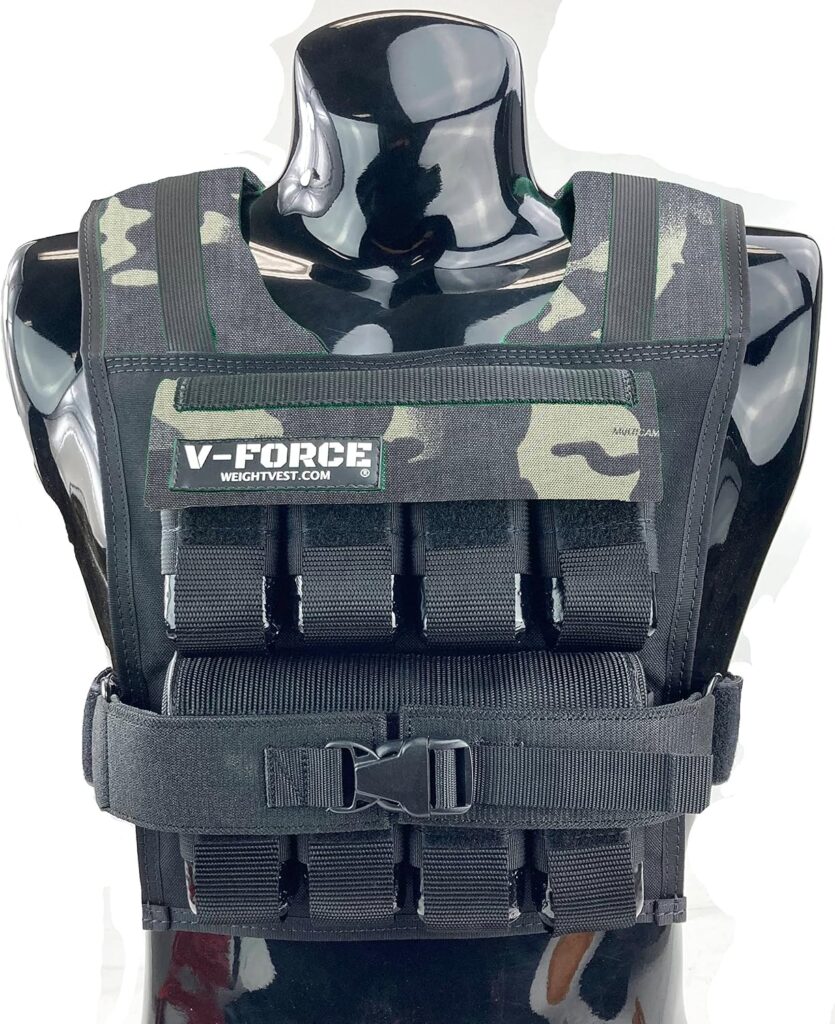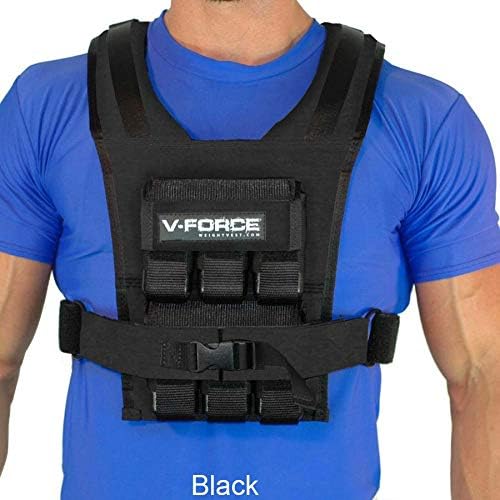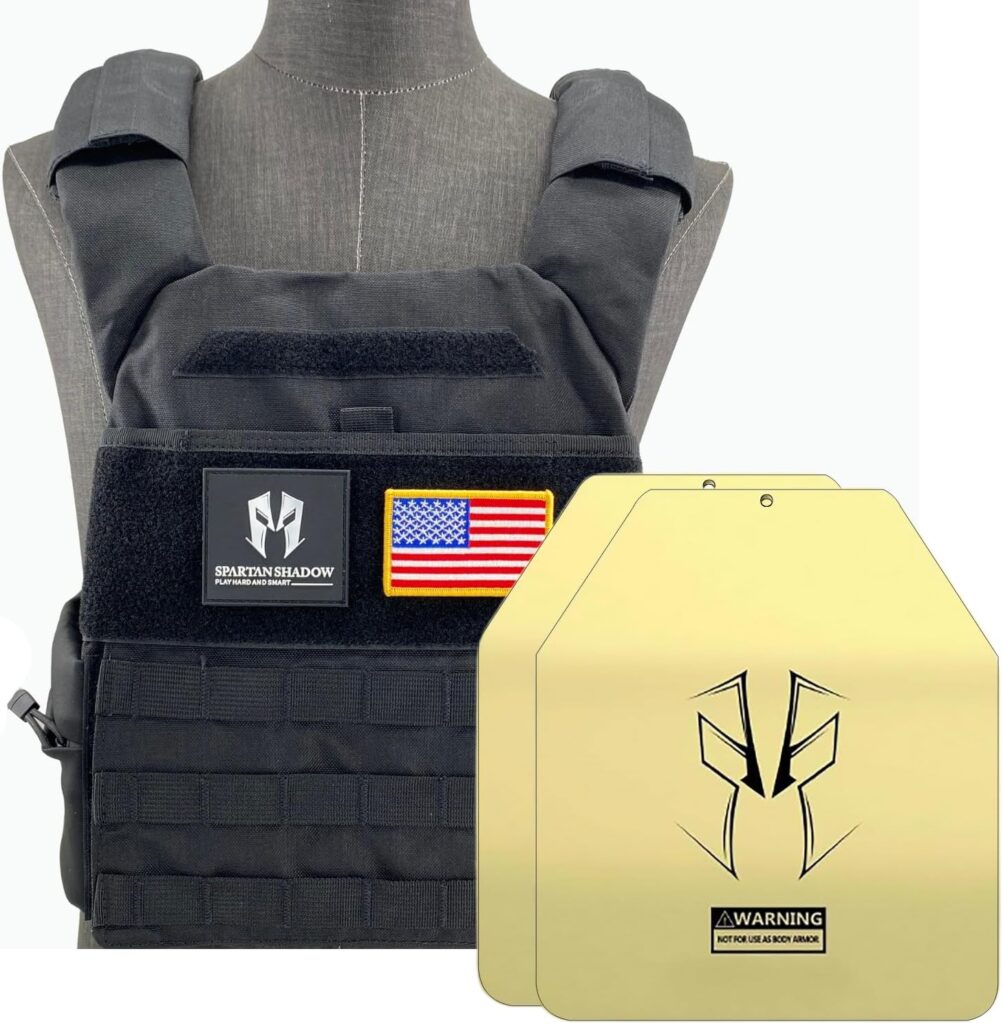
Search for crossfit vest plates and two different products hide behind the phrase: vests that already ship with plates in the box, and plates meant to slide into a carrier you already own. The distinction decides how you buy, how the load sits during a workout, and whether the vest can grow with your training. This guide untangles the terminology, then walks through the three load styles you will find under a “crossfit plate vest” listing and shows where each one fits a CrossFit-style session. Everything below sticks to what the product listings themselves state — no lab testing, no spec guessing.
The short answer: a crossfit vest plate is a shaped, contoured weight that sits in dedicated pockets on a weighted vest, holding the load compact and tight against your torso while you move. Plate-style vests are the adjustable end of the category — remove plates and the vest gets lighter. The alternatives sew the weight in as iron-sand fill or build it in as a fixed load you cannot change. Which one suits you depends on how often you want to change weight between sessions, how the vest moves during burpees and runs, and how much fitting and care you are willing to do.
Affiliate disclosure: FitGearPilot may earn a commission on purchases made through the Amazon links on this page, at no extra cost to you.
What Crossfit Vest Plates Actually Are
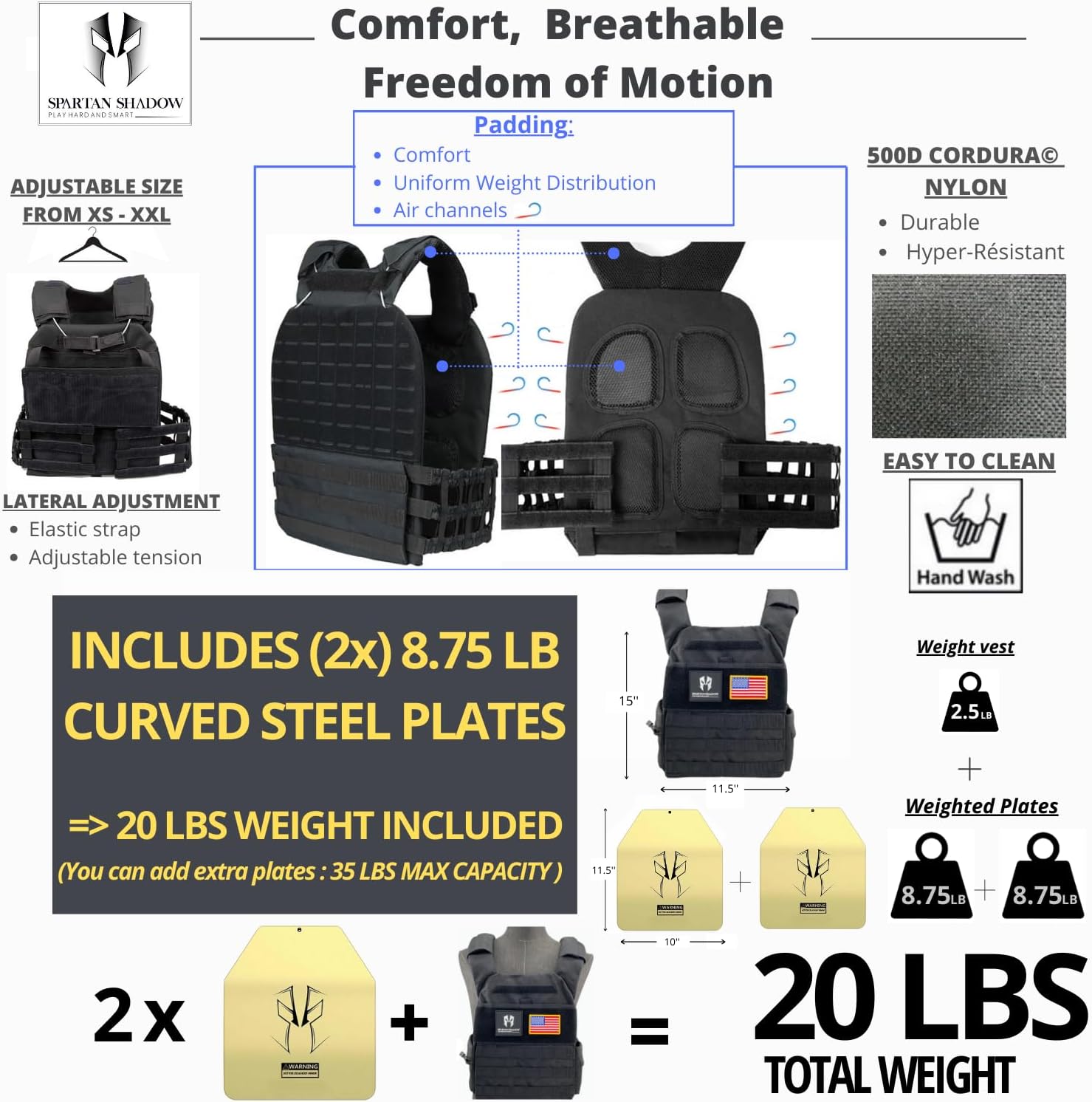
A vest plate is the weight insert for a plate-style weighted vest. Instead of sand stitched into the fabric, the vest is a shell with pockets and the plates slot in; in the plate-style listing covered here, the plates are curved to follow the chest and back. The shell is designed around the plates, not the other way round: the 20 lb vest below is cut to the size of its included plate pair, which keeps the whole rig compact and close to the body.
Two boundaries matter for the “crossfit plates for vest” search. First, not every weighted vest accepts plates: neoprene vests with sewn-in sand have no pockets, so there is nothing to add to them. Second, a plate only works with a vest whose pocket system matches it. Listings that include plates pair them with the shell at the factory, which removes the guesswork about fit.
Core Concepts: Plate-Loaded, Sand-Fill, and Fixed-Weight Vests
Plate-loaded: removable weight in a sized shell
The Spartan Shadow 20 lb curved-plate vest is the direct answer to the phrase: a 20 lb vest with a curved weight vest plate pair included, plus a phone pocket. Because the shell is adapted to the size of the plates, it is easier to handle and takes up less space during training. Padding runs across the shoulders, torso, and back for even weight distribution. The fit adjusts from XS to XL with an ergonomic elastic side strap that reduces chafing and friction, and the shell itself is washable 500D Cordura. The listing pitches the design at Murph-style workouts, WODs, running, walking, and rucking (current Amazon listing).
Sand-fill: iron sand sealed in neoprene
The BAGAIL Comfort-Fit weighted vest takes the opposite approach: fine iron sand spread inside breathable, sweat-resistant neoprene, with a body-hugging cut, upgraded straps, and smooth-stitched edges meant to prevent chafing and bounce. The range spans 5 to 30 lb depending on the configuration you order, and the load sits evenly rather than bunching at one point. A detachable phone pouch takes most phones up to 7 inches, a large rear mesh pocket carries keys or snacks, and reflective strips run across the front and back for low-light sessions (see its Amazon listing).
Fixed-weight: one sealed load, simplest decision
The Ama Divo reflective weighted vest removes the most decisions: you pick one fixed weight — 8, 12, 16, or 20 lb — and the vest is sealed as-is, with iron sand as the load. Heavy-duty adjustable buckles cover a wide range of body shapes, including plus sizes, and soft padding sits under the buckles to prevent skin irritation. Breathable neoprene with a soft mesh layer keeps airflow up, 360-degree reflective strips cover front and back, reinforced double stitching is there to stop sand leakage, and a detachable arm bag holds a large phone (Amazon listing).
How to Choose Between the Load Styles
Four checks separate the designs faster than any brand name:
- Fit system. A plate shell adjusts XS to XL through a strap; sand-fill designs lean on buckle systems with wide adjustment ranges. Where the padding sits — shoulders and back on the plate vest, under the buckles on the strap-and-buckle design — tells you where friction is handled.
- Movement profile. A shell sized to its plates keeps the load compact and high; flexible neoprene with sewn-in sand is built to hug the body and move with you, which is why both sand-fill listings above target running and walking as much as strength work.
- Extras you will actually use. Phone pocket on the plate vest, detachable pouch plus rear mesh pocket on the BAGAIL, arm bag on the Ama Divo. Reflectivity appears on both neoprene designs, which matters for road work.
- Care. The plate vest wants its plates out before a hand wash and hang dry; the sand-fill neoprene is wipe-clean only. Neither is machine washable as a unit — buy the one you will actually maintain.
Practical Examples in a Session
On a strength-biased day, the plate design earns its keep: the load sits high and compact, so squats, pulls, and carries stay balanced instead of swinging, and the shell keeps its place against the back through ground-to-stand movements.
Endurance days favor flexible fill. A vest that hugs the torso with even sand distribution is built for tempo runs, long walks, and rucking-style outings where a rigid plate would announce itself at every footfall — and the reflective strips on both neoprene designs exist for exactly those early-morning or evening miles.
For a first vest or a gift, the fixed-weight design is the low-friction entry: choose the weight once, adjust the buckles, and train. No plate handling, no fill decisions — though the load you buy is the load you keep.
Common Mistakes With Weighted Vest Plates
- Shopping by the weight number alone. The number describes the load, not how the vest carries it: plates in a shell sized to them, sand spread through neoprene, and a sealed fixed fill are different constructions, and the listings describe them differently for a reason. Read the construction before the figure on the label.
- Buying a load you cannot change. A fixed 20 lb vest cannot get lighter on recovery days, and a sealed vest cannot grow. If progression matters, the removable-plate route is the one built for it.
- Ignoring the fit range. The designs above reach their even-distribution and anti-chafe claims only when properly adjusted; an oversized vest that slides is the most common source of friction, whatever the fill.
- Defaulting to the heaviest advertised weight. Most designs here are sold across a weight range, and the top of that range is headroom, not a starting point. A vest you keep on for whole sessions does more work than one you take off after a few minutes — match the load to the sessions you actually train.
Decision Checklist
- Do you want to change the load between sessions, or set it once and forget it?
- Does the vest you are eyeing have plate pockets, or is the weight sewn in?
- Does the fit system cover your body type — strap range from XS to XL, or wide buckle adjustment?
- Where will you train: road miles that reward flexible fill and reflectivity, or strength sessions that reward a compact, high-sitting load?
- Which extras would you use — phone pocket, detachable pouch, mesh pocket, arm bag?
- Can you live with the care routine: hand wash and hang dry, or wipe-clean only?
FAQ
What is the difference between a crossfit plate vest and a regular weighted vest?
The load construction. A plate vest carries shaped, removable plates in dedicated pockets; a regular weighted vest usually sews iron sand into neoprene or seals a fixed weight into the body. The plate design can get lighter or heavier by swapping plates; the sewn and sealed designs cannot.
Can you add plates to any weighted vest?
No. Only vests built with a plate pocket system accept them — and the pocket has to match the plate. The 20 lb vest covered above ships with its curved plate pair because the shell is designed around that exact plate size; sand-fill and fixed-weight vests have no pockets at all.
What weight should you start with for CrossFit-style vest work?
The listings here span 5 to 30 lb in the sand-fill range and 8 to 20 lb in fixed weights, with the plate vest at 20 lb — so there is no single starting number. Pick a load you can move in with full range of motion and adjust from there; both the strap and buckle systems exist precisely so the fit can be tuned before the weight is.
How do you wash a weighted vest?
Follow the design. The plate vest’s instructions are to remove the plates, hand wash the shell with soap, and hang it to dry. The sand-fill neoprene designs are wipe-clean with a damp cloth only. Machine washing is not part of any of these care routines.
Related Commercial Guides
If you would rather shop than research, the site’s roundup of the best weighted vest for crossfit compares WOD-ready models side by side, and the best weighted training vest guide covers general strength and walking use. Both live inside the broader Strength Training weighted vest guidance hub, where new vest reviews and guides land as they are published.