Most weighted vests are cut for an average frame, and the problems start the moment yours isn’t: chest straps that run out of adjustment, panels that ride up over a fuller midsection, shoulder straps that dig in because the vest never sits flush. A poor fit doesn’t just feel bad. The load swings instead of moving with you, and the whole point of adding weight quietly falls apart.
Searches like “weighted vest for big guys” — and the blunter variant “weight vest for fat guys” — are asking the same practical question: will a vest fit a bigger body and stay comfortable in motion? The answer is yes, provided you shop by design details rather than brand names. Strap range, front-and-back load balance, and chafe-resistant materials decide almost everything, and you can check all three in a product listing before spending anything.
FitGearPilot is reader-supported. If you buy through links on this page, we may earn a commission at no extra cost to you. Product details in this guide come from the manufacturers’ own listings and spec sheets, not from hands-on testing.
Direct answer: the three details that decide fit
A weighted vest works on a big guy when three things hold at once:
- Strap range. Two independently adjustable straps, or one long elastic strap, let you pull the vest snug over a broader chest. A single short strap is the most common failure point on bigger frames.
- Load placement. Weight held in pockets at the front and back sits against your torso and moves with you. Weight packed toward one zone shifts as you walk and ends up pulling on your shoulders.
- Friction control. A soft, flexible shell, padding at the contact points, and finished seams are the difference between a comfortable hour and raw skin under the arms.
Three widely sold vests show what those principles look like in practice. Two follow them deliberately; one fixed-design option suits a narrower set of routines. Each is covered below with its actual listed specifications.
Core concepts: how weight should sit on a bigger torso
A vest carries load well when the weight wraps around you instead of hanging off you. Designs that split the fill between front and back panels put the mass close to your centre of gravity, so the vest moves as one piece with your body. That matters more as torso size increases, because slack in the fit gets amplified: a vest that gapes slightly on a slim runner will bounce noticeably on a broader chest.
The shell material is the second variable. Neoprene and Lycra — the two shell materials used across the vests covered here — flex with your torso and recover their shape, which keeps the panels in contact rather than gapping open. Stiffer constructions can be tolerable for standing strength work, but they tend to create pressure points once you start walking or running.
Capacity plays into fit, too. A vest that maxes out at a single fixed weight locks you into one intensity; a design that spans a range lets you start light and climb in small steps. For a bigger user, that headroom is worth more than any single feature, because the alternative is replacing gear every time your conditioning improves.
Selection guidance: how to read a listing before buying
Product pages bury the details that matter for bigger bodies under marketing copy. Work through this list in order:
- Chest strap count and length. Two straps, or explicitly long elastic webbing, give you the adjustment range a broader chest needs.
- Stated weight range. A range such as 6–30 pounds means adjustable fill; a single fixed number means one intensity, permanently.
- Fill type and distribution. Iron sand and iron pellets both appear in quality vests. What matters more is whether the listing describes even distribution across the front and back panels.
- Contact-point comfort. Shoulder pads, smooth-stitched edges, and a body-hugging cut counter the friction a larger frame amplifies.
- Storage and visibility. A phone pouch and reflective detailing earn their keep on walks and rucks, where a vest spends the most time outdoors.
- Care instructions. Some vests are wipe-clean only. That is a minor detail until the vest becomes part of your daily routine, so check before buying.
Three contextual examples from current listings
These three vests turn up in nearly every search on the topic. They illustrate the principles above; they are not ranked picks.
Henkelion 12 lb weighted vest: the fixed-weight neoprene option
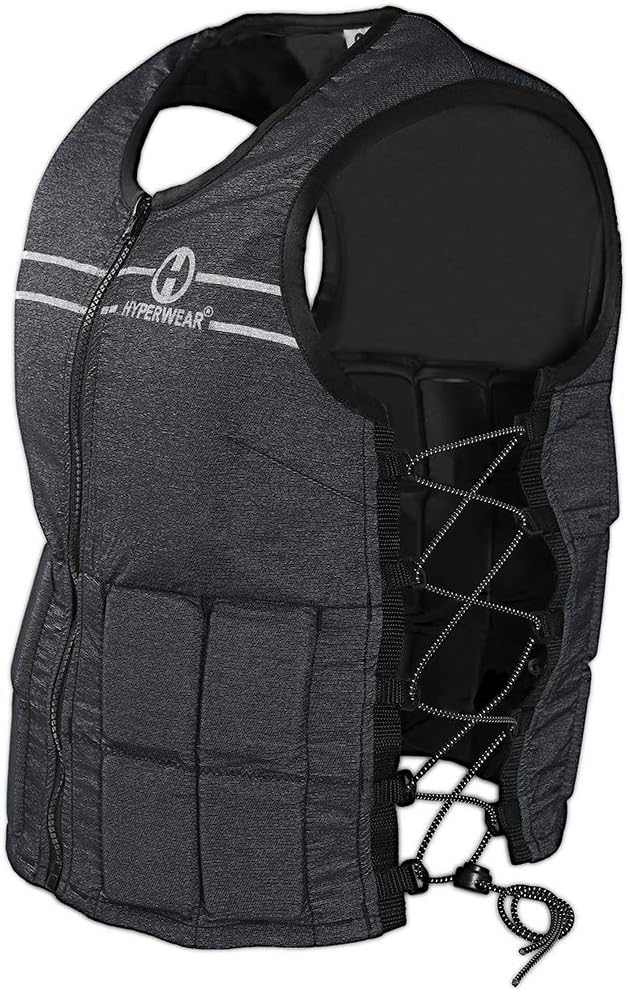
The Henkelion Weighted Vest Weight Vest for Men Women Kids Weights Included, Body Weight Vests Adjustable for Running, Training Workout, Jogging, Walking uses a soft neoprene shell filled with iron pellets and metal rock, with pockets at the front and back so the load hugs your torso. An adjustable strap is included to keep the vest from sliding mid-movement, and a mesh pocket on the back leaves room to add extra weight of your own. One qualifier matters here: the 12-pound fill is not adjustable, so the vest delivers one moderate intensity — well matched to steady walking and jogging, less so to progressive training. If that single-intensity trade-off fits your routine, you can check the Henkelion vest on Amazon.
PACEARTH weighted vest: the wide-range Lycra option
The PACEARTH Weighted Vest,6lb/8lb/10lb/12lb/16lb/20lb/25lb/30lb Weight Vest with Reflective Stripe, Body Weight Vests for Women, Men, Weight Loss Workout, Strength Training, Running, Walking, Jogging is the clearest big-guy-friendly construction of the three. Its two adjustable chest straps, which the manufacturer describes as delivering a snug fit for “a variety of body shapes”, put the strap-range principle from the direct answer into practice. The odor-free Lycra shell is skin-friendly and breathable, a pair of shoulder pads cushions the points that press hardest, and reflective stripes on the front and back improve visibility around traffic. Weight runs across eight options from 6 to 30 pounds, and an arm-strap phone pouch with an earphone opening keeps your phone close without occupying your hands. You can see the PACEARTH vest on Amazon.
BAGAIL comfort-fit weighted vest: the iron-sand body-hugger
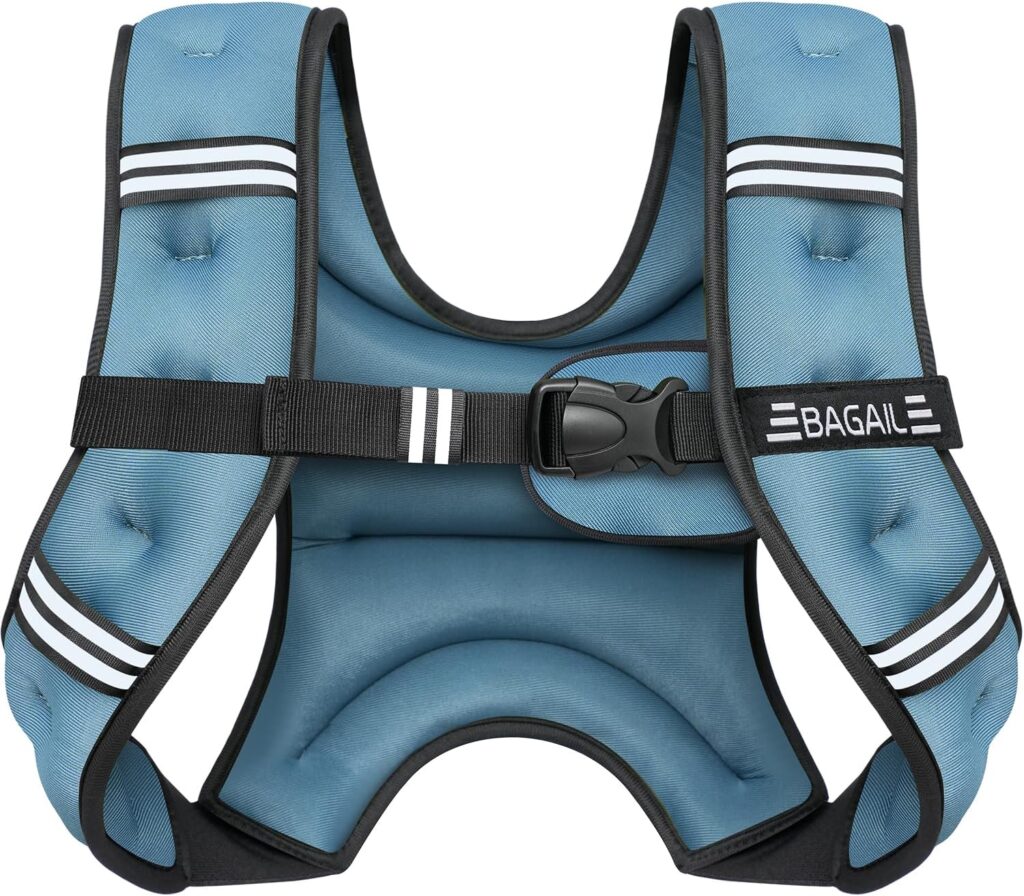
The BAGAIL Comfort-Fit Weighted Vest for Woman, Even Weight Distribution, Faster Weight Loss, No-Chafe or Bounce for Walking & Running with Detachable Phone Pouch & Reflective Stripes (Available 5-30lbs) takes a different route to the same goal: fine iron sand inside a breathable, sweat-resistant neoprene shell, which the maker says produces even weight distribution without bulk or bounce. The body-hugging cut, upgraded straps, and smooth-stitched edges attack chafing directly, with weights from 5 to 30 pounds. Storage is the standout here: a detachable phone pouch that fits most phones up to seven inches, plus a large rear mesh pocket for keys or snacks. Care is wipe-clean with a damp cloth rather than machine washing, and the listing carries a lifetime support commitment. If that mix appeals, you can view the BAGAIL vest on Amazon.
Practical examples: using a vest when you’re starting bigger
Weighted walking is the lowest-friction entry point. It needs no technique changes — you put the vest on at its lightest setting and walk your normal route — and both adjustable vests covered above begin light enough for exactly that. If you walk near roads or before dawn, use the reflective detailing these designs carry; it exists for the sessions that run later than planned.
Strength work is the second pattern. Loading basic movements — pull-ups, dips, push-ups, squats — turns familiar exercises into progression work without extra equipment, and the BAGAIL listing explicitly documents weighted pull-ups, dips, burpees, and sprints among its intended uses. Keep the first sessions conservative: the goal is letting your shoulders and trunk adapt to carrying load, not testing how much the vest can hold.
Everyday wear counts too. PACEARTH’s listing even includes housework and jogging among its recommended uses, which sounds trivial until you treat the vest as a gradual daily habit rather than a workout event. Whatever the activity, the sequence stays the same: snug fit first, light load second, longer duration third.
Common mistakes bigger buyers make
Buying a fixed weight when progression is the goal. A fixed-fill vest delivers one intensity for the life of the gear. That is workable for a steady walking routine, but if you expect to get stronger, an adjustable range saves you from buying twice.
Ignoring wear direction. Henkelion’s own listing warns that the elastic band must sit at the waist and tells buyers to check the direction of wear in the photos. Fixed-strap designs rely on that geometry for their anti-slip fit, so a vest worn upside down loses the fit it was built for. Thirty seconds with the product photos prevents it.
Judging fit by weight range alone. A wide range helps only if the strap system can hold the vest snug at every setting. The range and the straps have to be read together, which is why the checklist below puts straps first.
Skipping the care check. Wipe-clean-only maintenance surprises buyers who assume all training gear goes in the wash. If that doesn’t suit your routine, verify the care label before purchase rather than after the first spill.
Decision checklist
Run any vest you’re considering through these questions:
- Do the straps adjust far enough to close snug over your chest without pinching — ideally two independent straps?
- Is the weight held in front and back pockets and described as evenly distributed?
- Does the weight range start light enough to walk in comfortably and leave room to grow?
- Is there padding or smooth stitching at the shoulder and underarm contact points?
- Does the shell flex with your torso? Neoprene and Lycra both do.
- Will you carry a phone, and is there a pouch or pocket that fits it?
- Do you walk near traffic, and does the vest carry reflective detailing front and back?
- Are the care instructions compatible with how you actually maintain gear?
- If the vest is fixed-weight, are you content with one intensity indefinitely?
A vest that clears the first three questions will fit; the rest refine the experience.
FAQ
What weight should a bigger guy start with?
Start with the lightest setting your vest offers and keep early sessions short, adding load gradually rather than in large jumps. If you have joint, back, or cardiovascular concerns, clear added-load training with a healthcare professional before you begin — a vest multiplies the demands of whatever activity you attach it to.
Will a vest marketed for women fit a big guy?
Look past the label. What fits a broader chest is strap range and panel cut, not the gender on the listing — one vest covered above is sold largely to women yet built around two adjustable straps the maker designed to fit a variety of body shapes. Read the strap description first and the label last.
Is a fixed-weight vest ever the right call?
Yes, when one moderate intensity genuinely covers your routine, such as steady walking or jogging at a consistent pace. It becomes the wrong call the moment you want progression, because there is nothing to adjust. If you do choose fixed fill, check whether spare pockets let you add weight later; one of the vests above includes a rear mesh pocket for exactly that purpose.
Related commercial page
When you’re ready to compare ranked recommendations across the current market, our best weighted vest roundup puts the leading options side by side. For more background reading, the Blog weighted vest guidance hub collects every weighted-vest explainer on the site in one place.
Fit is the whole game with a weighted vest, and it is more controllable than it looks. Check the straps, the load placement, and the material, start lighter than feels necessary, and the vest becomes equipment you forget you’re wearing — which is exactly what it should be.