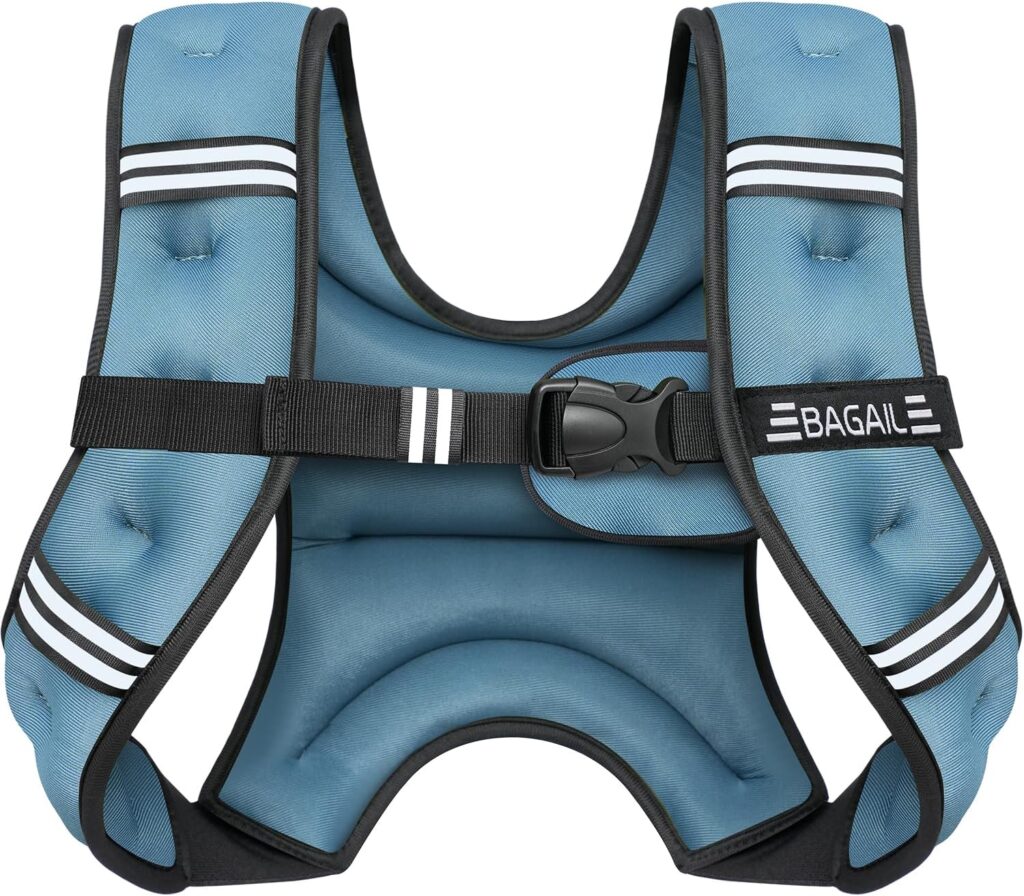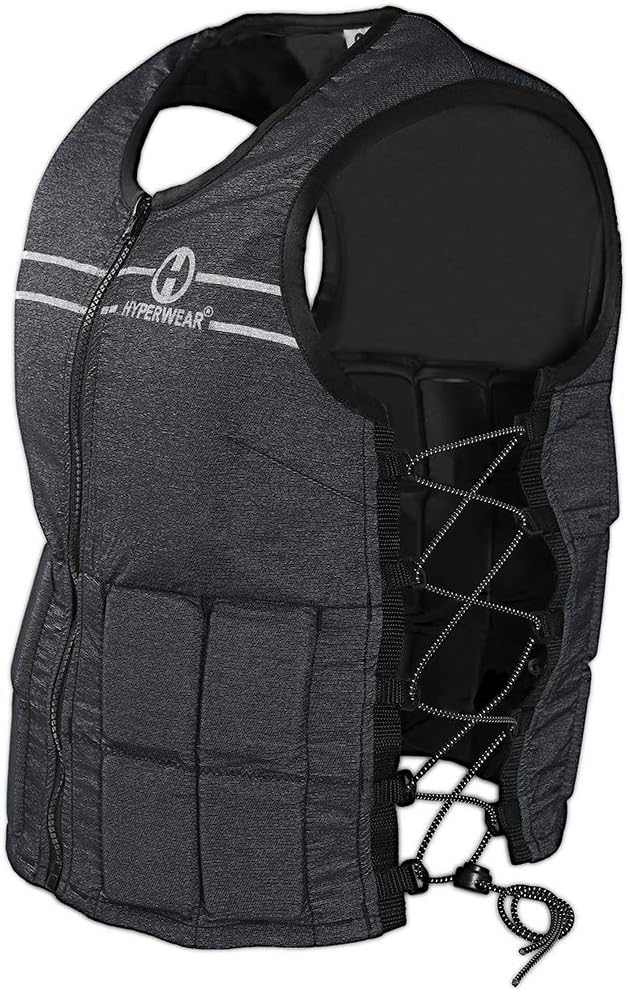
Shopping for a gymnastics power weighted vest usually means one thing: adding a small, controlled amount of load to bodyweight training – conditioning work, strength drills, and gymnastics-style movements – without strapping a rigid, heavy plate carrier to your torso. No manufacturer sells a product under that exact name, and that is the first useful thing to know. What fits the search instead is a light, close-fitting weighted vest with small weight steps: several pounds, not tens.
This guide answers the question behind the search – what such a vest actually needs to do, how the three vest lines below build and carry their load, and how to match weight range, fit, and storage to the way you train. One caveat worth stating once: every specification here comes from the product listings rather than independent testing, so treat them as manufacturer claims and confirm current details on each product page before you decide.
Affiliate disclosure: this guide contains affiliate links to Amazon. If you buy through one of them, FitGearPilot may earn a commission at no additional cost to you. Prices and ratings are listing snapshots, not live offers – always confirm the current listing before you buy.
What a gymnastics power weighted vest actually is
Strip the search phrase down and the need is specific: a vest light enough to wear through dynamic movement, with weight steps small enough that the load grows gradually. The “power” in the phrase describes how the vest gets used – adding resistance to short, dynamic bodyweight efforts rather than long steady-state runs – which is exactly the job a low-weight, snug vest is built for. In practice that means iron sand rather than rigid plates, in a shape that hugs the torso so the weight moves with you instead of swinging.
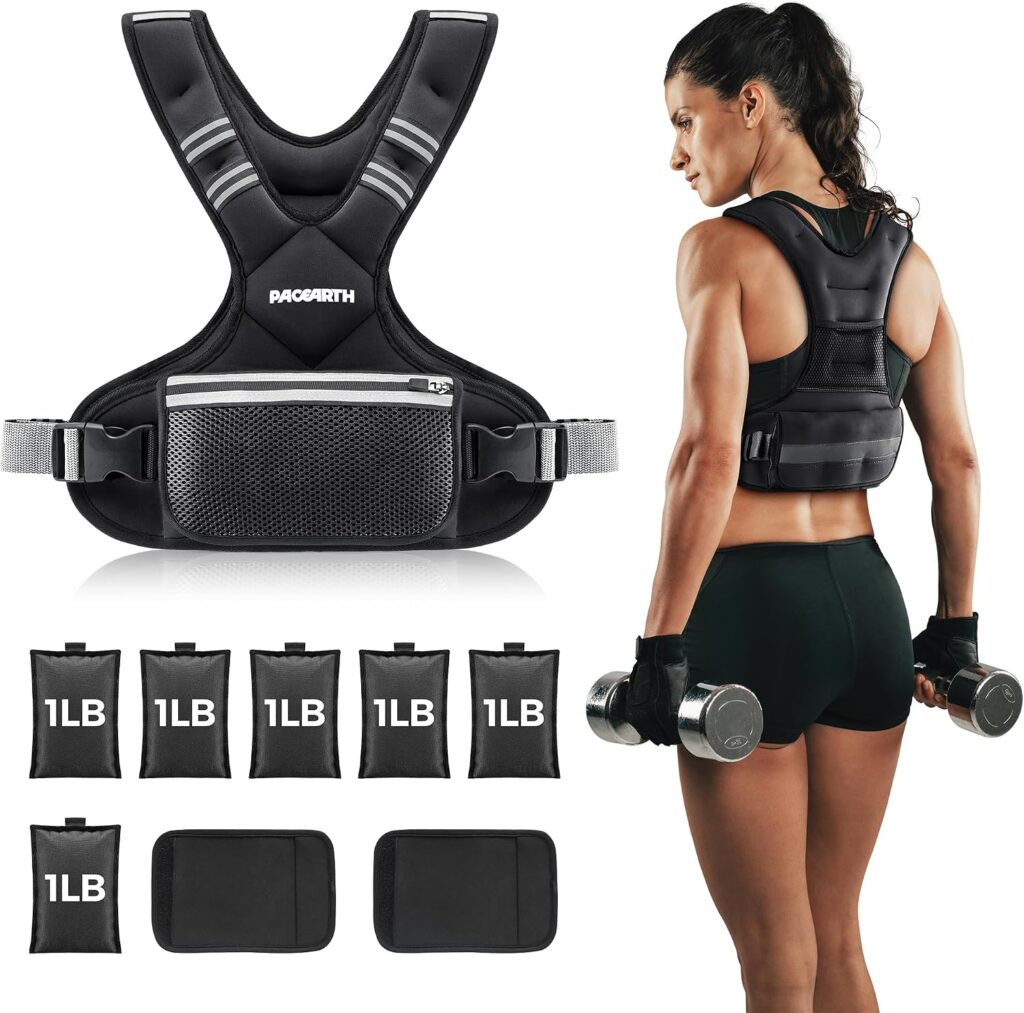
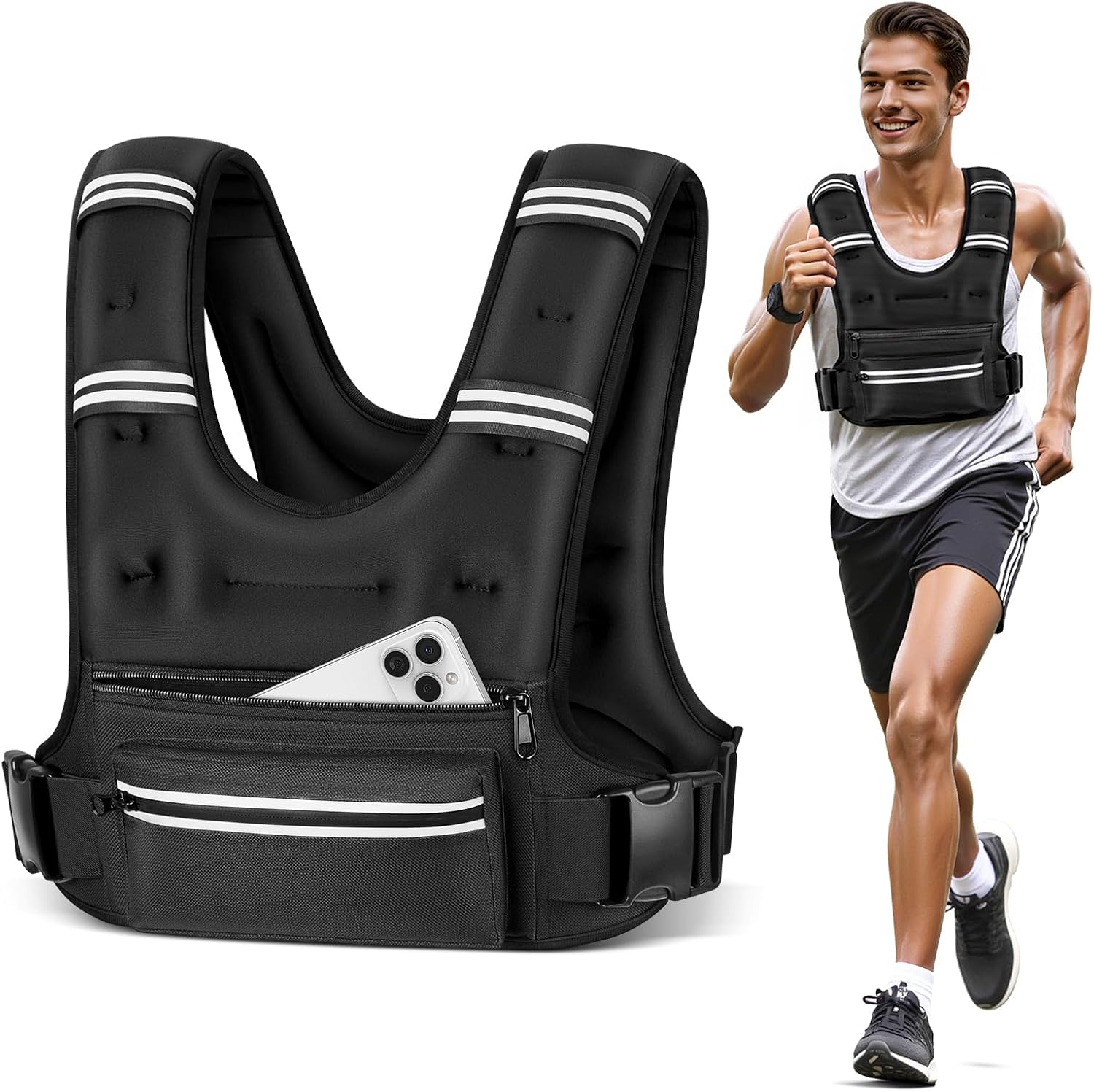
Three vest lines fit that description, and each takes a different route to it. PACEARTH builds its 4-10 lb vest around six removable 1-lb bags, so the load changes after purchase in the smallest steps of the group. Wolliwa and Mieakvool sell the same shell at sealed weights – 6 to 20 lb and 8 to 20 lb respectively – and let the straps and buckles handle the adjusting. Those choices drive everything else below.
How the load is built and carried
Two mechanical choices separate these vests: how weight is added, and how it is spread across the body.
- Weight system. PACEARTH starts at 4 lb and grows to 10 lb through six 1-lb iron sand bags, the only load here you can change without buying another vest. The Wolliwa and Mieakvool lines are fixed per size.
- Distribution. PACEARTH’s X-shaped design spreads weight over the torso, Mieakvool’s H-shaped cut shares it across the upper body so the shoulders do not carry it alone, and Wolliwa lists even weight distribution as its answer to shoulder and neck fatigue.
- Shell and fill. All three pair neoprene shells with iron sand fill, which is why they conform to the body rather than sitting like armor. PACEARTH adds double-line stitching against weight leakage and ships two shoulder pads. Mieakvool describes its neoprene as waterproof.
For movement-heavy training, the pattern that matters is a vest that stays put when you do. Every vest here answers that with a close-fitting cut and adjustable straps – design intent worth weighing, though it is not a performance guarantee.
Matching a vest to the way you train
The table compresses the decision points the listings actually settle.
| Vest | Weight options | Can you change the load? | Storage | Visibility |
|---|---|---|---|---|
| PACEARTH (4-10 lb) | 4 lb up to 10 lb | Yes – six removable 1-lb iron sand bags | Front zipper pouch | Reflective strips front, shoulders, back |
| Wolliwa (6-20 lb sizes) | 6, 8, 12, 16, 20 lb | No – pick a size; straps adjust fit only | Back mesh pocket | Reflective stripes on both sides |
| Mieakvool (8-20 lb sizes) | 8, 12, 16, 20 lb | No – pick a size | Two zippered front pockets plus a large back net pocket | Reflective strips front and back |
Fit has its own inputs. Wolliwa sizes by chest measurement and body weight and points beginners to the guidelines on its size chart, while PACEARTH’s straps are sized to fit both teens and adults, with loops that tuck the excess ends away so nothing flaps mid-drill. If you expect to outgrow light loads, the add-a-bag system is the only path that does not involve a second purchase.
Where a light vest earns its place
The listings sketch the intended settings. Wolliwa names strength training, stair climbing, walking, running, gymnastics, and calisthenics among its recommended uses; PACEARTH spans everything from yoga to light jogging; Mieakvool targets running, walking, cycling, and strength work. Three patterns follow:
- Conditioning blocks. Stair climbs and weighted walks appear across the listings and are the simplest way to add load without changing how you move.
- Strength and skill circuits. For bodyweight work in the calisthenics tradition – which Wolliwa’s listing names directly – small increments matter. Adding one pound is a nudge; jumping to a sealed 20 lb shell is a different sport.
- Outdoor sessions. Storage decides how practical the vest is away from home, and visibility decides how early or late you can train – all three vests carry reflective strips for low light.
Common mistakes to avoid
- Starting at the ceiling. Every line here begins low, and Wolliwa’s listing tells beginners to follow its size-chart guidelines and increase intensity gradually. Shop for the floor of the range, not the top.
- Buying “adjustable” without checking what adjusts. Wolliwa goes out of its way to warn that its straps adjust fit, not weights.
- Skipping the first-day routine. Mieakvool recommends airing a new vest in a ventilated space for one to two days and flopping it around so the iron sand settles evenly before the first wear.
- Sizing by feel. Chest measurement and body weight are the inputs Wolliwa specifies; guessing risks a vest that shifts mid-movement.
- Shopping on price alone. The snapshot prices run from about $15 to $26, so the receipt separates these vests far less than their weight systems do.
Gymnastics power weighted vest decision checklist
- Weight floor: 4 lb (PACEARTH), 6 lb (Wolliwa), or 8 lb (Mieakvool) – which matches where you are now?
- Growth path: removable 1-lb bags, or acceptance that moving up means another vest.
- Fit inputs: chest measurement, body weight, adjustable straps, and extras like shoulder pads.
- Distribution claim: X-shape, H-shape, or ergonomic cut – whichever the listing supports best for your movements.
- Carry needs: a single zipper pouch, zippered pockets plus a net pocket, or a simple mesh pocket.
- Training venue: reflective strips if you train outdoors early or late.
Frequently asked questions
What weight should a beginner start with?
The defensible answer is the lowest load the vest you choose offers: 4 lb in the PACEARTH system, or the smallest sealed size in the Wolliwa and Mieakvool lines. Wolliwa’s listing explicitly directs beginners to its size-chart guidelines and a gradual buildup, which is the closest thing to official guidance any of the three listings provides.
Can the straps make a vest lighter?
No. Wolliwa’s listing is explicit that the straps and buckles adjust fit, not weight – a sealed 16 lb vest stays 16 lb. Changing load after purchase is only possible with the PACEARTH’s removable 1-lb bags.
Why does a new weighted vest smell?
Iron sand fill and packaging can leave a noticeable odor out of the box. Mieakvool’s listing recommends one to two days of ventilation before the first wear, while PACEARTH treats its material with active charcoal to cut odor at the source.
Are these vests suitable for both women and men?
Yes, by listing: PACEARTH, Wolliwa, and Mieakvool all market their vests to women and men. Because two of the three shells are sealed per size, the size chart – chest and body weight – matters more than any unisex label.
Where to compare these vests in more depth
Each vest has a full product page on FitGearPilot with the current specification: the PACEARTH Adjustable Weight Vest 4-10lbs / 11-20lbs / 20-32lbs X-Shape Weighted Vest for Women and Men, Home Workout Ironsand Vest with Zipper Pouch and 6 Weight Packs, Available in Pink, Gray, Black, the Wolliwa 6lb/8lb/12lb/16lb/20Lb Weighted Vest Woman Men, and the Weighted Vests for Women Men, 8 12 16 20 lb Weighted Vest with Storage Pockets, Rucking Vest with Reflective Stripe, Adjustable Straps Weight Vest for Running, Walking, Workout, Training. If you would rather check Amazon directly, the same vests are available on the PACEARTH listing, on the Wolliwa listing, and on the Mieakvool listing.
To widen the field beyond these three, the best weighted vest comparison covers the broader market, and the Blog weighted vest guidance hub collects the rest of the site’s weighted-vest explainers.