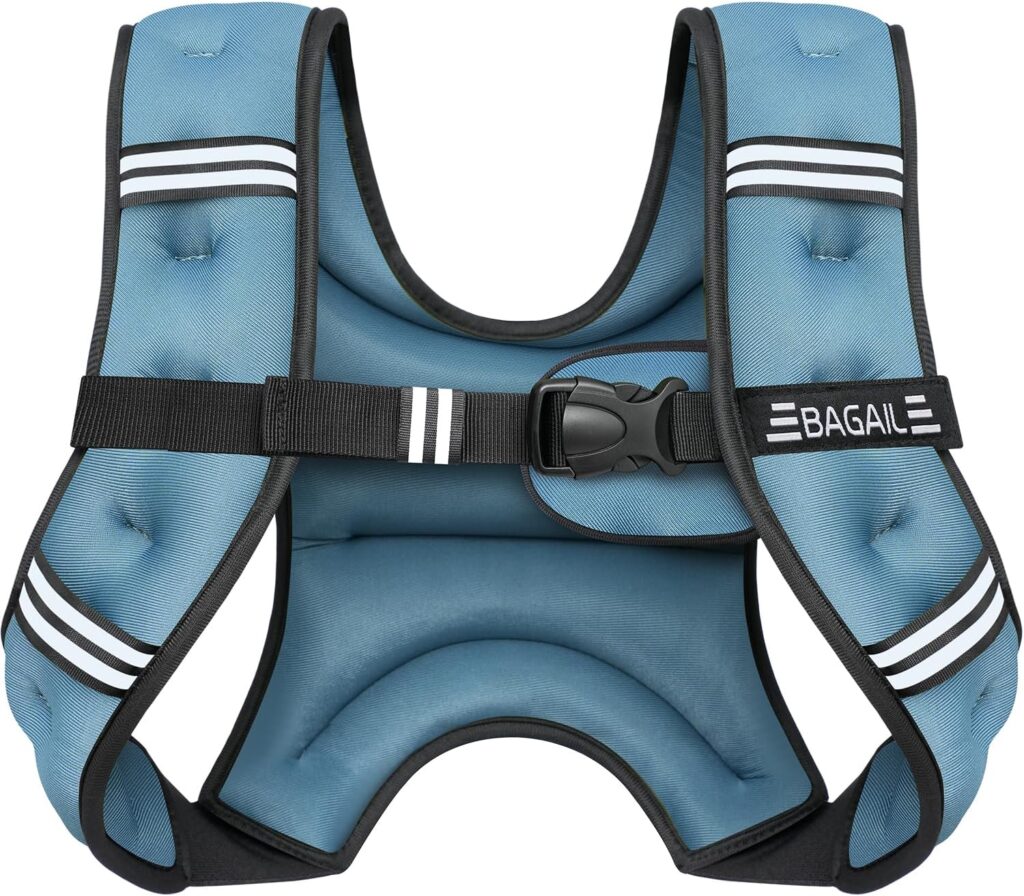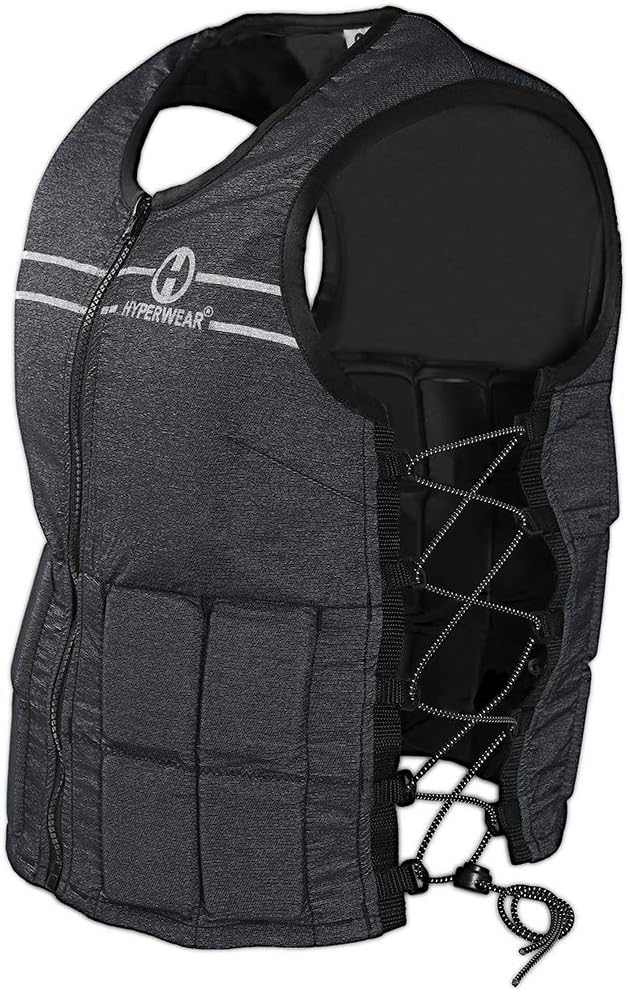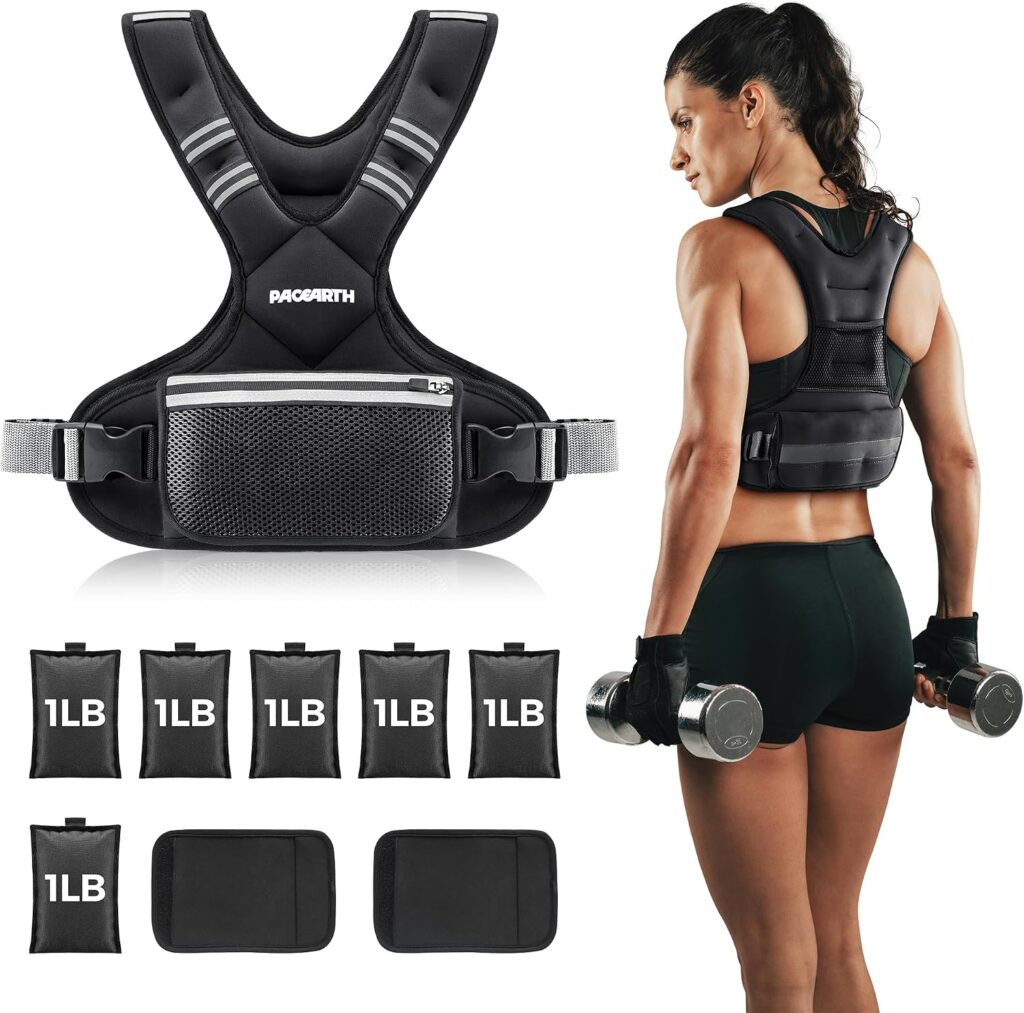
Searching for a black friday weighted vest usually means one of two things: you want a black weighted vest that disappears under clothing or stays low-key in the gym, or you are timing a purchase around the Black Friday discounts. Either way, the sale is not what makes a vest right. Weight range, adjustability, and load distribution are, and the best vest is simply the one that matches your training at a price you were already willing to pay.
Here is the short version: pick your weight class first, decide whether you want adjustable or fixed weight, and only then start comparing sale prices. Three vests cover the most common buyer brackets in this guide – PACEARTH’s light adjustable model (the 4-10 lb version covered here), Wolliwa’s mid-range adjustable line (6-20 lb range), and Amazon Basics’ simple fixed-weight option (12 lb). Each is linked to its FitGearPilot product page, so you can check the full specification before any sale banner matters.
Affiliate disclosure: this guide contains affiliate links to Amazon. If you buy through one of them, FitGearPilot may earn a commission at no additional cost to you. Prices and ratings reflect the listings as of the guide’s last update, not live offers – always confirm the current listing before you buy.
What a “black friday weighted vest” search actually covers
No manufacturer makes a vest called a Black Friday weighted vest. The deals apply to the same vests sold all year, which is why this search mixes two kinds of shoppers: those filtering by color (black hides sweat and dirt and matches everything, which is why it dominates) and those waiting for the seasonal price drop. Whoever you are, you end up comparing the same products by the same criteria.
Every difference between models traces back to a small set of design decisions:
- Weight range. How much load the vest carries, and whether that load can change after purchase.
- Adjustability. Some vests let you add or remove weight bags; others are sealed at a fixed weight.
- Fill material. Iron sand is the common choice across the models in this guide because it distributes densely and evenly.
- Shell material. Neoprene dominates because it is soft against the body and wipes clean.
- Fit system. Straps, buckles, and shoulder pads decide whether the vest stays put while you move.
- Extras. Pockets for phones and keys, and reflective strips for low-light training.
How to choose a weighted vest before the discount matters
Match the weight range to your training
Buying more weight than you need is the mistake that ruins most vest purchases. A vest you cannot move comfortably in stays in the closet, no matter what it cost on sale. Walkers, joggers, and bodyweight-circuit people live at the lower end of a vest’s range; calisthenics and strength trainers need the higher ceiling. Know which one you are before you look at prices.
This is where adjustable designs earn their keep. PACEARTH’s 4-10 lb configuration starts at 4 pounds and grows in roughly 1-pound steps through six iron-sand weight bags, so a beginner can start light and add resistance gradually. Wolliwa’s line spans 6, 8, 12, 16, and 20 lb across its sizes, which suits buyers who already know they want mid-range load. Amazon Basics keeps it simpler: a fixed 12 pounds, enough for brisk walks and circuit training, with nothing to fiddle with.
Adjustable versus fixed weight
Adjustable vests solve a real problem: six months from now, you do not know what weight you will tolerate. The price is complexity – weight bags, pouches, straps to tuck away – and a slightly bulkier build. A fixed vest is simpler, often sits lighter on the shoulders for the same nominal weight, and costs less, but it is a bet that 12 pounds (or whatever you buy) will remain useful to you.
One Wolliwa listing detail deserves special attention during sale shopping: the straps adjust, the weights do not. Whatever size you buy, that is the load you keep. Sale pages compress exactly this kind of detail, so read the size column before checkout.
Fit, distribution, and how the vest carries
Weight distribution is the difference between a vest you forget you are wearing and one that digs into your shoulders. Wide shoulder coverage and an X-shaped or cross-body load path spread the weight across the torso instead of hanging it off the traps. PACEARTH shapes its vest in an X with adjustable straps and adds two shoulder pads; Wolliwa relies on two adjustable buckle straps and even front-to-back distribution; Amazon Basics pairs adjustable straps with a structured neoprene shell that the listing describes as holding its shape during training.
Breathability matters more than most buyers expect, and all three vests answer it with neoprene – recycled neoprene on the Amazon Basics. PACEARTH’s listing adds charcoal processing for odor control and quick-drying fabric; those are listing claims rather than independent test results, but they point at the right features to weigh when you compare alternatives.
Storage and visibility
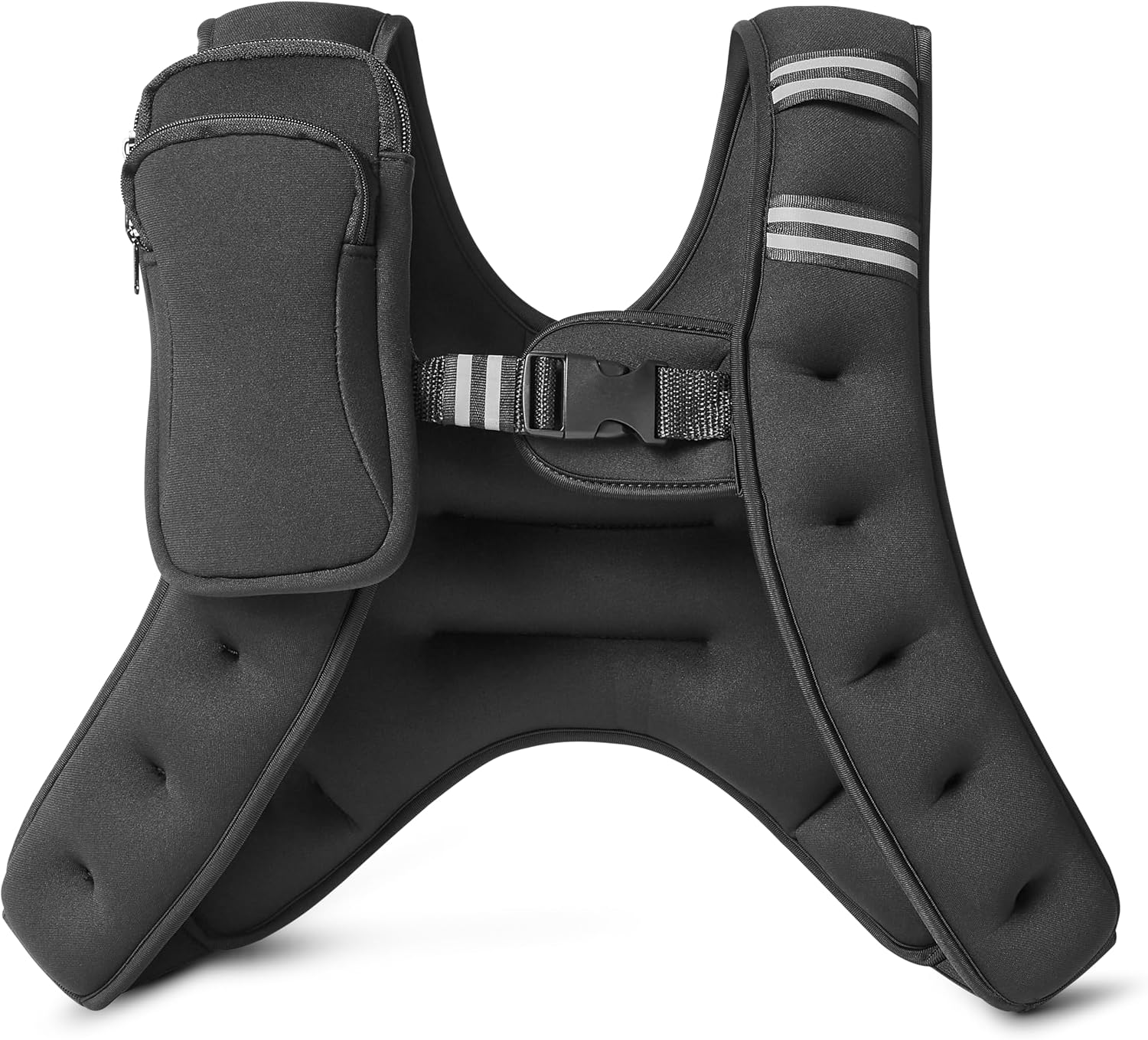
Outdoor training makes two features non-negotiable. The first is storage: the PACEARTH carries a front zipper pouch, the Wolliwa a back mesh pocket, and the Amazon Basics both a detachable front zipper pocket and a back mesh pocket, so your phone and keys stay on your body instead of in a car or on the ground. The second is visibility. The PACEARTH runs reflective strips across front, shoulders, and back, the Wolliwa adds reflective stripes down both sides, and the Amazon Basics shell carries reflective striping. Black is the hardest color to see in the dark, which makes that detailing the safety feature of a black vest rather than a cosmetic extra.
Three vests that map to common Black Friday shortlists
PACEARTH Adjustable Weight Vest (4-10 lb)
Beginners, walkers, and anyone easing back into general fitness belong here. The vest starts at 4 lb and takes up to six 1-pound iron-sand bags for a 10 lb working load; double-line stitching keeps the fill contained, and strap loops tuck away the excess webbing. The X-shape spreads the load across the torso while the front zipper pouch covers the essentials. It was listed at $14.99 with a 4.7-star rating across 821 reviews when this guide was last updated. Full details are on our PACEARTH Adjustable Weight Vest 4-10lbs / 11-20lbs / 20-32lbs X-Shape Weighted Vest for Women and Men, Home Workout Ironsand Vest with Zipper Pouch and 6 Weight Packs, Available in Pink, Gray, Black product page, and the current Amazon listing is where any Black Friday price would appear.
Wolliwa Weighted Vest (6-20 lb range)
Buyers who have trained with light load and know they want more belong in the mid-range bracket. The Wolliwa line spans 6 to 20 lb across sizes; this guide covers the 20 lb model in dark grey. Two adjustable buckle straps cinch the vest to different bust and torso shapes, a back mesh pocket takes a phone and headphones, and reflective stripes run down both sides. If 20 lb sounds ambitious, the listing publishes beginner weight guidance on its size chart. It was listed at $16.99 with a 4.7-star rating across 392 reviews. Specifications are on the Wolliwa 6lb/8lb/12lb/16lb/20Lb Weighted Vest Woman Men product page, and the Amazon listing is the place to watch for a weighted vest Black Friday price on this model.
Amazon Basics Weighted Vest (12 lb, fixed)
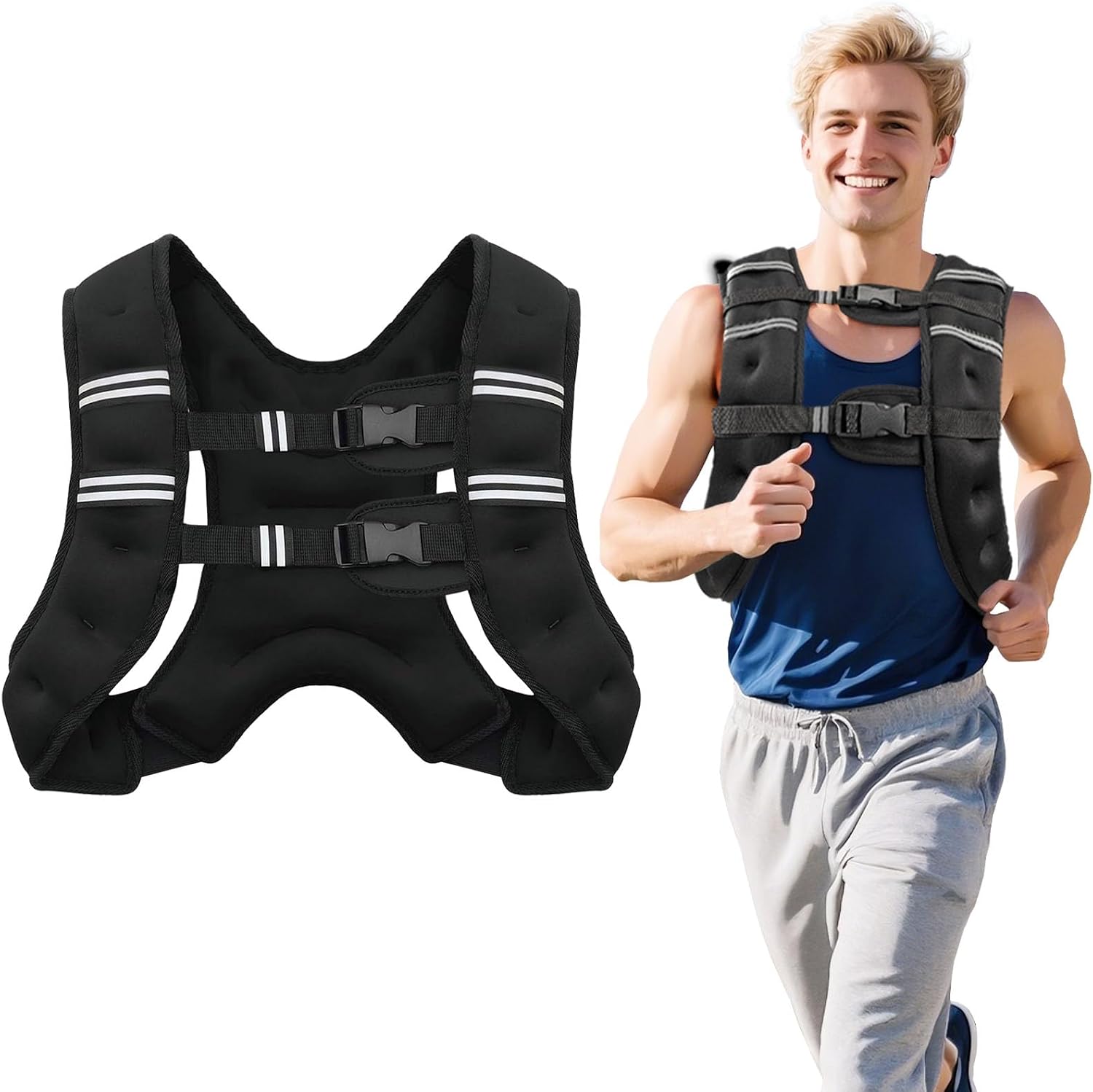
Some buyers want one decision, not a system – that is the fixed-weight bracket. Sealed at 12 pounds, this vest suits brisk walking, stair sessions, and general conditioning with zero weight-bag management. The recycled neoprene shell carries reflective striping and reinforced stitching, storage comes from a detachable front zipper pocket plus a back mesh pocket, and adjustable straps with a buckle closure hold the fit. It was listed at $26.40 with a 4.5-star rating across 303 reviews. Details live on the Amazon Basics Weighted Vest for Men and Women with Reflective Stripe for Exercise, Cardio, Non-Adjustable, 12 lb, Black product page, and the Amazon listing carries the current price.
Common mistakes when buying a weighted vest on sale
- Buying the heaviest option because it looks like the best value. Price per pound is a poor metric. The question worth asking is whether you will actually train with the weight you buy.
- Assuming “adjustable” always refers to the weight. The Wolliwa listing itself points out that its straps – not its weights – are the adjustable part. Read which feature the word describes.
- Comparing discounts across different configurations. A sale price on the 4-10 lb PACEARTH tells you nothing about the price of its 20-32 lb sibling. Confirm the size column on the listing you open.
- Treating listed prices as final. Sale-season prices move by the hour; the live listing page is the only reliable source at checkout time.
- Ignoring fit hardware. Straps, buckles, and shoulder pads decide day-to-day comfort more than shell fabric does, and they are the hardest thing to fix after purchase.
Black Friday weighted vest decision checklist
- Do I know my working weight range – the load I can wear for a full session today, not the load I aspire to?
- Do I want to change weight after purchase (adjustable) or never think about it again (fixed)?
- Does the vest distribute weight across the torso – X-shape, wide shoulders, or dual straps – rather than hanging from the shoulders?
- If I train outside early or late, does it have reflective detailing, given that black is the lowest-visibility color?
- Is there a pocket where I need one – front zipper for quick access, back mesh for bulkier items?
- Have I checked the live listing for the exact size and configuration, rather than trusting a summary or snapshot?
Frequently asked questions
Are Black Friday weighted vest deals actually cheaper?
The vests themselves do not change; only their prices do. All three models covered here are already budget-tier buys at their usual prices, so the sale question is only whether a specific listing drops further – something the live page alone can answer. Shortlist the model first and let the price decide the moment.
What weight should a beginner start with?
The manufacturers here offer a concrete starting band rather than a medical rule. PACEARTH’s adjustable design begins about as light as weighted vests allow and grows in small steps, while Wolliwa publishes beginner weight guidelines on its size chart and recommends building up gradually. Starting light and increasing slowly is the pattern both listings describe; if you have any health condition that extra load could affect, that is a question for a professional, not a product page.
Is an adjustable weighted vest better than a fixed one?
Better for whom is the real question. Adjustable models like the PACEARTH and the Wolliwa range suit anyone whose target weight is still uncertain, at the cost of a bulkier build and more moving parts. A fixed vest like the Amazon Basics 12 lb model is simpler and cheaper, and it works best when you already know 12 pounds is the right working load. Neither design is superior in the abstract.
Do weighted vests come in black?
Black is the dominant color, and all three vests covered in this guide are black or near-black (dark grey for the Wolliwa). The practical consequence is visibility: a black weighted vest is hard for drivers to see at dusk, so the reflective strips and stripes on these models are worth verifying on the product page before you order.
Where to compare more options
If none of these three fits, our best weighted vest comparison covers the wider market in more depth, and the Blog weighted vest guidance hub collects the rest of our training guides. Between them you will find heavier adjustable platforms, lighter running vests, and the terminology that makes sale listings readable.