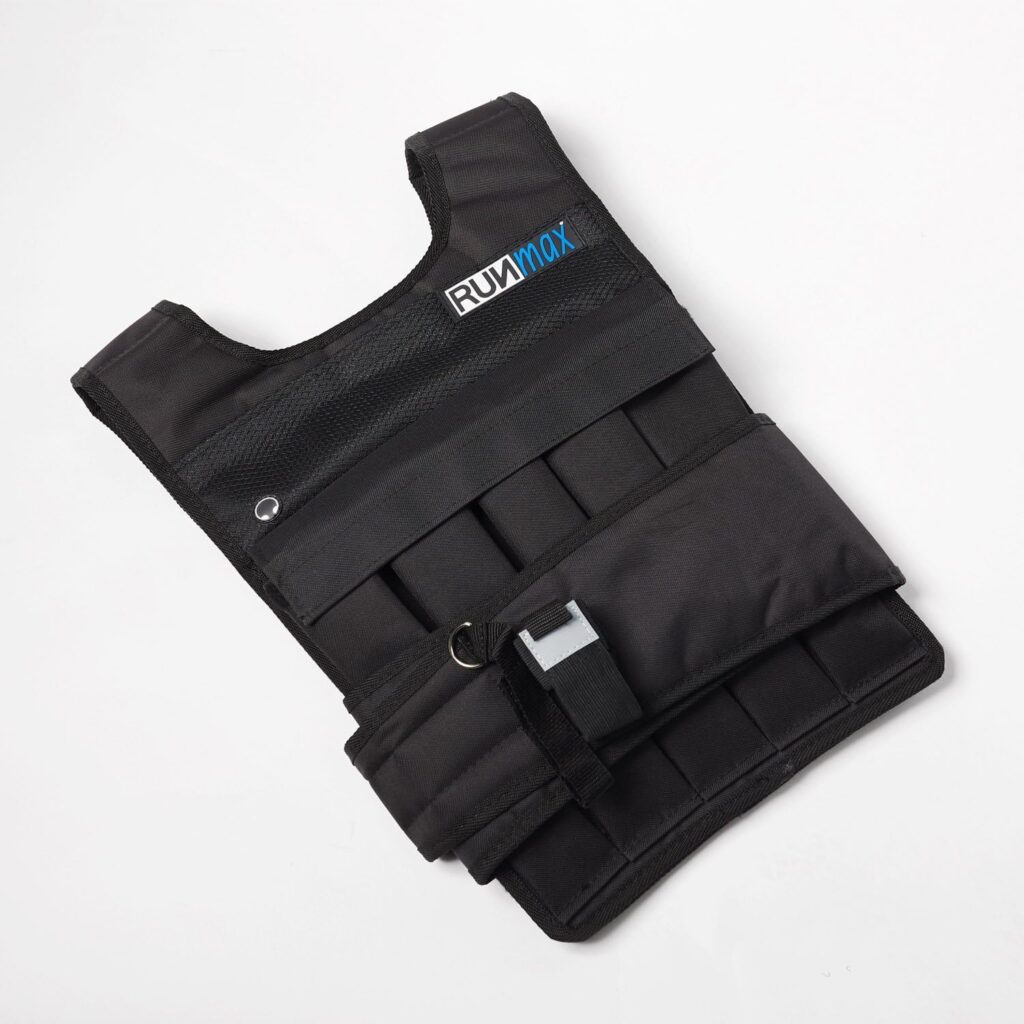
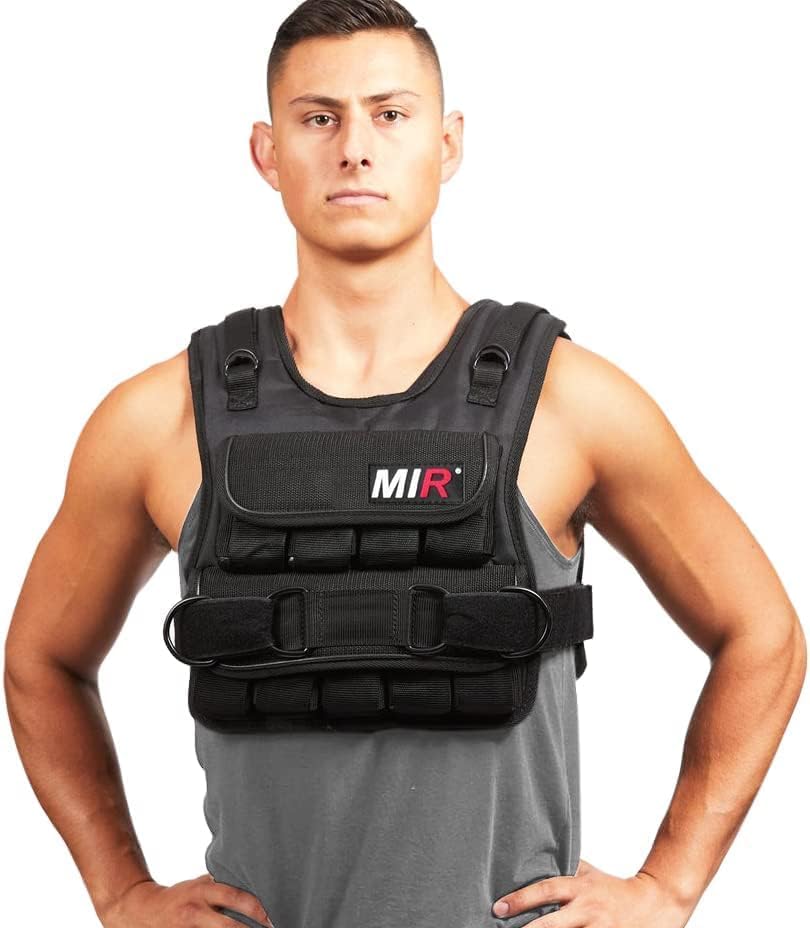
Search for a weighted vest for women plus size and you run into a wall almost immediately: the listings say “for women,” but almost none of them publish measurements for larger bodies. One vest in our catalog prints a fit envelope, and it tops out at a 45-inch bust. That is the whole published sizing story, which means the label on the page will not make this decision for you.
The good news is that fit in a weighted vest does not come from the label anyway. It comes from hardware: how many independent straps a vest has, where they sit, and how far they open. Every vest here adjusts in some way, from six separate buckle points down to a single waist belt, and that spread of adjustment decides comfort far more than S, M or L ever will. Load works the same way: across these six vests the floor runs from 0.7 pounds up to designs that only start at 15, so the first weight you put on is a choice you make before checkout. This guide covers the fit hardware, the starting-weight decisions, and where the six vests we track genuinely differ.
The direct answer
Yes, a weighted vest can work well for a plus-size woman, provided you shop by adjustability rather than by size label. Three rules do most of the work. First, prefer multiple independent adjustment points: straps at the chest and side waist, not just one center buckle. Second, start at the lowest load the vest offers; the floors across these vests run from 0.7 to 11 pounds, and the low end exists for exactly this reason. Third, treat published fit envelopes as the deciding evidence and their absence as an open question, measured against the strap description rather than the product photos. Everything below turns those rules into concrete checks.
Core concepts: what actually decides fit
Weighted-vest listings lead with weight ranges and fabrics. For a larger body, four quieter details decide whether the vest is wearable.
- Adjustment points beat size labels. The WICTTISPOSI listing describes six adjustable buckle straps across the chest and side waist and claims that accommodates most body shapes. The Atybo vest leans on adjustable side straps that contour to your body, and the TB3C combines double buckles with elasticated webbing. Each is a different answer to the same problem: letting the shell widen before it snugs down. A single buckle with a waist belt, as on the APEXUP fixed vest, has far less range.
- The one published fit envelope is instructive. The UOPON ruck vest publishes recommended dimensions: bust 35 to 45 inches, body weight 110 to 130 pounds, height under 5 feet 5 inches. It is the only listing here with numbers, and it shows both why numbers matter and why “women’s” on a label guarantees nothing, since that envelope excludes larger bodies by design. A vest without published measurements is not more inclusive; it is just unmeasured.
- Load floors vary more than ceilings. The lightest starting points across the six vests are 0.7 pounds (WICTTISPOSI) and 6 pounds (UOPON); the three-range APEXUP and TB3C vests begin at 4 pounds in their lightest configuration; the Atybo starts at 11; the APEXUP fixed vest carries 15 with no lower setting. Your first load is a floor decision, and the floors differ by more than 14 pounds across otherwise similar-looking vests.
- Heat and pressure decide long sessions. Most vests here use neoprene, which holds warmth. Two listings answer that directly: the WICTTISPOSI uses an open-back construction for airflow, and the Atybo adds 360-degree airflow with an anti-odor lining. Pressure is the other half. The Atybo’s thickened shoulder pads and the APEXUP vests’ padded shoulder straps exist because load concentrates where the straps sit, and a fuller torso feels that sooner.
How to choose: the checks that matter
Work through these in order before anything else on the page.
- Count the adjustment points and note where they sit. Chest-and-side-waist straps (WICTTISPOSI) or side straps plus shoulder padding (Atybo) give you independent control; one buckle does not.
- Hunt for published measurements. If the listing gives numbers, as the UOPON does, compare them to your actual bust and torso. If it gives none, treat fit as unverified and lean harder on strap count and range.
- Check the load floor, not just the ceiling. A vest that starts at 11 or 15 pounds offers no gentle first session; a 0.7- or 4-pound floor lets the first weeks be about fit, not load.
- Look at shoulder hardware. Wide padded straps spread the pressure that narrow straps concentrate; the Atybo’s thickened pads are the clearest example here.
- Plan for heat. Open-back construction or airflow lining if you run warm; plain neoprene against skin holds heat over longer sessions.
- Match the ceiling to your progression. The APEXUP and Atybo ranges run to 32 pounds; the UOPON and WICTTISPOSI designs top out at 12 to 18. Buy the ceiling you will actually use.
Practical examples: the six vests in our records
Each product page below lives on this site, and the Amazon link beside it is the exact listing behind every fact here.
For the lightest possible start: the WICTTISPOSI ultra-light vest begins at 0.7 pounds and adds twelve removable packs, 1 pound each in the 0.7-12.7 variant and roughly 1.44 pounds each in the 0.7-18 variant. The six buckle points and open back are the fit story; the steel-shot fill and washable shell are the maintenance story, since the shell washes once the packs come out. See the WICTTISPOSI listing on Amazon.
For a tight budget and the only published envelope: the UOPON 6-12 lb ruck vest is the least expensive vest of the six at $14.97 and the only one with published body measurements. Check the 35-to-45-inch bust range first; if it fits you, the 6-pound base with six 1-pound packs makes an easy starting load. Its listing also markets bone-density and balance benefits for older women, which are the seller’s claims rather than established outcomes. See the UOPON listing on Amazon.
For progression in one purchase: the APEXUP adjustable vest spans three ranges (4-10, 12-18 and 20-32 pounds) with six iron-sand packs over a base weight, so the same shell serves a first walk and a later strength block. A large front mesh pocket is the practical touch. See the APEXUP adjustable listing on Amazon.
If straps dig in: the Atybo vest pairs thickened shoulder pads with adjustable side straps and a 360-degree airflow lining. Mind the floor, though: it starts at 11 pounds and adds six 1.15-pound sandbags to reach 18. See the Atybo listing on Amazon.
For staying snug during movement: the TB3C vest for women uses double buckles with elasticated webbing and padded shoulder straps, in ranges from 4-10 up to 20-30 pounds, with the mesh pocket on the back. See the TB3C listing on Amazon.
Only if you already know you want 15 pounds: the APEXUP fixed 15 lb vest is the simplest design here, with a waist belt, padded straps and a clip closure, and the least flexible, since there is no lighter setting. See the APEXUP fixed listing on Amazon.
Common mistakes
- Trusting the “women’s” label. It describes marketing, not measurements; the only published envelope in this comparison belongs to a vest sized for smaller frames.
- Buying the heaviest configuration first. A 32-pound ceiling is for progression; day one should sit near the floor.
- Ignoring heat. Enclosed neoprene gets uncomfortable over longer sessions; choose the airflow features if you run warm.
- Skipping the floor check. A fixed 15-pound vest leaves no way down, while designs with 0.7- to 6-pound floors leave room to grow into load.
- Assuming fit from photos. None of these listings shows a plus-size body, so the strap description is the only fit evidence most of them offer.
Decision checklist
- Two or more independent adjustment zones: chest and side waist, or side straps plus waist belt
- A load floor you would genuinely start at; the lightest floors here run from 0.7 to 6 pounds
- Published measurements where available; your own measurements against the strap range where not
- Wide or padded shoulder straps for pressure
- A heat answer: open back, airflow lining, or washable fabric
- Pockets and reflective strips if you walk near traffic
- A weight ceiling that matches where you expect to stop
FAQ
Which is the best weighted vest for a plus-size woman?
Our catalog cannot crown one, because no listing publishes full plus-size measurements. What the evidence supports is a method: the most adjustable shell with the lowest useful floor wins for most people. On those two criteria, the six-point WICTTISPOSI design and the padded, side-strapped Atybo carry the strongest hardware stories, with the caveat that the Atybo starts at 11 pounds.
How heavy should a plus-size beginner start?
At the lowest setting the vest offers; Core concepts shows how far apart those floors land. Then judge by feel: a full session without hot spots or shifting load is the pass mark, and the first weeks should be about fit, not weight.
Do vests made “for women” fit plus-size bodies better?
Not automatically. The one women’s-cut detail among these vests is the UOPON’s X-shaped front, which exists to sit comfortably on a female frame, yet its published envelope stops well below plus sizes. The unisex APEXUP and Atybo vests fit by straps alone. Decide by strap geometry and any published numbers, never by the label.
Can a weighted vest help with weight loss?
The only weight-loss claim in these listings comes from the Atybo, which says walking with 10 to 15 percent of your body weight can raise calorie burn by up to 15 percent, and that is the seller’s framing. What a vest reliably does is add load to movement you already do; treat weight-loss framing on a product page as marketing until better evidence exists.
Related commercial page
Every vest discussed above links to its product page on this site from its own section. For the full catalog and the rest of this series, the Women weighted vest guidance hub collects the guides and the gear in one place.