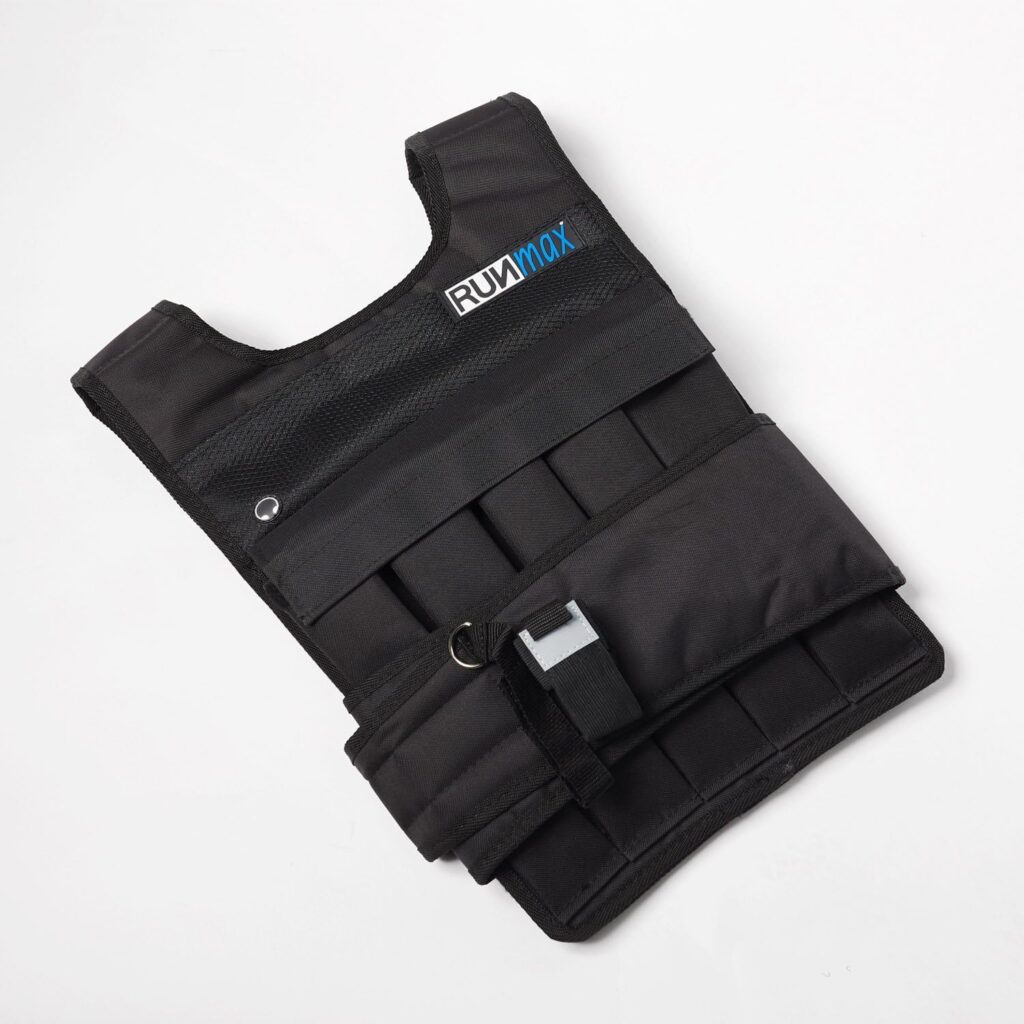
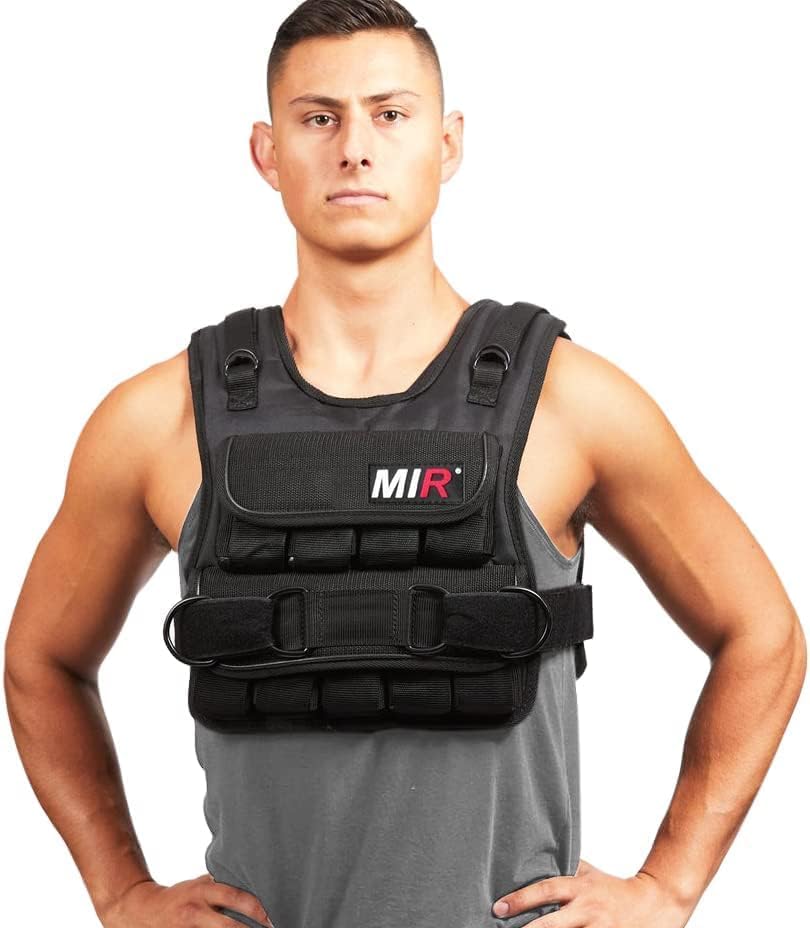
If you have been searching for a weighted vest for women over 50, the real questions are usually narrower than the search box suggests: how heavy to start, what actually fits an older body comfortably, and whether the whole idea is worth trying at all. All three are answerable before you look at a single product page.
The short version: a weighted vest can work well in your fifties and beyond, provided three decisions are made deliberately. Pick a starting load that feels almost too light, choose fit hardware that pulls the vest close to your torso, and add weight in small steps you control. The women’s-oriented vests in our catalog start between 0.7 and 11 pounds at their lowest setting, which tells you how conservative a first load can be. This guide covers what the product listings support, how to choose, and where the six vests we track differ.
The direct answer
Yes, a weighted vest is a reasonable tool for women over 50, with conditions you control. Start lighter than feels meaningful (most vests designed for women begin at 4 to 6 pounds, and one starts below 1), insist on adjustable fit rather than a size label, and add load only when the current setting feels routine. What you should not do is buy the heaviest configuration first or take health claims in product listings at face value. The rest of this guide turns those conditions into a concrete checklist.
Core concepts: what a weighted vest actually does
A weighted vest adds constant load to whatever you already do, whether that is walking, bodyweight squats, or yard work. Unlike dumbbells, it keeps your hands free and the movement pattern unchanged. Three hardware concepts decide whether the added load helps or annoys you.
- Base weight versus removable packs. Some vests carry a fixed load; the APEXUP 15 lb vest is one example. Adjustable models pair a light base weight with removable packs of roughly one pound each, so your first sessions can happen at the base weight alone.
- Distribution. Weight spread evenly around the torso behaves differently from weight bunched in one spot. Every vest in our records advertises even distribution, and the UOPON and TB3C listings call it out as a headline feature.
- Adjustment points. Buckles, elasticated webbing, and side straps pull the vest snug. More independent points mean the vest can follow your shape rather than fighting it. Six is the most we track, on the WICTTISPOSI model.
None of this is exotic. It is the same logic as a well-fitted backpack: load close to the body, spread evenly, held by straps that actually tighten.
What the evidence supports, and what it cannot settle
Everything specific in this guide comes from the product listings captured for our catalog: stated weight ranges, materials, closure hardware, pocket placement, and each listing’s ratings snapshot (the APEXUP adjustable vest, for instance, shows a 4.6-star snapshot across 1,127 reviews). Snapshots are historical listing data rather than our own scoring, and prices change without warning.
Health claims deserve more caution. The UOPON listing says weight training can prevent osteoporosis and improve balance for middle-aged and elderly women, and the Atybo listing cites research that walking with 10 to 15 percent of your body weight can boost calorie burn by up to 15 percent. Those are the sellers’ statements, quoted so you know what the marketing claims. They are not findings this guide can verify, and they are no substitute for advice from a clinician who knows your history.
How to choose a weighted vest over 50
Start lighter than you think you need to
The clearest pattern across women’s-oriented listings is a low floor: 0.7 pounds on the WICTTISPOSI vest, 4 pounds at the bottom of the APEXUP and TB3C ranges, 6 pounds on the UOPON. That floor exists for a practical reason: a vest only works if you keep wearing it, and a load that noticeably changes your walk from the first step tends to come off after two sessions. Begin at the base weight, then add packs once that feels unremarkable.
Judge fit by hardware, not by size labels
Most vests in this class are one-size, so the label tells you little. Count adjustment points instead. The UOPON vest uses an X-shaped cut designed for female bodies and is the only one in our records that publishes a fit window: bust 35 to 45 inches, body weight 110 to 130 pounds, height under 5 feet 5 inches, which makes it the easiest to size from a tape measure. The WICTTISPOSI takes the opposite approach with six buckle straps across chest and waist to accommodate most shapes. The TB3C pairs double buckles with elasticated webbing. Two or more independent adjustment points is a sensible minimum.
Distribution, breathability, and comfort
Where the weight sits matters as much as how much there is. Soft neoprene bodies filled with iron sand or steel shot spread the load flat against the torso, and thickened shoulder pads, a stated feature of the Atybo vest, keep it from digging in. Heat is the other comfort factor. The WICTTISPOSI design drops the back panel entirely for airflow, and the Atybo listing describes 360-degree airflow with an anti-odor lining. If summer walks are on your calendar, those details decide whether the vest stays in rotation.
Extras that earn their place
Pockets, reflectivity, and washability sound minor and are not. Enlarged mesh pockets that hold a phone (featured on the UOPON and both APEXUP models) remove the need for a separate bag. Reflective strips on the front, shoulders, and back are standard across all six vests and matter if you walk early or late in the day. For cleaning, the WICTTISPOSI vest body is washable once the weight packs come out, one of the few listings that addresses sweat directly.
The six vests in our records, side by side
Specs below come from each listing; where a vest sells in several weight ranges, the captured configuration is noted.
| Vest | Captured load range | How it adjusts | Worth knowing |
|---|---|---|---|
| APEXUP Adjustable Weighted Vest | 4–10 lb (also sold in 12–18 and 20–32 lb ranges) | Base weight plus six iron sand weights | Large front mesh pocket with detachable patch; reinforced stitching and reflective straps |
| APEXUP fixed 15 lb vest | 15 lb fixed | Padded shoulder straps and waist belt, clip closure | The simple option: no packs to manage, and no progression built in |
| TB3C Weighted Vest for Women | 11–20 lb (also sold in 4–10 and 20–30 lb ranges) | Double buckles plus elasticated webbing | Back mesh pockets; a 4.7-star listing snapshot, the highest among the six |
| UOPON 6–12 lb ruck vest | 6–12 lb | Six 1 lb removable packs over a 6 lb base | X-shaped cut with a published fit window, sized for smaller frames |
| WICTTISPOSI ultra-light vest | 0.7–12.7 lb (also sold in a 0.7–18 lb version) | Twelve removable packs, six buckle straps | Open-back airflow; washable once the packs are removed |
| Atybo Weighted Vest | 11–18 lb (also sold in 4–11 and 20–32 lb ranges) | Six 1.15 lb iron sandbags over an 11 lb start | Thickened shoulder pads; dual mesh pockets; reflective stripes |
Each vest’s product page carries the details above, and you can also go straight to the marketplace listing for the APEXUP adjustable vest, the APEXUP fixed 15 lb vest, the TB3C vest, the UOPON ruck vest, the WICTTISPOSI vest, or the Atybo vest. Those are affiliate links, and we may earn a commission if you buy through them, at no extra cost to you.
What a first month can look like
A concrete structure helps more than any single purchase decision. Here is a workable first month built on the logic the listings support.
- Weeks one and two. Wear the vest at its base or lowest setting, say 6 lb on the UOPON or under 1 lb on the WICTTISPOSI, for a walk you already take. Twenty to thirty minutes is enough to learn where the straps rub and whether the load shifts as you move.
- Week three. Add one pack if the base weight now feels unremarkable. One-pound steps are the entire point of removable packs; they keep progression boring, which is what you want.
- Week four. Try the vest during light strength work at home, such as squats, lunges, or stair climbs, before considering it for anything longer. If a session leaves a joint aching rather than a muscle tired, drop back a step.
The UOPON listing even suggests daily housework as a use, which is a legitimate low-stakes way to accumulate time under load. Keep early sessions short regardless of the activity, and let comfort decide the pace.
Common mistakes
- Buying the heaviest configuration first. A 20 to 32 lb vest is a conditioning tool for someone already training under load. Starting there is how a vest ends up in a closet.
- Trusting the size label. One-size vests fit by adjustment hardware. Check any published fit window or strap range against your own measurements before ordering.
- Treating listing health claims as settled outcomes. Bone-density and calorie-burn statements are marketing claims until someone qualified confirms what applies to you.
- Ignoring heat. A fully enclosed neoprene vest on a warm walk is miserable, so ventilation features are practical, not cosmetic.
- Progressing by calendar instead of by feel. Add load when the current one feels routine, not because a week passed.
Decision checklist
- Starting load sits at the vest’s minimum and is light enough to forget during a normal walk
- Two or more independent adjustment points, buckle-based rather than elastic-only
- Padded shoulders and even weight distribution across the torso
- Breathable or ventilated construction for the season you will actually walk in
- A pocket that fits your phone, plus reflective strips if you walk near traffic
- An adjustable design rather than fixed weight, unless you are already certain of the load you want
FAQ
What weight should a woman over 50 start with?
At the vest’s lightest setting; that is what the low floors in these listings (0.7 to 6 lb) exist for. The Atybo listing’s framing of 10 to 15 percent of body weight for walking is the seller’s guidance, not a prescription. The practical test is simple: a load you can wear through a full walk without noticing hot spots.
Are weighted vests good for bone density after menopause?
Listings say so. The UOPON vest is marketed specifically on bone-density and balance benefits for middle-aged and elderly women. but a product listing cannot establish what resistance training will do for your bones. That is exactly the question to raise with your doctor, ideally before your first session rather than after a problem.
Is any of this different for women over 60 or 70?
The checklist barely changes; the margins shrink. Fit tolerance and recovery both narrow with age, which argues for the lighter end of the range, shorter first sessions, and slower progression. Notably, the vests marketed toward elderly women in our records are the same designs aimed at beginners.
Do you need a vest designed specifically for women?
Not strictly; the APEXUP and Atybo listings are unisex. Women’s-specific cuts still change where the load sits: the UOPON’s X-shape and published bust range exist because a straight-tube vest can press uncomfortably on a female frame. If a unisex vest fits snug and distributes evenly, it will do the job, and if it does not, a women’s cut is the fix.
Where to go next
This guide is deliberately about the decision, not the ranking. When you want a ranked shortlist across brands and budgets, our roundup of the best weighted vest for women does that work, and the Women weighted vest guidance hub collects every guide in this series in one place.
When individualized professional guidance may be appropriate
Some situations call for a conversation with a clinician or physical therapist before the first session, and a checklist cannot cover them. Diagnosed osteoporosis or low bone density, a recent joint replacement or surgery, balance problems or a fall history, heart or blood-pressure conditions, and persistent pain that extra load would challenge all belong in that category. A vest is adjustable precisely because the right load is personal; a professional can tell you where to start and how to progress in a way no listing can. Bring the vest’s weight range to the appointment, since it turns the conversation from whether to how much.