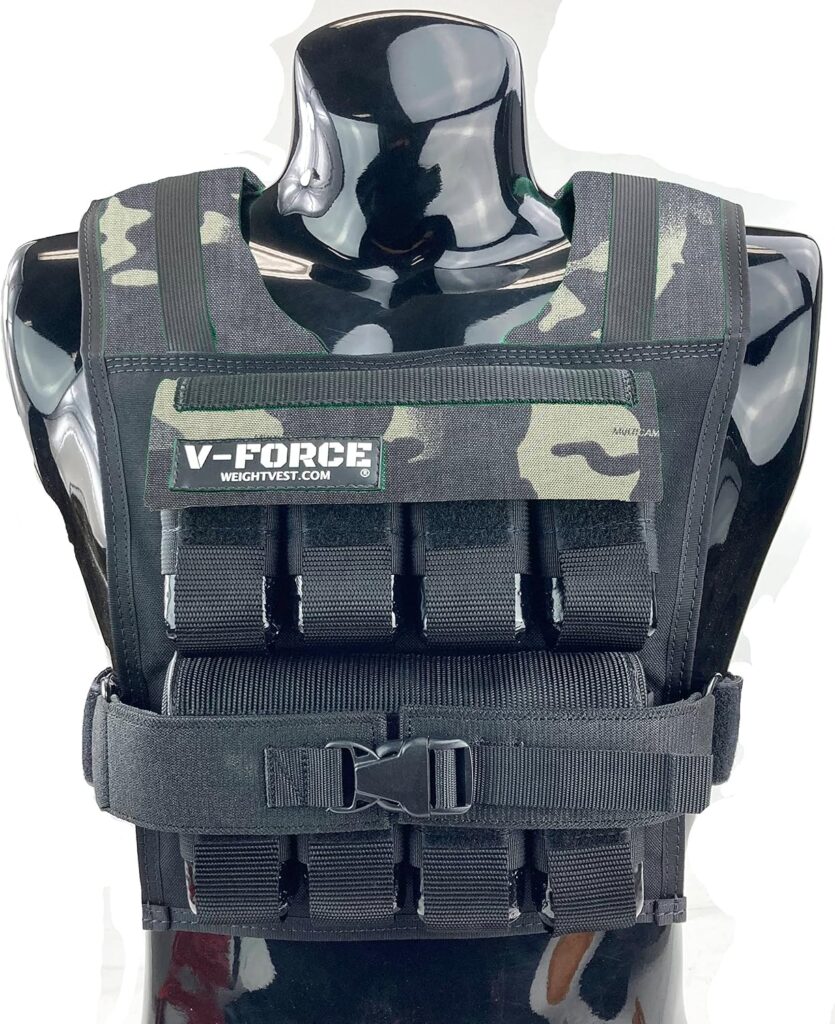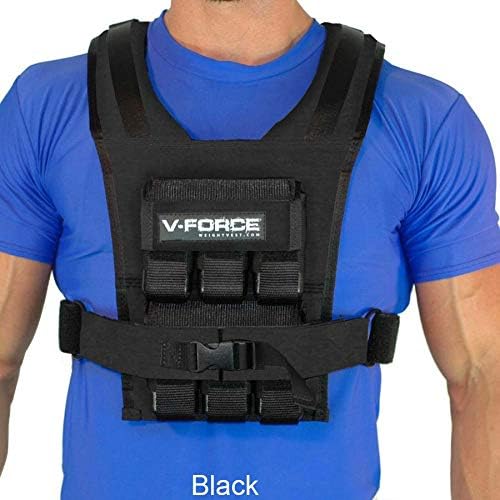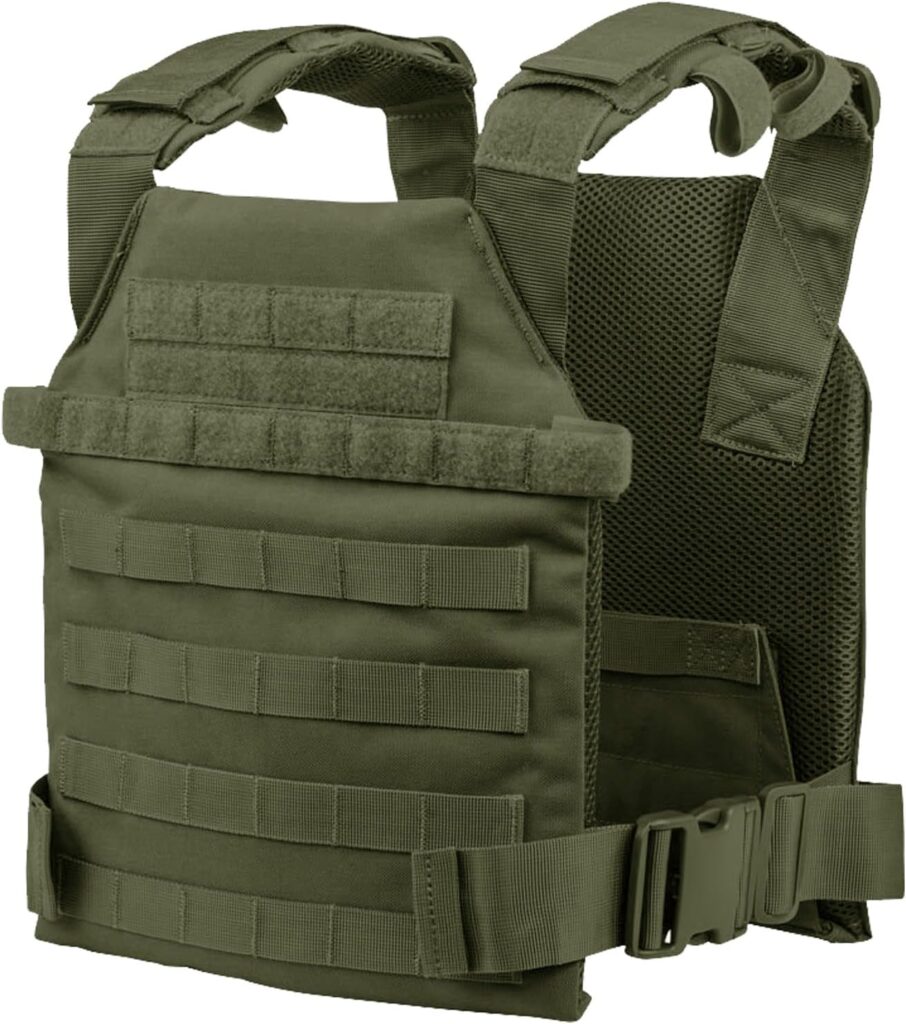
A military weighted vest is a training vest styled after military load-bearing gear: a tactical shell with buckled straps, MOLLE webbing for pouches, and — in the most common design — front and back pockets that hold rigid weight plates. Used for strength training, it does what every weighted vest does: add load to movements you already do. The styling changes how the weight is carried, adjusted, and expanded. It does not change what the load does for your training.
That distinction matters, because a search for a military weighted vest turns up two different products. One is a plate-carrier-style vest that ships nearly empty and takes its load from plates you add. The other is a filled vest with the weight built in, wearing a tactical cut. This guide sorts the two apart, walks through the selection criteria that actually matter, and closes with practical training examples. New to weighted training altogether? The Strength Training weighted vest guidance hub covers the fundamentals first.
Affiliate disclosure: this guide contains affiliate links, and FitGearPilot may earn a commission on qualifying purchases at no extra cost to you.
What Is a Military Weighted Vest?
It is a weighted vest modeled on military load-carrying equipment rather than on gym accessories, and two hardware families share the look. Plate-carrier-style vests give you empty pockets sized for rigid plates, plus webbing and buckles borrowed from tactical gear. Filled vests keep the silhouette but come pre-loaded — some with iron sand sewn into neoprene, others with removable weight blocks. Either way the weight rides on your torso; what differs is how you set the load, how finely you can adjust it, and how the vest behaves once you start moving.
How Military-Style Vests Differ From Gym Vests
Four features separate the tactical designs from the plain gym vest, and each maps to a real training decision:
- Weight format. Plate-style vests take rigid plates; block-based designs use removable metal weights. Filled neoprene vests fix the load at the factory, so you pick a weight class rather than add anything.
- Attachment hardware. MOLLE webbing and patch panels let you add pouches or morale patches — cosmetic for most lifters, genuinely useful when a walk calls for a phone, keys, or snacks.
- Shells and stitching. Tactical shells favor high-density, water-resistant nylon with reinforced stitching, while gym vests lean on neoprene. Both survive normal training; the tactical build adds abrasion resistance, and some nylon designs go in the wash where neoprene only wipes clean.
- Fit system. Plate carriers use cummerbund-style waist belts and adjustable shoulders; neoprene relies on elastic straps and buckles. The tactical approach tunes fit across a wider range of body types.
How to Choose a Military Weighted Vest for Training
Start with progression. Fixed vests are the simplest choice, but the load you pick on day one is the load you keep. If you want the weight to grow with your training, look for plate pockets or removable weights — block systems adjust in small, repeatable steps, and plate pockets accept bigger jumps when you are ready for them.
Then check the fit window against your body. Tactical cummerbunds publish explicit waist ranges; neoprene stretches and leans on elastic straps and buckles, which fits a broader spread of bodies with less precision. Adjustable chest sizing and padded shoulders matter more the longer your sessions run.
Airflow is the last piece: mesh padding and breathable neoprene move air better than flat shells, and you notice the difference once sessions run long or hot.
The Options in Practice
Three designs from our coverage show how the choice plays out across the most common uses.
Prices and ratings are listing snapshots from our records, not live offers, and we have not tested these vests — every specification below comes from the product listings themselves.
Strength circuits and loaded carries
A plate-carrier vest earns its keep in circuits and carries. The Miramrax tactical weighted vest (listing snapshot: $35.99, rated 4.3 out of 5 across 355 reviews) has front and back pockets sized for 10-by-12-inch plates and rated to carry up to 50 pounds; the vest itself weighs just over a pound, so the load is entirely your choice of plates. A cummerbund covers waists from 32 to 52 inches, velcro strips adjust the shoulders, mesh-padded pockets move air against the body, and quick-release buckles shed the vest between movements. MOLLE webbing and 3-by-6-inch patch panels round out the tactical kit. Check the Miramrax vest on Amazon if plate-style loading matches your setup. Best for: lifters who want maximum load headroom and already own standard plates.
Walking, rucking, and everyday wear
For walking and rucking, even distribution beats raw capacity. The BAGAIL Comfort-Fit Weighted Vest (listing snapshot: $26.09, rated 4.6 out of 5 across 4,231 reviews) spreads fine iron sand through sweat-resistant neoprene in 5-to-30-pound size options, and smooth-stitched edges plus a body-hugging cut keep chafe and bounce out of the picture. A detachable phone pouch fits devices up to 7 inches, a rear mesh pocket holds keys or snacks, and reflective strips cover early-morning or evening routes. Care is wipe-clean only — no machine washing. See the BAGAIL Comfort-Fit on Amazon. Best for: walking-first readers who want comfort and storage over a big ceiling.
Progressive strength blocks
Lifters who want the load to climb in small steps get the most from removable weights. The BAGAIL 20/30/40 weighted vest (listing snapshot: $119.99, rated 4.6 out of 5 across 456 reviews) adjusts with rust-resistant 2.5-pound iron blocks across 2-20, 2-30, and 2-40-pound ranges — eight, twelve, or sixteen blocks depending on the version. Its 1200D oxford nylon shell is washable; extra-thick shoulder pads and a wide velcro belt with safety buckles hold the fit; an 18-month warranty backs the build. Check the BAGAIL 20/30/40 on Amazon. Best for: progressive strength work without the expense of a plate set.
Common Mistakes to Avoid
- Assuming plates are included. Plate-style vests are carriers, not complete systems. The weight is a separate purchase, so price the plates into the decision before comparing stickers.
- Starting too heavy. A vest you cannot move cleanly in gets shelved. Adjustable formats exist precisely so early sessions stay light and the load climbs as your movements stay clean.
- Ignoring the fit window. Tactical cummerbunds publish waist ranges for a reason — order against the published range, not the product photo.
- Reading “military grade” as a specification. It is marketing shorthand. Fabric weight, stitching, and hardware are the details that matter — the same ones this guide tells you to check.
- Paying for capacity you will not use. Match the load ceiling to the training you actually do, not to the biggest number on the listing.
Military Weighted Vest Decision Checklist
- Decide the weight format first: plates you add, blocks you adjust, or a fixed filled vest.
- Match the load ceiling to your main use — circuits and strength want headroom; walking rarely does.
- Check your waist against the published fit range, and look for adjustable shoulders or chest sizing.
- Favor mesh padding or breathable neoprene for long, sweaty sessions.
- If you train outdoors early or late, put reflectivity on the requirement list.
- Compare care requirements and warranty support before you buy.
Frequently Asked Questions
What does the “military” part actually add?
Mostly hardware and construction — attachment points, buckles, and shell fabrics you would not find on a plain gym vest. As for the training effect, a military weighted vest works like any other: the load is the load.
Do military weighted vests come with plates?
Not always. Plate-carrier-style designs are sold as carriers and expect you to add rigid plates; filled neoprene vests ship with their weight built in. The product listing states which you are buying, so check before you order.
How heavy should a first weighted vest be?
Light enough that every rep stays clean. Adjustable formats make this easy: begin near the bottom of the range and add load in small steps as the training starts to feel easy.
Can you run in a military weighted vest?
Snug straps and even weight distribution exist to control bounce, which matters more with every stride. If running is the main use, a filled vest generally suits repeated impact better than a rigid plate setup.
Related Weighted-Vest Guides
If a tactical setup is exactly what you are after, the best tactical weighted vest roundup covers the rugged end of the market in depth, and the best weighted training vest guide compares purpose-built gym options.