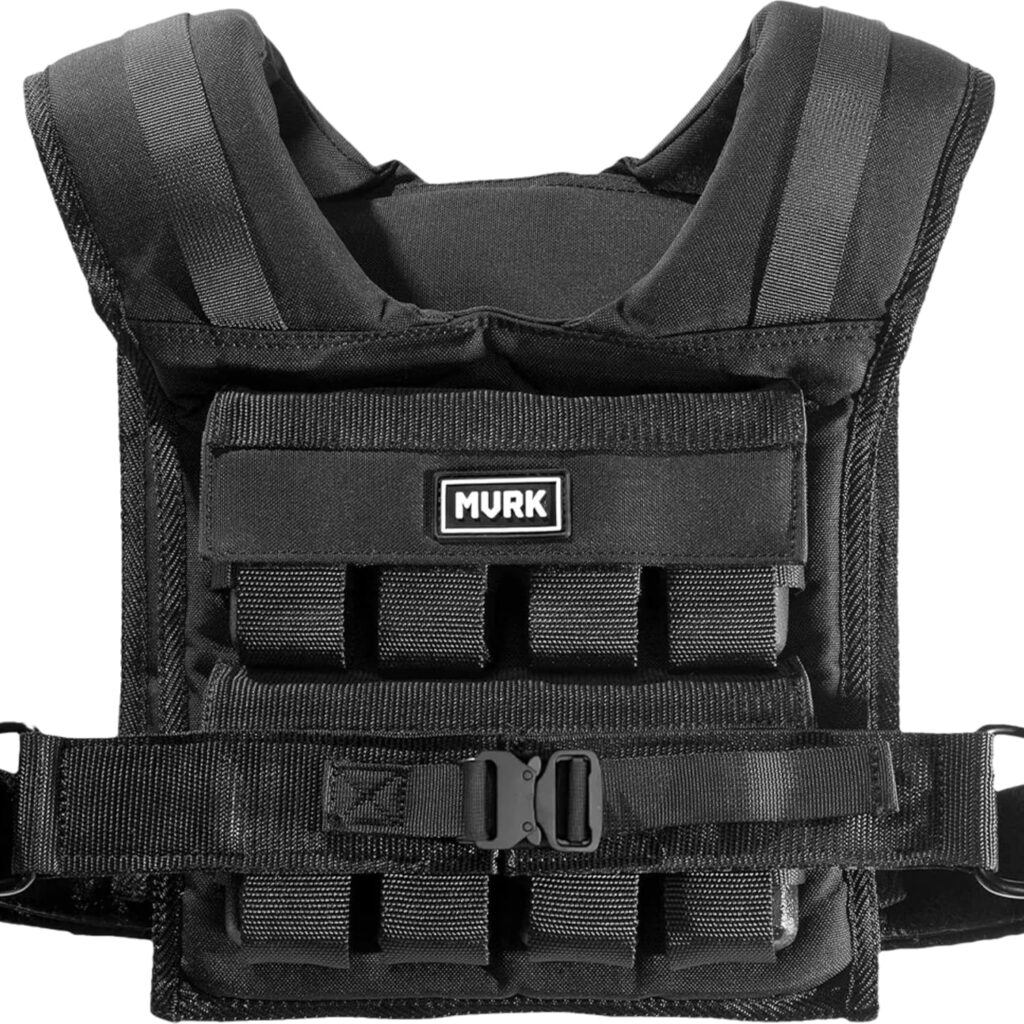
A weighted vest makes the workouts you already do — walking, running, push-ups, squats — harder, and it does so without bulky equipment. For most men, the practical answer to the best weighted vest for men workout question is a neoprene vest with a 20–30 lb ceiling and a snug, adjustable fit: enough load for strength work, light enough for cardio. Walkers can stay with fixed 8–12 lb vests under $25, while rucking and serious strength progression justify the modular vests that scale to 35–45 lb.
Twelve vests follow, compared by weight range, fill, fit system, and price and grouped by the training each actually suits. The table gives you the quick scan; the per-vest notes help narrow it down. If you buy through links on this page, FitGearPilot may earn a commission at no extra cost to you.
What Matters in a Men’s Workout Weighted Vest
Four decisions separate the vests in this roundup:
- Weight range. Fixed vests in the 8–12 lb band suit walking and cardio; multi-step ranges from roughly 6–30 lb cover general training; high-capacity models reaching 35–45 lb serve strength work and rucking.
- Fill and distribution. Iron pellets, iron sand, silicone blocks, and steel micro-weights all appear here; what matters is even loading across chest and back so the vest rides on your torso instead of pulling on your shoulders.
- Fit security. Straps, buckles, elastic sides, or a zipper decide whether the vest stays put on runs and burpees.
- Everyday details. Reflective stripes, phone pockets, shoulder pads, and washability vary widely at the same price point.
The Lineup at a Glance
| Vest | Weight range | Price* | Listing rating | Standout |
|---|---|---|---|---|
| Henkelion | Fixed per size | $12.23 | 4.5 (9,091 reviews) | Cheapest; iron pellet fill |
| Tone Fitness | 8 or 12 lb | $20.99 | 4.5 (4,412 reviews) | Buckle fit, zip pocket |
| PACEARTH | 6–30 lb | $18.99 | 4.7 (4,947 reviews) | Highest rating here; shoulder pads |
| Zeerun | 6–30 lb, 8 steps | $19.99 | 4.5 (4,389 reviews) | Sealed fill, double-stitched |
| Poudee | 6–30 lb | $19.99 | 4.6 (2,622 reviews) | Even iron-sand fill |
| Zikopomi | 6–30 lb | $19.99 | 4.6 (2,170 reviews) | Category best-seller rank |
| BAGAIL | 5–30 lb | $26.09 | 4.6 (4,231 reviews) | Detachable phone pouch |
| VEVOR | 11–20 lb (versions to 40 lb) | $25.80 | 4.3 (101 reviews) | Six removable weight bags |
| ONETWOFIT | 2–45 lb | $119.99 | 4.5 (210 reviews) | Silicone weights, machine washable |
| Rough Country Military Grade | Up to 35 lb | $149.99 | — | Rugged, precise loading |
| Hyper Vest PRO | Up to 40 lb | $215.95 | — | Steel micro-weights, no-bounce fit |
| Empower | 8 lb fixed or 4–16 lb | $29.95 | 4.5 (2,628 reviews) | Women-specific contoured fit |
*Prices change often.
The Picks, Grouped by Training Use
Fixed-weight simplicity for walking and general workouts
Cheapest of the twelve and by far the most reviewed, the Henkelion weighted vest skips the classic budget shortcut: its fill is iron pellets and metal rock rather than river sand. Weight sits in front and back pockets for balance, a soft neoprene shell carries an adjustable strap to stop sliding, and a mesh pocket leaves room to add more load. The catch: the weight itself is fixed per size, so choose your load when you order — check the price at Amazon.
Simplicity has a second face in the Tone Fitness workout vest, which comes in 8 lb or 12 lb versions. A secure buckle closure with elastic sides fits different torsos, soft neoprene spreads the load across the trunk, and you get reflective strips plus a zip pouch and mesh pocket for keys or a phone. Several color options make it one of the less tactical-looking picks — see today’s price at Amazon.
Neoprene vests with room to progress
If comfort drives your choice, the PACEARTH weighted vest pairs the group’s highest listing rating with the most features per dollar: an odor-free Lycra shell the listing bills as cloud-smooth, included shoulder pads for long sessions, and two adjustable chest straps that pull the vest close on different body shapes. An arm-mounted phone pouch with an earphone opening is the detail walkers and runners use most — check the price at Amazon.
Built for progression, the Zeerun weighted vest offers eight weight steps from 6 to 30 lb, so one purchase can follow your training for years. The interior is sealed to keep iron particles from leaking during high-intensity work, seams are double-stitched, and thickened shoulder pads with an elastic band and buckle hold the load steady — check the price at Amazon.
The Poudee weighted vest covers the same 6–30 lb spread with evenly filled iron sand, which lays the load flat across the torso instead of bunching it at the shoulders. Adjustable straps and breathable material keep the fit snug through running, hiking, and bodyweight sessions, and a reflective stripe covers low-light road work — check the price at Amazon.
Another iron-sand, double-stitched design, the Zikopomi weighted vest adds two elastic adjustable straps and reflective strips front and back. It earns one of the strongest category best-seller ranks in this roundup, so it’s a well-trodden budget path. One practical note from the listing: a harmless new-vest odor fades if you air it out for a day or two — check the price at Amazon.
Comfort-focused designs with carry options
Shoppers who haul a phone on every walk should look at the BAGAIL comfort-fit vest, built for no-chafe, no-bounce walking and running with fine iron sand for even distribution and sweat-resistant neoprene. Its detachable phone pouch fits most phones up to seven inches, a large rear pocket takes the rest, and the backing includes unconditional lifetime support. Sized for men and women from 5 to 30 lb, it doubles as a sensible shared-household vest — check the price at Amazon.

The VEVOR adjustable weighted vest loads like a mini weight belt: the 11–20 lb version starts at 11 lb and adds six removable 1.5-lb ironsand bags, so increases are deliberate rather than all-or-nothing. Larger 20–32, 35, and 40 lb versions extend the same idea. Padded shoulders, buckle straps, a mesh pocket, and reflective stripes round it out — it’s the newest listing here, so its review base is small — check the price at Amazon.
High-capacity adjustables for strength work and rucking
At the premium end, the ONETWOFIT adjustable weighted vest spans 2–45 lb using sixteen high-density silicone weights, which stay soft and skin-friendly where iron fill can feel harsh and, as the listing argues, resist rust. A zipper closure makes it easy to throw on and slim enough to wear under a coat, the vest is machine washable, and its reflective strips detach when you don’t need them. For rucking and long strength progression, this is the comfort-first pick — check the price at Amazon.

Rugged and no-frills, the Rough Country military-grade vest adjusts in precise increments up to 35 lb and leans into a tough build for progressive training. This listing doesn’t publish rating data, so you’re buying on spec rather than accumulated reviews — check the price at Amazon.
Bounce is what keeps most men from running in a vest, and the Hyper Vest PRO exists to solve it. Slim steel micro-weights sit flat inside a compression shell of stretch fabric, holding the load with no vertical shift during sprints and burpees, scaling to 40 lb. It’s by far the priciest pick, but nothing else here is engineered this specifically for speed work — check the price at Amazon.
For households that need two fits
Couples shopping once can shortlist the Empower weighted vest, which is designed around a woman’s curves: a contoured X-shape, open chest area, and full shoulder mobility. Weight comes as a fixed 8 lb version or adjustable 4–10 and 10–16 lb configurations, pitched at weight-bearing walking — check the price at Amazon.
Who Each Pick Suits
- Buying your first vest, mostly for walking and light cardio: Henkelion or Tone Fitness.
- One vest to grow with through general training: Zeerun, Poudee, Zikopomi, or PACEARTH.
- Walkers who carry a phone, or shared men’s and women’s use: BAGAIL.
- Granular weight increases on a budget: VEVOR.
- Rucking and long-term strength progression: ONETWOFIT or Rough Country; runners and HIIT fans: Hyper Vest PRO.
Limitations and Trade-Offs
An honest note before you decide: every comparison here comes from the listings’ own published specs plus price and rating snapshots, FitGearPilot hasn’t trained in these vests, and both prices and ratings move. The trade-offs worth weighing: fixed-weight vests cost less but lock in one load; iron-sand and pellet fills are cheaper than silicone or steel but bulkier per pound; and the two designs with the smallest review bases, VEVOR and ONETWOFIT, have less accumulated feedback behind their numbers than the older listings.
Buyer’s Guide: Matching Weight and Fit to Your Training
Let your main activity set the range. Walking and casual cardio rarely need more than 12 lb, which puts the fixed-weight pair in play. Mixed training — bodyweight strength, cardio, gradual progression — lands in the 20–30 lb ceiling group. Rucking and dedicated strength work justify the high-capacity models. Where you expect to progress, favor multi-step systems like Zeerun’s eight weights, VEVOR’s removable bags, or ONETWOFIT’s sixteen blocks, so one purchase covers the next year instead of one season.
Fit beats fabric: a buckle, chest strap, or zipper that pins the vest to your torso matters more for running than any material upgrade, and shoulder pads earn their keep at 20 lb and above. For care, air new sand-filled vests out for a couple of days, keep the fill dry, and if maintenance is a sticking point, ONETWOFIT’s machine-washable design is the outlier worth paying for.
FAQ
What weight should a man start with?
Start at the low end of whatever vest you buy. The listings here span 4–45 lb, and newer wearers are best served by an 8–12 lb fixed vest or the 6 lb step of an adjustable range, adding load once walks and bodyweight sets feel easy. Removable-bag designs make those increases gradual.
Can you run in a weighted vest?
Yes, and several listings here are positioned for running and jogging, but design decides whether it’s comfortable. The Hyper Vest PRO exists largely because standard vests bounce at speed — its slim compression fit and steel micro-weights aim at zero load shift. If running is your priority, prioritize a close fit and secure straps over maximum weight.
Are weighted vests for men actually adjustable?
It varies by model. Henkelion’s load is fixed per size even though the strap adjusts, and Tone Fitness sells separate 8 lb and 12 lb versions. The rest — Zeerun, Poudee, Zikopomi, BAGAIL, VEVOR, ONETWOFIT, and Rough Country — all change weight, typically in 1.5–5 lb steps.
How do you care for a weighted vest?
Air new vests in a ventilated spot for a day or two to let material smells fade, keep the fill dry, and spot-clean neoprene rather than soaking it. If low maintenance matters most, ONETWOFIT’s machine-washable design is the outlier worth paying for.
Related Supporting Guides
For more men-specific comparisons, sizing notes, and training ideas built around weighted vests, our Men weighted vest guidance category collects the rest of the site’s coverage in one place.