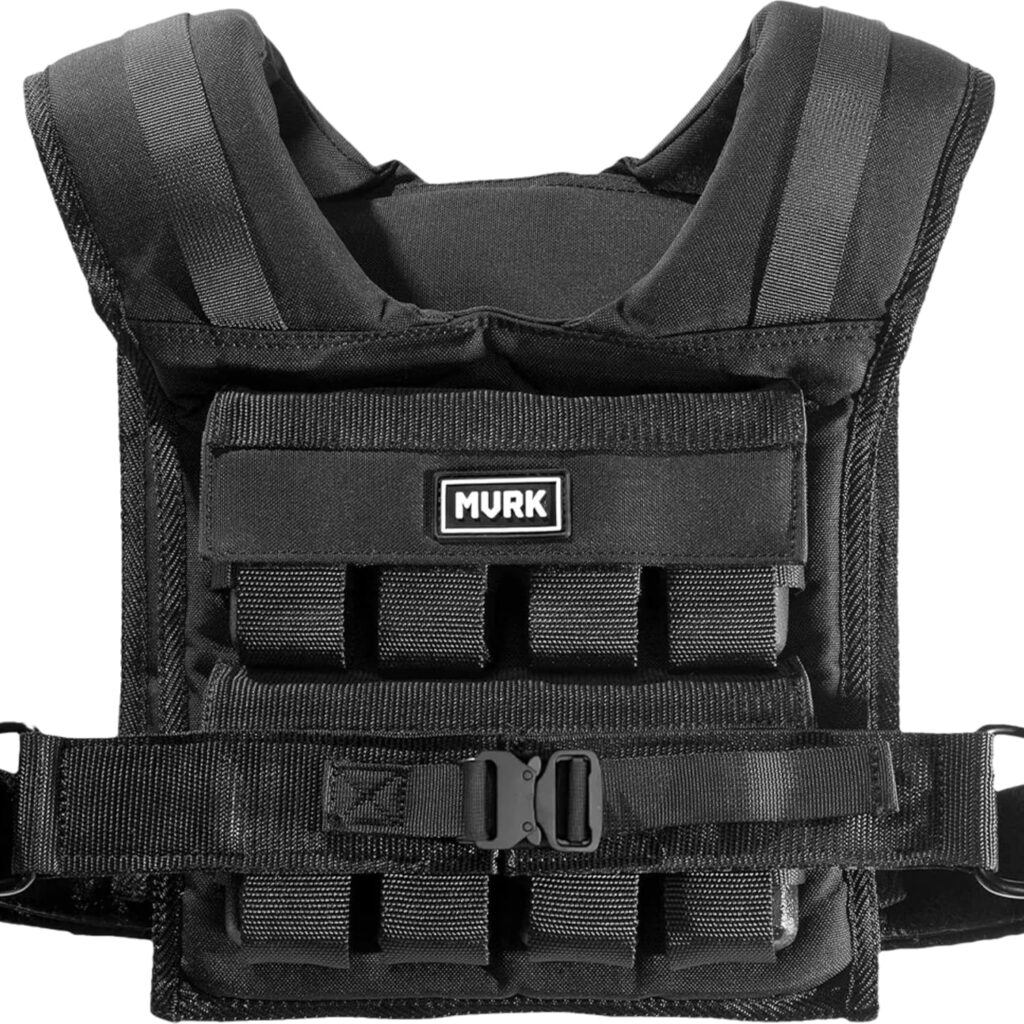
A big and tall weighted vest is a fit problem before it is a weight problem. Standard vests are cut for average torsos: the panels stop short, the straps barely meet, and the band that should sit at the waist climbs or digs the moment a bigger frame starts moving. What separates a vest that works from one that rides up is not the brand or the price. It is torso coverage, strap reach, band placement, and where the load actually rests.
The honest starting point: the vests shortlisted below are general-audience cuts rather than dedicated big-and-tall sizing. That is less limiting than it sounds. They handle larger frames three different ways — a fixed simple design that loads front and back, a two-strap system built for a variety of body shapes, and a wide selectable weight range with a manufacturer sizing guide. Whether you arrived from a search for a weighted vest for big and tall men, for larger men, or for plus size men, the fit questions are the same; only the answers differ.
Affiliate disclosure: some links in this guide are affiliate links. If you buy through one, FitGearPilot may earn a commission at no extra cost to you.
What a weighted vest has to get right on a bigger frame
Four things decide whether a vest works on a bigger or taller body, and none of them is the number printed on the label.
- Torso coverage. Weight carried against the chest and the back spreads across the trunk, which is where a heavy vest becomes comfortable. Weight carried only at the shoulders concentrates the whole load on two narrow strips of strap.
- Strap reach and adjustment. Adjustment points are the fit budget of a vest. Two independently adjustable straps can be tuned around a broader chest; a single fixed band either fits or does not, with nothing in between.
- Band placement. An elastic band sits comfortably only where the listing says it should. On a longer torso, a band designed for the waist can end up across the ribs if the vest is worn wrong, so wear-direction notes deserve a proper read.
- Weight range. A fixed-weight vest is one decision and done. A selectable range lets one vest follow a training progression instead of being replaced every few months.
How to check fit before you buy
One limitation matters before you start: none of the three vests below publishes chest or torso measurements, so verify every fit claim with a tape measure and the manufacturer’s size chart. Then work down the list.
- Measure the chest at its widest point, and torso length from the top of the shoulder to where the vest should end on the ribs.
- Count the adjustment points. More straps mean more ways to tune the fit around an XL or XXL frame.
- Read the placement notes: where the elastic or band is meant to sit, and any direction-of-wear warnings in the listing.
- Decide fixed versus adjustable weight before shopping, not after. Fixed is simpler; a range grows with you.
- Match the care instructions to your routine. Some neoprene shells are wipe-clean only, which rules out the washing machine.
The three listed vests, mapped to bigger frames
These three vests are the shortlist for this search. Each entry sticks to what its listing actually says: construction, adjustment, and the fit mechanism that matters here.
Henkelion 12 lb: the simple fixed-weight option
The Henkelion weighted vest is a neoprene shell filled with iron pellets and metal rock rather than river sand, with the load carried in pockets at the front and back so it rests on the trunk instead of the shoulders. An adjustable strap keeps the vest from sliding mid-workout, and the listing is unusually candid about fit: the elastic must sit at the waist, there is a specific direction of wear, and the weight itself is not adjustable. It was listed at 4.5 stars across roughly 9,100 ratings when this guide was compiled. Specs are on the product page, and current pricing is on Amazon.
Who it suits: walkers and first-timers who want one simple decision — put it on correctly and go.
PACEARTH 6–30 lb: the two-strap system
The PACEARTH vest makes adjustment its fit story: two chest straps that the listing describes as delivering a snug fit across a variety of body shapes, which is exactly the mechanism a broader chest needs. Shoulder pads were added after earlier user feedback to cushion the shoulders on long wears, the shell is a breathable Lycra, and an arm-strapped phone pouch with an earphone opening keeps a phone close on vests with no pockets. Reflective stripes run front and back for low-light roadwork. Weight is sold in set sizes from 6 to 30 lb, and it was listed at 4.7 stars across about 4,900 ratings when this guide was compiled. Details are on the product page, or see the listing on Amazon.
Who it suits: bigger chests and torsos that need the widest strap adjustment, and anyone who layers the vest over clothing.
BAGAIL 5–30 lb: one vest across a long range
The BAGAIL comfort-fit vest carries fine iron sand inside a sweat-resistant neoprene shell, with a body-hugging cut, upgraded straps, and smooth-stitched edges aimed at keeping the load still. Weight is chosen with the manufacturer’s sizing guide anywhere from 5 to 30 lb, so a single vest can follow a long progression instead of being outgrown. A detachable phone pouch takes most phones up to 7 inches, a rear mesh pocket adds storage, and reflective strips cover the front and back. Cleaning is a damp cloth and air drying — no machine washing. It was listed at 4.6 stars across about 4,200 ratings when this guide was compiled. Full specs are on the product page, and Amazon carries the current listing.
Who it suits: anyone who wants to buy once and change weight over time, for walking, rucking-style outings, and general strength work.
Common mistakes bigger buyers make
- Buying the weight first and the fit second. A heavy vest that rides up on every step gets worn less than a lighter one that stays put.
- Trusting a one-size claim without a tape measure. Fit claims are written for the middle of the size range, not its edges.
A quick decision checklist
- Do the chest and torso measurements line up with the adjustment system?
- Does the load sit front and back rather than on the shoulders alone?
- Is the weight fixed or selectable — and was that chosen on purpose?
- Do the care instructions match how the vest will actually be cleaned?
- Did the manufacturer’s sizing guide set the starting weight?
Frequently asked questions
How heavy should a first weighted vest be for a bigger man?
The vests featured here start light: the selectable ranges on the listed vests all begin in the single digits, and each manufacturer publishes a sizing guide to match weight to the wearer. The sizing guide is the right starting point, and if training is planned around joint, heart, or weight concerns, a doctor or trainer should make the call — the listings are not medical advice.
Can you add weight to a weighted vest later?
Depends on the design. A fixed-weight vest cannot be tuned — its listing says so in plain text — and the only add-on path it offers is a rear mesh pocket designed for extra weight, which raises the load but never lowers it. Vests sold as selectable ranges avoid the problem by design: the weight changes within the range the manufacturer sells, and no second vest is needed.
How do you wash a weighted vest?
Follow the shell, not habit. The iron-sand and neoprene designs here specify wiping clean with a damp cloth and air drying, explicitly no machine washing. The Lycra design takes a different route to the same problem — its fabric is described as odor-free and breathable, a wear property rather than a washing instruction. Check the care label before the first workout, not after the first smell.
Where the commercial shortlist lives
This guide deliberately stops at fit and function. When the decision turns to ranked, buy-ready options across more brands, the site’s best weighted vest for men shortlist is the commercial side of this topic, and the Men weighted vest guidance hub gathers everything published for men in one place.